
Reviewed · DUBLIN WALKING TOURS
2-Hour Historical Walking Tour from Dublin
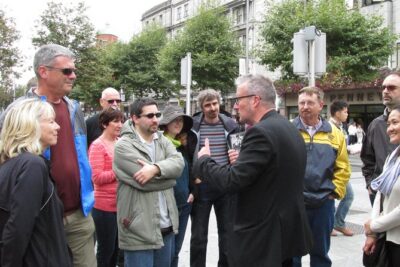
Dublin’s past moves fast on foot. This 2-hour historical walking tour uses history postgraduate guides and a small group size (max 25) to help you understand how Dublin got from Viking roots to British rule and beyond. You start opposite Trinity College Dublin, walk through central landmarks, and leave with a clear sense of what to see next.
I love the way this tour turns big themes into street-level stories. I do warn one thing: the history runs deep, with lots of politics and context, so if you want light culture stops, this can feel dense.
Key points worth knowing before you go
- Meeting at Henry Grattan Monument (College Green), opposite Trinity College means you’re in the right spot fast.
- History-postgraduate guides focus on cause and effect, not just dates.
- Mostly quick site visits keep the pace moving, with a full 2 hours approx. for the route.
- Book of Kells entry is not included, even though you’ll discuss it at Trinity College.
- Central sights, lots of eras: university, colonial parliament, Viking Dublin, civil war flashpoints, and cathedrals.
- It’s an easy add-on day-one plan, since the walk is short enough to leave the rest of your day open.
A 2-hour walk that beats trying to DIY Dublin’s timeline
Dublin can feel like a patchwork at first. You see gorgeous buildings, pub streets, and grand churches, but it’s not obvious why everything sits where it does or how each era shaped the next one.
That’s where this tour earns its place. In about two hours, you get a guided storyline that connects old names, political power, and the physical city. By the time you’re done, you usually know what you’re looking at, even if you have never visited Dublin before.
This also makes the rest of your day easier. You finish near Christ Church Cathedral, so you can keep exploring in the same area without zigzagging across town.
You can also read our reviews of more historical tours in Dublin


Price, value, and what you really get for about $23
At $22.98 per person for a group walk, you’re paying for one thing above all: a guide who can explain Irish history in a way that sticks. With history postgraduate guides leading the tour, you are not just buying a map and a casual stroll.
Another value win is that most stops are built around places where the tour time is free. The big ticket item tied to the Trinity stop, the Book of Kells, is the one thing you’ll need to handle on your own since entry is not included.
In plain terms, you’re paying to get context efficiently. If you plan to visit several of these landmarks anyway, a short guided run like this often beats trying to stitch the story together from apps and guidebooks.
Also, this is popular enough that it’s often booked ahead. On average, it’s taken up about three weeks in advance, so if your dates are fixed, book early.
Route reality: how the timing works in the city center
The itinerary is structured so you’re constantly moving, but not sprinting. You’ll typically spend about 10 minutes at many stops, with a couple longer moments to let the story land.
That matters because Dublin history is layered. Viking Dublin sits under later streets. Norman power shows up in church architecture. British administration left its imprint in the castle and legal structures. If you stand still too long at the wrong time, you miss the thread.
The practical part: wear comfortable shoes. One thing I’d take seriously is weather. Even when it’s cold and miserable, the tour keeps going, so plan to layer up and stay warm enough to listen clearly.
Start at Grattan statue, where the tour gives you a quick mental map
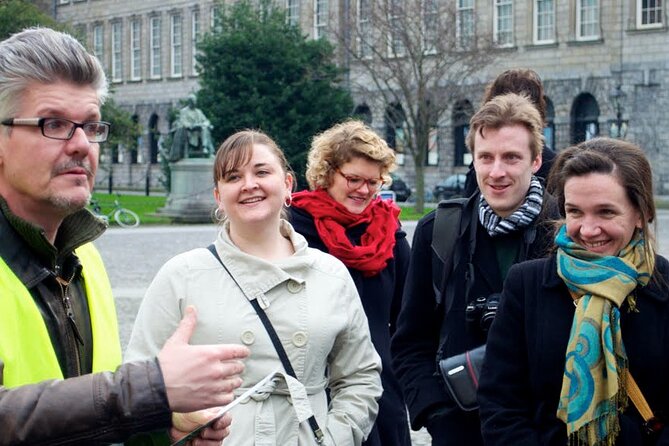
You meet at the Henry Grattan Monument at College Green, right by the Trinity College front area. The group starts there and then moves onto campus for the first big historical anchor.
This first step is smart. It’s not just a meeting point. It’s also a way to set your bearings for central Dublin: you begin with one of Ireland’s most important institutions and use it to frame the centuries that follow.
The guides use clear voices and storytelling that makes it easier to follow even if you are walking in winter coats and trying not to freeze your ears. I’ve seen examples of guide styles mentioned with Eoin and Jody for being especially easy to listen to and for keeping the pacing readable.
Trinity College Dublin: oldest university, the Book of Kells, and why it matters
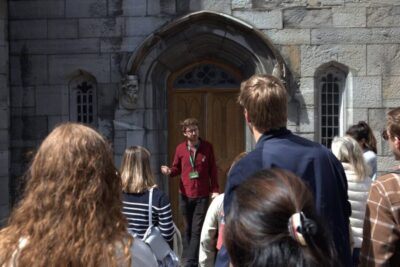
Your first stop is Trinity College Dublin, where the tour focuses on its founding and its lasting influence on Ireland. You learn about its start in 1592, and then you connect that to one of the campus’s best-known treasures: the Book of Kells, an 8th-century Latin manuscript of the Four Gospels.
A key detail for planning: Book of Kells entry is not included. That doesn’t make the stop less useful, but it does change your decisions. If you want to see the manuscript itself, budget extra time and get your ticket separately.
Even if you skip the Book of Kells for now, the campus stop still does its job. It sets up the theme of learning, power, and culture showing up in physical places. After that, the rest of the tour makes more sense, because you start to see institutions as political forces, not just buildings.
A few more Dublin tours and experiences worth a look





Bank of Ireland to Temple Bar: from colonial power to a 1990s cultural shift
After Trinity, you head toward the Bank of Ireland. This stop is about more than architecture. You’ll hear how the building links to Ireland’s colonial past, when it served as a colonial parliament in 1729 and was abolished after the Act of Union in 1800.
You also get the “why it matters” layer. The tour connects the period’s neo-classical architecture and the idea of Protestant Ascendancy to the way power was expressed in Dublin’s public spaces.
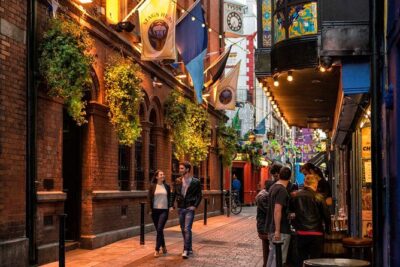
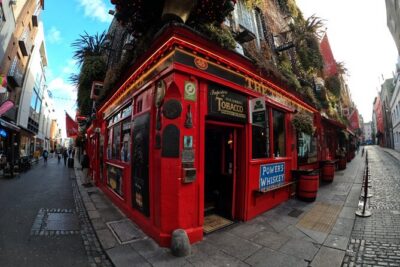
Then you swing toward Temple Bar, and this is where the story turns from power to repurposing. Temple Bar’s narrow streets, once associated with potential demolition, were reframed in the 1990s as part of Dublin’s Cultural Quarter.
That contrast is useful. It helps you understand how cities rebrand themselves while still carrying older political scars. The area you might associate with nightlife also has a longer storyline than the stereotype.
Wood Quay Amphitheatre: the Viking city is not just a fact, it’s a location
At Wood Quay Amphitheatre, the tour brings in the Viking layer of Dublin’s story, anchored in archaeology. You’ll learn about excavations and how the Viking city was founded around AD 840.
This is one of those stops that changes how you walk through the city. Instead of seeing the streets as simply paved ground, you start thinking about what was here before, and how later Dublin used the same spaces even as cultures shifted.
If you like history that feels grounded, this stop is a good bridge between the “big names” and the “where it happened.” It also helps explain why later eras claimed central locations instead of building from scratch.
Four Courts and Ireland’s legal power during the Civil War
Next comes the Four Courts, Ireland’s legal headquarters. Here, the tour ties architecture and government to violence and decision-making in the early 1920s.
You’ll hear about how a Civil War started in June 1922, involving people who supported and people who opposed the Treaty agreed in December 1921, which had ended the War of Independence from 1919-21.
This stop can be a lot, and it’s also why the tour’s tone matters. If you’re into politics and the mechanics of change, you’ll likely eat this part up. If you prefer history that stays above the drama, it can feel heavy.
For me, the value is that it doesn’t treat the past as abstract. It shows how legal institutions and political choices were connected, and why that matters for understanding modern Ireland.
Christ Church Cathedral: oldest cathedral in Dublin and the Norman footprint
At Christ Church Cathedral, you get a deep historical hook. The tour frames it as Dublin’s oldest cathedral, with roots going back to 1030, and then rebuilt in stone in the 1170s connected to Strongbow and the English invasion of the 1170s.
This is where your earlier stops pay off. Now you’re not only hearing about conquest in words. You’re connecting it to architecture, institutions, and long-lasting civic power.
Even with short time here, it’s a strong endpoint story. The guide is essentially tying Dublin together like a chain: education, governance, religion, law, and identity.
City Hall and Daniel O’Connell: Catholic emancipation in one recognizable statue
Then you move to City Hall, where the tour highlights a specific symbol: a statue of Daniel O’Connell, Dublin’s first Catholic Lord Mayor in 1840.
You’ll learn why he’s known as The Liberator and how he led a successful campaign for Catholic Emancipation in 1829, pushing for an end to anti-Catholic laws.
This stop is valuable because it gives you a human figure to remember. Political history is easier when it has names, choices, and consequences, and O’Connell becomes that anchor.
It also helps you see that Dublin’s story is not just about foreign rule and rebellion. It’s also about internal reform, religion, and civil rights pressure that changed the legal and social landscape.
Dublin Castle: British administration and the Dubh Linn origin of the name
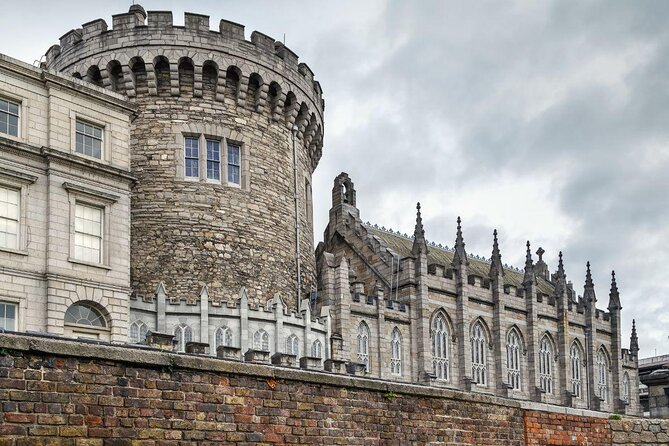
Your final major landmark is Dublin Castle, introduced as a seat of British administration for centuries. You’ll hear it was originally built by King John in 1204 and served as administration until 1922.
Then the tour adds one of those satisfying Dublin name origins: it links Dublin to Dubh Linn (Black Pool), suggesting how the city got its name.
This stop works well as a wrap-up because it ties together earlier themes of power and place. The castle is the physical proof that administration was not a concept, it was a fixed location.
And once you reach it and then finish near the cathedral area, you start to see why Dublin feels like it’s constantly negotiating identity.
What the guides do well, and why it impacts your whole day
The tour’s quality hinges on the guide’s ability to keep your attention. That’s where this experience seems to shine.
Across guide styles, people have highlighted that the presentations are funny when they can be, but still serious where it counts. Names that come up in feedback include Caolan Maher, Daragh, John D., Eoin, Jodie, Colm, Owen, Jody, and Tommy Graham. The common theme isn’t who the guide is, it’s how well the guide teaches the story while keeping you oriented.
You’ll likely notice the tour starts with a fast overview first, sometimes described as an outline of thousands of years in minutes. Then each stop becomes a chapter. That structure is exactly what you want from a first-day tour, because it gives you a mental framework you can fill in on your own afterward.
Who should book this tour, and who should skip it
If you love history, especially political history, this fits extremely well. You get a storyline that covers everything from university origins to colonial governance, Viking Dublin, legal power, and the civil war era.
You should also like walking tours if you want a guided framework rather than a checklist. Many people book this at the start of their trip because it helps them revisit sights with better understanding later.
If, however, you mainly want culture, scenic stops, or casual photo moments, this may feel like too much. The tour runs on detail and context, so you have to pay attention.
On the physical side, it’s described for moderate physical fitness and it’s near public transportation. The walking is steady, so plan for time on your feet.
FAQ
FAQ
How long is the 2-hour historical walking tour?
Plan for about 2 hours. The time is described as approximate, so build in a little buffer for your day.
Where do I meet the guide?
Meet at the Henry Grattan Monument on College Green, Dublin, opposite the front gate area of Trinity College Dublin.
Where does the tour end?
The walk ends at Christ Church Cathedral, Christchurch Pl, Wood Quay, Dublin (D08 TF98).
What is included in the tour price?
You get the expertise of history postgraduate guides, and you’ll receive a mobile ticket. Most stops during the itinerary are listed as free entry, but see the Book of Kells question below.
Is entry to the Book of Kells included?
No. At Trinity College, the tour discusses the Book of Kells, but entry to the Book of Kells is not included.
What if I need to change plans?
You can cancel for a full refund if you cancel at least 24 hours before the start time. Changes made less than 24 hours before the start time are not accepted.
Should you book this Dublin history walking tour?
If you want a fast, guided understanding of Dublin’s past, I think this is a great buy. For about $23, you get a compact route through major landmarks with a guide who can connect eras instead of dumping facts.
Book it if you love history and you’re okay with politics taking up real space in the conversation. I’d skip it only if you want a lighter, culture-first stroll, because this tour is built to explain the complicated layers behind the city.
If your goal is to get your bearings fast and then explore the rest of Dublin with better context, this is the kind of start that pays off all day.
More Historical Tours in Dublin



More Tours in Dublin





More Tour Reviews in Dublin



Not for you? Here's more nearby things to do in Dublin we have reviewed


Dublin Walking Tours, compared.
 ★ 5.0Dublin Highlights and Hidden Gems Guided Walking TourFrom $296,020 reviews
 ★ 4.9Highlights and Hidden Gems Walking TourFrom $272,140 reviews
 ★ 5.01916 Rebellion Walking TourFrom $271,605 reviews
 ★ 5.090 Minute Dublin Walking tour and Sightseeing tipsFrom $21916 reviews
 ★ 4.7Historical 2-Hour Guided Walking Tour of DublinFrom $22865 reviews
 ★ 5.0Dublin Traditional Irish 3 Course Meal Walking Tour with LocalFrom $107755 reviews
 ★ 4.9Mythology, Folklore and Legends Walking TourFrom $27703 reviews
 ★ 5.0The Dublin Private Walking TourFrom $163701 reviews
Browse the lists this tour appears in