
Reviewed · DUBLIN WALKING TOURS
2 Hour Walking Tour of Dublin’s City Centre
Two hours later, Dublin feels mapped. This city-centre walking tour strings together the big-name landmarks in a smart order, so you get the why behind each stop and not just the what. I especially like the easy meeting point at the Gaiety Theatre and the small-group size (up to 10), which makes it simple to ask questions and chat with fellow walkers. One thing to consider: a few major sites along the way have admission not included, so if you want to go inside, plan on buying those tickets separately.
The vibe is relaxed and focused, with a guide who uses stories and interaction (the games and quizzes show up more than once in the way groups describe the experience). You also choose your start, morning or afternoon, which is handy if you want to pair this with museums, pub stops, or a longer day trip.
You finish in a great spot too, at Fusiliers Arch in St Stephen’s Green, right by the Luas. Translation: your feet are tired, your brain is sparked, and getting around after the walk is easy.
Key things to know before you go
- Small group (max 10) helps the guide keep the pace human and answers clear.
- Start at the Gaiety Theatre on King St S, so you avoid that first-day Dublin stress.
- 2 hours gives a strong orientation without eating your whole day.
- Some sites have free viewpoints, some do not for admission, so read what’s included.
- Stops are outside-focused for most landmarks, meaning you can come back later for the interiors.
- Finish by St Stephen’s Green and the Luas, convenient for transit and onward plans.
Why this 2-hour Dublin city-centre walk is so useful
If Dublin is new to you, the hardest part is usually figuring out where everything is, and what order makes sense. This tour tackles that head-on by grouping major sights in the historic core, walking you between them in a way that feels like a guided route, not a random checklist.
I like how it sets you up for the rest of your trip. After two hours, you know which buildings are tied to power and politics, which ones shaped religious life, and where the city’s modern nightlife culture really took root. Even if you later visit only a couple interiors, the walk still does its job by giving you names, timelines, and context.
The other practical win is pacing. At about 15 minutes per stop, you get enough time to look up, take photos, and hear the story without getting stuck in one spot too long. It is a good match for people who want highlights now and deeper dives later.
You can also read our reviews of more city tours in Dublin



Starting at Gaiety Theatre, then walking the classic Dublin line
Your morning or afternoon starts at the Gaiety Theatre on King St S in Dublin 2. This is one of those meeting points that is hard to mess up because it is recognizable and central. I also like that the tour is built around a meet-up that keeps the pre-walk hassle low, especially if you are figuring out Dublin streets for the first time.
From there, the route feeds you into Dublin’s “old meets new” story fast. The first stop is a theatre, then you shift into cathedrals, a castle, and learning institutions. It is a neat rhythm because it shows Dublin as a living place, not a frozen postcard.
The tour is offered in English and runs with a mobile ticket, so you are not wrestling with paper confirmations. And because the group is capped at 10, you tend to get an easier flow through crowds at the big stops.
Gaiety Theatre, where Dublin’s theatre story sets the tone
The tour begins at the Gaiety Theatre. Even though this stop is only around 15 minutes, it works as a warm-up. You get oriented in the area and get the guide’s take on how Dublin’s public life moved through culture and storytelling, not just government and religion.
Admission at this stop is listed as free, so there is no extra payment hurdle just to get started. This matters when you are budgeting early in the day.
St Patrick’s Cathedral: the building that carries multiple eras
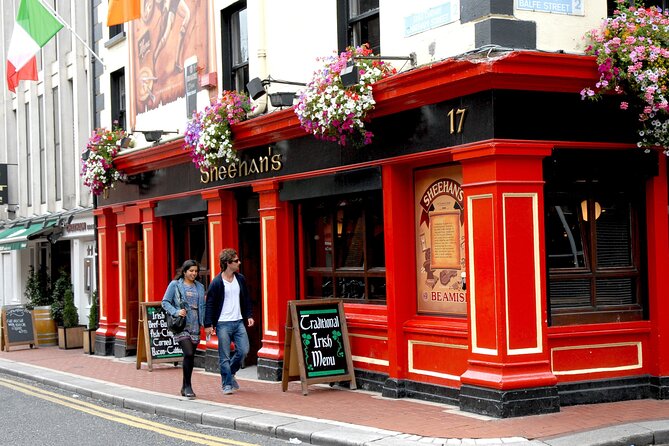
St Patrick’s Cathedral is next, and it comes with a built-in hook: it is linked to St Patrick and its structure has been shaped over time. The story includes the turn from Anglo-Norman building into a period when the cathedral faced near ruin, plus later rescue efforts connected to the Guinness family.
Why this stop hits: cathedrals are never just about architecture. They are about survival, power shifts, and community identity. When you hear the timeline, the façade and layout make more sense, even if you only look from the outside.
One consideration: admission is not included at St Patrick’s Cathedral. So if you want to go in, budget for separate tickets and keep a little extra time in your day.
Dublin Castle: from Anglo-Norman tower to power and a jewel heist story
Dublin Castle is the kind of stop you can sense before you reach it. It starts as an Anglo-Norman tower and grows into a bigger complex that served as a seat of power, a prison, and a stage for dramatic tales. One of the more memorable elements shared is a daring jewel heist that the site witnessed over the centuries.
This is a smart stop on a short walking tour because it gives you the “Dublin political center” frame. After Dublin Castle, other buildings you see around the city start to click into place as part of one long story about rule, resistance, and identity.
As with the cathedral, admission is not included for Dublin Castle. Plan on using this stop for exterior views and the story, then decide later whether the inside is worth extra time and tickets for you.
A few more Dublin tours and experiences worth a look





Christ Church Cathedral: Vikings founded it, rulers kept reshaping it
Christ Church Cathedral has layers in the best way. It traces back to Vikings founding the site in 1030, then it evolves through different eras of rule. The Anglo-Normans add Gothic flair, and later restoration is tied to the 19th century, including a note about a whiskey-funded rescue.
On a practical level, this is another reason I like the walking format. You hear enough context to notice what changed and why, instead of staring at stone and guessing.
Admission for this stop is not included, so it is best viewed as a landmark storytelling stop. You can always come back later if you want the full interior experience and have time in your schedule.
Temple Bar: from maze-like neighborhood to tourist hub
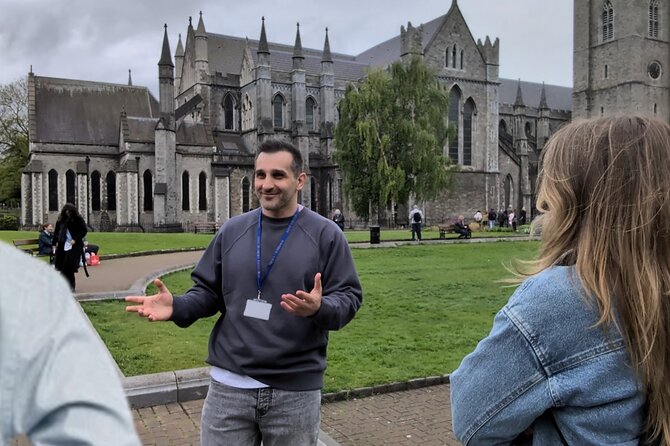
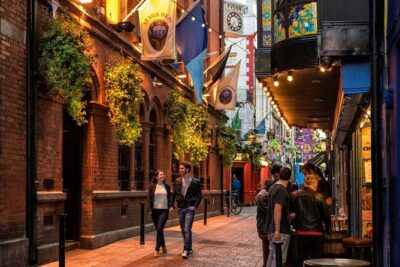
Temple Bar is the quick mood shift. Once described as a maze-like neighborhood with a notorious reputation, it is now a tourist hub full of pubs, art galleries, and lively nights.
For many visitors, this is where the tour helps most, because it explains how a “bad reputation” area becomes a recognizable nightlife district. You see it with context, not just as a place to drink.
Admission is listed as free here, and the time on the ground is about 15 minutes, so it is mostly about orientation and atmosphere. If you want a slower dinner or a longer pub crawl later, you now know where the action zone is.
Trinity College Dublin and the Book of Kells fame

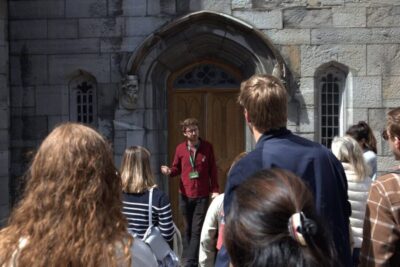
Next comes Trinity College Dublin, another 15-minute stop with admission listed as free. Trinity is tied to learning and famous artifacts, including the Book of Kells, plus the appeal of a beautiful campus setting.
This is a good place to pause and look up, literally. The campus gives you a different view of Dublin: more academic, more orderly, and easy to imagine how the city’s intellectual life shaped what followed.
Even if you do not enter for more, hearing the “why” behind Trinity helps you plan your later time. If you do want to go inside for exhibits, you now know what to prioritize first.
Bank of Ireland and the Old Parliament House link
The tour then heads to the Bank of Ireland area, with a stop focused on the Old Parliament House connection. This is where political Dublin shows up in a very tangible way, plus the story of architectural inspiration for grand buildings and the Act of Union.
I like this stop because it explains how history shows up in everyday streets. You walk up to a prominent building and realize it is tied to big decisions and big consequences.
Admission at this stop is listed as free, which makes it an efficient use of time on a short walk.
St Stephen’s Green: from elite garden to public park
St Stephen’s Green is the calm, green reset. You get about 15 minutes here, and admission is listed as free. The story is especially interesting: it used to be an exclusive green space for Dublin’s elite, then thanks to the Guinness family it became what everyone can enjoy today.
Even if you only spend a short moment in the park, it changes how you read the earlier stops. This is still Dublin’s power story, just told through land access, class, and public space.
When you finish, you end at Fusiliers Arch on the edge of St Stephen’s Green, near the Luas tram stop. That matters if you are trying to avoid a stressful transit scramble after a walking tour.
Price and what $28.96 really buys you
At about $28.96 per person for roughly 2 hours, you are paying for guided storytelling, route planning, and that practical grouping of stops. The cost makes sense when you compare it to how expensive it can get if you try to self-tour and then buy multiple attractions separately.
It is also important to look at what is and is not included. Some stops list admission as free, including the Gaiety Theatre stop and places like Temple Bar, Trinity College, and the Bank of Ireland area. Others list admission not included, including St Patrick’s Cathedral, Dublin Castle, and Christ Church Cathedral.
So think of the tour as your “get oriented plus learn the story” package. You decide later what deserves your extra spend and time for interior visits.
What I’d plan around it on your Dublin schedule
Because this tour is timed around the city centre and finishes by a major transit stop, you can build a smart half-day. A common strategy that works well is to do the walking tour early, then:
- Choose one interior site to revisit later with fresh context.
- Add a longer meal somewhere near the route.
- Use St Stephen’s Green as your reset point before you head out again.
If you are arriving in Dublin and want an easy first outing, this walk does a lot of lifting. It also works on a day when the weather is sketchy, because you get multiple stops and stories even when you are not wandering for hours on your own.
Who this tour fits best
This is a strong fit if you:
- Want a clear introduction to Dublin’s major landmarks in a short window.
- Prefer a small-group experience, where you can ask questions and keep the pace steady.
- Like guides who use interaction tools like games and quizzes to keep the tour from turning into a lecture.
It also seems to work across ages. One family described it as enjoyable for kids in the 11 to 15 range, with activities that kept everyone engaged.
You should think twice if you hate walking. The tour is moderate physical fitness level, and it is city walking, so comfortable shoes matter.
A few tips so you get more out of every stop
Wear shoes you can handle for two hours of city walking. Even with only about 15 minutes per stop, your legs are still doing the heavy lifting.
Bring your curiosity. The real value here is the “why” behind each landmark, like how Dublin Castle evolved from a tower into a complex tied to power and prison life, or how Christ Church Cathedral connects Vikings roots to later Gothic changes.
Also, use the tour as a shortlist. When you hear the highlights, you will naturally spot which place you most want to see in full detail later. Then you can spend your money where it feels worth it, instead of trying to do everything immediately.
Should you book this Dublin city-centre walking tour?
If you want a simple first Dublin experience that gets you oriented fast, I think this is a smart booking. The easy meet-up at the Gaiety Theatre, the small-group feel, and the way the guide brings landmarks together make it a practical way to get your bearings.
I would book it if you like a guided route and you want context for St Patrick’s Cathedral, Dublin Castle, Christ Church Cathedral, Temple Bar, Trinity College, and St Stephen’s Green. Just go in knowing that some big interiors require separate admission, so your goals for inside visits should come after you hear the stories outside.
If your priority is a deep, ticketed museum day, this might feel short. But for most people looking for a high-value orientation in Dublin’s center, this 2-hour walk is exactly the kind of trip that pays off all week.
FAQ
Where does the tour start?
The tour starts at the Gaiety Theatre on King St S, Dublin 2, Ireland.
Where does the tour end?
The tour ends at Fusiliers Arch in St Stephen’s Green, located at 3 St Stephen’s Green, Dublin, D02 X025. It is also right next to the Luas tram stop.
How long is the walking tour?
The tour lasts about 2 hours.
What price should I expect?
The price is $28.96 per person.
What language is the tour offered in?
The tour is offered in English.
Is admission included for all stops?
No. Admission is free at some stops, including the Gaiety Theatre, Temple Bar, Trinity College Dublin, and the Bank of Ireland, while admission is not included for St Patrick’s Cathedral, Dublin Castle, and Christ Church Cathedral.
How big is the group?
The tour has a maximum of 10 travelers.
Is it easy to get to the meeting point and end point?
Yes. The tour is near public transportation, and the end point is next to the Luas tram stop.
Can service animals join the tour?
Yes, service animals are allowed.
What is the cancellation policy?
Free cancellation is available up to 24 hours in advance for a full refund. If you cancel less than 24 hours before the start time, the amount paid is not refunded.
More City Tours in Dublin



More Tours in Dublin





More Tour Reviews in Dublin



Not for you? Here's more nearby things to do in Dublin we have reviewed


Dublin Walking Tours, compared.
 ★ 5.0Dublin Highlights and Hidden Gems Guided Walking TourFrom $296,020 reviews
 ★ 4.9Highlights and Hidden Gems Walking TourFrom $272,140 reviews
 ★ 5.01916 Rebellion Walking TourFrom $271,605 reviews
 ★ 5.090 Minute Dublin Walking tour and Sightseeing tipsFrom $21916 reviews
 ★ 5.02-Hour Historical Walking Tour from DublinFrom $22875 reviews
 ★ 4.7Historical 2-Hour Guided Walking Tour of DublinFrom $22865 reviews
 ★ 5.0Dublin Traditional Irish 3 Course Meal Walking Tour with LocalFrom $107755 reviews
 ★ 4.9Mythology, Folklore and Legends Walking TourFrom $27703 reviews
Browse the lists this tour appears in