

Reviewed · DUBLIN WALKING TOURS
2 Hours Senior’s Historical Private Walking Tour of Dublin
Dublin history works best when you can walk it, not just read it. In about 2 hours, this senior private walking tour strings together Dublin’s big landmarks in a way that feels paced and doable. I like that you start at Trinity College Dublin (established in 1592) and finish at St Patrick’s Cathedral, so the day has a clear arc. I also like the human side, a guide described as warm and diligent, with a solid knowledge base and genuine care that you see what matters to your group. One thing to keep in mind is the weather requirement, since this is a walking tour and parts of the visit are outside.
The format helps too. It’s private, so only your group participates, and you get a mobile ticket. You’ll also notice most stops are marked as outside visits, so you’re here to see and understand the places from street level, not to rush through lots of interior rooms.
Key Highlights You Get From This Dublin Senior Walking Tour

- Trinity College Dublin first, so you begin with a major anchor site in central Dublin
- Molly Malone Statue as a quick folklore stop tied to the famous Dublin song
- Ha’penny Bridge for classic River Liffey views and a simple photo moment
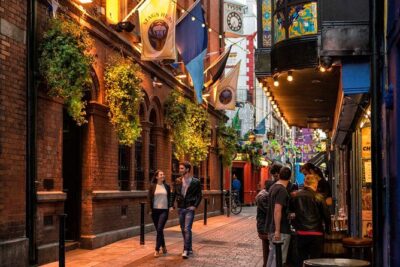
- Temple Bar time in the cultural quarter, with cobbled streets and historic pubs nearby
- Two landmark cathedrals on the way to St Patrick’s Cathedral, including Christ Church Cathedral’s medieval feel
Pricing and What $447.44 Per Person Buys You
At $447.44 per person for a roughly 2-hour private walking tour, this is not a budget option. But it is a focused one. You’re paying for a private format, a curated route, and a guide who is there to keep the experience aligned with what your group wants to see.
A public group tour in Dublin can be cheaper, but it often means you follow a pace that fits the majority, not the group in front of you. Here, the private setup matters most if you want time for questions, slower strolling, and a guided explanation at the stops that actually catch your eye.
Two details add value. First, the stops are set up with admission ticket free included. Second, the tour is designed for walking between landmarks that are close enough to handle within a short window. If you’re the type of traveler who hates wasting time, this route is built for efficiency without feeling like a sprint.
Still, it’s wise to sanity-check your expectations. Since many segments are outside visits, you may not get the same experience as a tour where you’re spending a lot of time inside buildings. If your goal is interior-depth sightseeing only, you might need a different type of tour.
You can also read our reviews of more private tours in Dublin



Starting at Trinity College Dublin: Dublin’s Academic Center

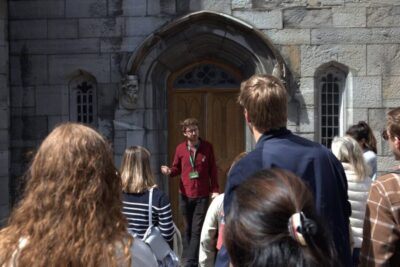
Your tour starts at Trinity College Dublin on College Green. This is a strong opening move because Trinity is easy to locate and instantly gives context for the city. The campus is known for classical architectural beauty and a lively scholarly atmosphere, and you’ll see the famous Campanile as a centerpiece moment.
Trinity College has been around since 1592, and that age alone gives you a sense of continuity in Dublin. In two hours, you don’t need a long backstory lecture at every stop. Starting here sets the tone: this is a city with deep layers, and your walk will bounce between education, folklore, civic power, and religion.
You’ll get about 20 minutes at this stop, marked as an outside visit. That timing is helpful for seniors who want to see something meaningful without standing too long. It’s also ideal for photos, since you can frame Trinity and the Campanile without competing for indoor entry lines.
Molly Malone Statue: A Quick, Fun Dive Into Dublin Folklore
Next up is the Molly Malone Statue. It’s iconic for a reason. This is a symbol of Dublin made famous through the famous song tied to Molly Malone. Even if you only know a couple lines, the statue gives you a “now I get it” moment.
This stop is short, around 15 minutes, which is perfect for a walking tour structure. It doesn’t drag. It also works well as a mental reset between larger landmarks. Trinity is big and architectural. Temple Bar later on leans more street-life. Molly Malone sits in the middle, reminding you Dublin also tells its story through characters and music.
Practical tip: because this is a quick stop, look up and down the street for where you want your photo before the group moves. When time is tight, you’ll thank yourself for planning it for 30 seconds.
Ha’penny Bridge Over the River Liffey: The Postcard Moment

Then you reach Ha’penny Bridge, a charming pedestrian bridge over the River Liffey. This is one of those locations that feels designed for walking tours because it offers scenery in a small package.
You get about 20 minutes here, which means you can do more than just a glance. You can take in the river views, orient yourself, and enjoy a calmer moment in the middle of a landmark sequence. It also helps you understand Dublin as a city shaped by waterways, not just street corners and buildings.
If you’re planning what to wear, this is a spot where good footwear really helps. Bridges and riverside areas can feel more exposed than narrow streets, and even if you don’t expect rain, Dublin weather can be changeable.
Temple Bar Time: Culture Quarter Without the Pressure

After the river, you’ll spend about 20 minutes in Temple Bar. This area is known as a cultural quarter with cobbled streets and historic pubs. The vibe here is a big reason people come to Dublin in the first place.
For this walking tour, the goal isn’t to turn it into a long pub crawl. It’s more about giving you a sense of Dublin’s social atmosphere as you walk through it. Since you have limited time overall, the Temple Bar stop is a smart way to experience the neighborhood feel without losing your entire afternoon.
One consideration: Temple Bar can be visually busy. If you’re trying to stay focused on the historical thread of the tour, treat this stop as a “feel the place” break. Look at the streetscape and the general atmosphere rather than expecting every detail to stand out instantly.
You can also read our reviews of more historical tours in Dublin






Dublin Castle Outside View: Civic Power in Stone

Next comes Dublin Castle, viewed from the outside. You’ll get around 15 minutes at this stop, and the emphasis is on stately architecture and gardens. The description also frames the castle as a key site in Irish history, which gives it weight even when you’re not stepping inside.
This is a good contrast to Temple Bar and the bridge. Temple Bar is people and streets. The castle is institutions and permanence. Even as an outside visit, you’ll likely feel the difference immediately. Stone buildings do that.
Because the tour keeps moving, your best move here is to take a slower look for 60 seconds. Notice the shape and scale rather than just the fact that it’s important. In a short tour, your attention is your greatest asset.
Christ Church Cathedral Outside Visit: Medieval Character and Stained Glass

After Dublin Castle, you’ll visit Christ Church Cathedral from the outside. This stop runs about 15 minutes and highlights why the cathedral is a major medieval site in Dublin. You’ll also get pointed attention toward the historic crypt and stained glass, even if you’re not going far into interior spaces.
Christ Church Cathedral is described as one of Dublin’s oldest medieval cathedrals. That matters for your mental picture of the city. Dublin isn’t only about newer landmarks and modern streets. It has medieval religious architecture you can still see and feel.
Stained glass tends to be visually powerful, so even a brief stop is worthwhile. Try to position yourself where you can get the right angles for what’s visible from your viewpoint.
If you’re sensitive to crowds or prefer quieter corners, this is another reason the pacing helps. You’re not forced to spend a long time there. You see the key elements, then you move on.
St Patrick’s Cathedral Finale: A Large Cathedral and Quiet Green Space

Your tour ends at St Patrick’s Cathedral, at St Patrick’s Close. This is a natural finale because it’s described as the largest cathedral in Ireland, plus it offers tranquil green spaces. You get about 15 minutes here.
Ending at a cathedral makes sense for the overall route. You start with education, pass through folk culture and a city crossing, shift into civic power at Dublin Castle, and then land on religious architecture. By the time you reach St Patrick’s, the “why Dublin matters” story feels more complete.
Also, the green space note is important. Even with limited time, the tour gives you a chance to slow down a bit and absorb the calmer atmosphere a large cathedral complex can offer.
One more practical point: this is where the walking tour finishes. If you’re planning onward travel, you may want to check the area around St Patrick’s Close so your next step is easy.
The Guide Factor: What Makes This Tour Worth It
The reviews point to the biggest difference-maker: the guide’s approach. People describe the guide as warm and diligent, with a solid knowledge base and clear eagerness to make sure the group sees what they want to see.
That kind of care matters a lot on a short tour. When you only have two hours, there’s no room for wandering. A good guide can read the group’s energy, adjust the pacing, and keep explanations clear without turning it into a nonstop lecture.
It also helps explain why this works especially well for seniors. If you need a slower tempo, prompts for where to look, or time to regroup, you’ll feel it in the way the stops are handled. The route itself is efficient, but the guide is what keeps it from feeling rushed.
How the Stops Add Up: A Simple Historical Route in 120 Minutes
This tour is built like a chain. Each stop supports the next one, and you move from one “type” of landmark to another.
You begin at Trinity College Dublin for a scholarly anchor. Then Molly Malone gives you Dublin’s folklore side. Ha’penny Bridge offers river scenery and helps you get your bearings in central Dublin. Temple Bar brings you into a cultural neighborhood feel. Dublin Castle adds civic weight. Then Christ Church Cathedral and St Patrick’s Cathedral wrap the route with medieval and cathedral architecture.
Because each stop is relatively short, the tour is best for people who want highlights with meaning, not a long day of deep interior sightseeing. If you’re balancing other plans in Dublin, this format makes it easier to fit history into real vacation time.
Practical Tips to Make It Comfortable
This experience is marked for most travelers to participate, but you’ll still want to set yourself up for comfort.
Wear shoes with good traction. You’ll be moving between landmarks, and cobbled streets can be harder than they look. Bring a light layer. Dublin weather can flip quickly even when the forecast seems calm. And if you’re sensitive to sun or wind, plan for that around the bridge and open areas.
Also think about timing. Since the tour is about two hours and ends at St Patrick’s Cathedral, plan your next activity with travel time in mind. You’re not going back to Trinity at the end.
Lastly, since it’s private and only your group participates, it’s okay to speak up. If there’s one stop you care about most, tell the guide early. A guide who is eager to ensure you see what you want to see can only help if you share your priorities.
Should You Book This 2-Hour Senior Private Walking Tour of Dublin?
Book it if you want a short, well-paced route through Dublin’s major sights, with a guide who treats your group’s interests seriously. I think it’s a strong pick for seniors who want an easy-to-follow plan and for first-time visitors who need a highlight route that still feels historical.
Skip it or consider a different style of tour if your priority is interior access and long time inside buildings. This experience is centered on outside visits and brief stop durations, so it’s designed more for orientation and key views than for deep cathedral interior exploration.
If the weather in your travel window looks uncertain, remember this tour requires good weather, and the plan adjusts if conditions are poor. For the right day, though, it’s a smart use of two hours, and the guide attention is the kind of detail that can make the whole route feel worthwhile.
FAQ
How long is the Dublin walking tour?
The tour lasts about 2 hours.
Where does the tour start and end?
It starts at Trinity College Dublin on College Green, Dublin 2, and ends at St Patrick’s Cathedral at St Patrick’s Close, D08 H6X3.
Is this a private tour?
Yes. It’s a private tour/activity, and only your group will participate.
Are tickets included for the stops?
The stops are listed as admission ticket free, and the visits are described as outside visits for key locations.
What language is the tour offered in?
The tour is offered in English.
What is the cancellation policy and what happens with bad weather?
You can cancel for a full refund up to 24 hours before the experience starts. The experience requires good weather, and if it’s canceled due to poor weather you’ll be offered a different date or a full refund.
More Private Tours in Dublin


More Tours in Dublin






More Tour Reviews in Dublin



Not for you? Here's more nearby things to do in Dublin we have reviewed


Dublin Walking Tours, compared.
 ★ 5.0Dublin Highlights and Hidden Gems Guided Walking TourFrom $296,020 reviews
 ★ 4.9Highlights and Hidden Gems Walking TourFrom $272,140 reviews
 ★ 5.01916 Rebellion Walking TourFrom $271,605 reviews
 ★ 5.090 Minute Dublin Walking tour and Sightseeing tipsFrom $21916 reviews
 ★ 5.02-Hour Historical Walking Tour from DublinFrom $22875 reviews
 ★ 4.7Historical 2-Hour Guided Walking Tour of DublinFrom $22865 reviews
 ★ 5.0Dublin Traditional Irish 3 Course Meal Walking Tour with LocalFrom $107755 reviews
 ★ 4.9Mythology, Folklore and Legends Walking TourFrom $27703 reviews
Browse the lists this tour appears in