

Reviewed · DUBLIN WALKING TOURS
Historical 2-Hour Guided Walking Tour of Dublin
Dublin history hits different when it’s told street by street. This 2-hour walking tour helps you connect big events to real buildings, with Trinity College Dublin and University College Dublin trained guides and stops like Dublin Castle and Temple Bar. It’s a lot to fit into two hours, so if you dislike walking or long fact-heavy stories, you may want to pace yourself.
You meet at the Henry Grattan Statue opposite the front gate of Trinity College, then you’re guided through the Medieval City with a clear chronological thread. I like that you get both the landmark scenes and the human stories behind them, from the American and French revolutions to the Potato Famine, the 1916 Rising, and the War of Independence. One watch-out: the tour is in English, and several reviews point out you’ll want to pay close attention.
Key points worth knowing before you go
- Trinity College and UCD history graduates guide the walk, blending facts with jokes
- Dublin Castle, Temple Bar, City Hall, and the Medieval City are all part of the route
- Big Irish turning points covered in a tight timeline, including 1916 and the War of Independence
- Modern-day context is included, with the Northern Ireland Peace Process and today’s Dublin
- A quick, efficient 2-hour format that works well as a first Dublin history primer
Starting Point: Henry Grattan Statue by Trinity College
Your tour begins at street level, at the Henry Grattan Statue opposite the front gate of Trinity College. Look for your guide wearing a lanyard or badge with Authenticity Tours, so you can spot the group fast and start walking without fuss.
This is a strong start point for two reasons. First, Trinity College instantly anchors the tour in Dublin’s long intellectual and political life. Second, the opening minutes set the tone: you’re not just hearing dates, you’re getting a sense of why Dublin kept mattering to Ireland, and then to the wider world.
You can also read our reviews of more guided tours in Dublin



What You See: Dublin Castle, Temple Bar, City Hall, and the Medieval City
In two hours, you’ll cover a well-chosen set of Dublin landmarks that represent different eras and power centers. You’ll see Dublin Castle, Temple Bar, and City Hall, then roam through the Medieval City as the stories connect to the streets.
Here’s why each stop matters, and what to pay attention to as you go:
Dublin Castle, beyond postcards
Dublin Castle is more than a photogenic facade. As the tour moves through Ireland’s shifting political landscape, this site becomes a physical reminder that ruling power in Ireland often arrived with institutions, paperwork, and policies, not just armies. One thing I like about this approach is that it helps you understand what those institutions meant in real life, especially when later stories jump to uprisings and independence.
Also, entrance fees are included as per the itinerary, but entry into the State Apartments in Dublin Castle is not included. So if you’re hoping to step into those specific rooms, treat this tour as the historical overview plus some included access, not a full castle interior visit.
Temple Bar, the meeting point of culture and politics
Temple Bar is often thought of as nightlife and shops, but in a history-focused walk it becomes a useful clue to how Dublin’s cultural identity has been shaped over time. Your guide ties it back to Ireland’s broader upheavals, so it stops being just a neighborhood and becomes part of the city’s long memory.
In practice, this kind of stop is also helpful because it gives you a contrast point. One moment you’re hearing about revolutions and famine. The next, you’re standing in a place that shows you how Dublin keeps reinventing itself.
City Hall, civic power in plain sight
City Hall rounds out the political story by showing the civic side of the city. Even when your guide is talking about much earlier events, the point of this stop is to help you see how governance continues to evolve. It’s the reminder that history does not stay in the past tense.
As you listen, I’d focus less on memorizing architecture terms and more on the timeline your guide is building. The best tours like this are really about turning a blur of Irish events into a sequence you can explain later.
You can also read our reviews of more historical tours in Dublin






The Medieval City walk, where stories stick
Roaming through the Medieval City is where the tour feels most like Dublin and less like a lecture. Narrow streets and older street patterns do something that museum galleries can’t: they make it easier to picture how people moved, gathered, and survived during tough times.
One review highlights seeing hidden bits of the past, like bullet holes. Even if your exact route differs by guide and conditions, it’s a good example of the kind of details that can make the city feel layered rather than flat.
The Big Irish Timeline: From revolutions to the Peace Process
This tour doesn’t try to cover everything about Ireland. Instead, it picks major turning points and shows how Dublin sits at the center of them. In two hours, you’ll cover themes and events including the influence of the American and French revolutions, the Potato Famine, the 1916 Rising, and the War of Independence.
Then the tour continues into modern history, including the effects of the Northern Ireland Peace Process. That last part matters because it stops the story from freezing in the early 1900s. You leave with a stronger sense of how political change affects daily life and national identity right up to today.
If you learn best through narrative, you’ll likely enjoy the way your guide builds connections. Multiple reviews mention that guides weave background and personal anecdotes together, which is a practical skill: it helps you remember the timeline instead of drowning in dates.
How the Guides Make It Work: History grads who tell stories fast
What makes this tour special is not just the facts. It’s how the guide delivers them.
The guides are described as history graduates from Trinity College Dublin and University College Dublin, and reviews repeatedly praise the same set of traits: humor, good organization, and an ability to answer questions without breaking the flow. Names that come up in the stories include Jodie, Colm, Daragh, Grace, Eoin, and Tommy. Another guide, Jody Fitzpatrick, is also mentioned for making history feel alive through performance-style storytelling.
In other words, you’re not paying for a transcript. You’re paying for a guide who can keep you following even when the subject matter gets heavy. That’s also why the tour is a good first history activity in Dublin, when your brain is still mapping neighborhoods and major sites.
The pace: fast, but not chaotic
This is a walking tour with stops, so the pace is naturally brisk. One review even notes that even in a loud, busy city, the guide was still clearly audible, which is reassuring if you’re worried about noise in central Dublin.
Still, keep expectations realistic. If you’re sensitive to long explanation, consider this more like a tightly packed orientation than an in-depth academic seminar.
Price and Value: $22 for landmarks plus included entrance fees
At $22 per person, this tour is priced like a smart add-on, not a premium day-long program. The value case gets stronger because entrance fees are included as per the itinerary, even though State Apartments entry is not part of what’s included.
So what are you really buying? You’re buying three things that are hard to assemble on your own:
1) A clear storyline connecting Dublin’s buildings to major Irish events
2) A guide trained to translate history into something you can remember
3) Some included access that saves you time and hassle once you’re already out walking
If you only have one short window to get context for the city, $22 can feel like an efficient shortcut. If you have several days and love museum deep-dives, this won’t replace those. But it can absolutely make the rest of your trip click.
Practical Tips: Walking time, shoes, and listening carefully
This is a 2-hour guided walk, so wear comfortable shoes. More than one review suggests bringing good walking shoes, and the logic is simple: you’ll be moving around enough that uncomfortable footwear can turn a fun morning or afternoon into a slog.
Also, the tour is in English. Reviews specifically mention needing good English skills to follow all the information, so if you’re still building confidence with English listening, you might want to pick a day when you’re not exhausted from travel.
Finally, be ready for a history mix that includes heavy topics like famine and uprisings. The guides are clearly experienced at keeping it engaging, but you’ll still be dealing with real and serious events.
Who should book this tour, and who might skip it
I’d recommend this tour if you:
- Want a first-time overview of Dublin’s major landmarks with real historical context
- Like guided storytelling that connects events to places
- Prefer learning in a chronological order, not random facts
You might want to think twice if you:
- Struggle with fast-paced walking in busy central streets
- Prefer deeper, longer-form history experiences rather than a tight two-hour sweep
- Want lots of time inside major buildings, since the State Apartments are not included
One review even notes that the tour can feel a bit “Boomer heavy,” which is a reminder that group demographics vary by season and time slot. If you’re going for a quiet, independent vibe, a guided walk might feel a little more structured than you’d like.
Should you book this award-winning Dublin walking tour?
Yes, if your goal is to get oriented quickly and understand how Dublin connects to Ireland’s biggest turning points. The strong theme from the guide names and repeated praise is consistent: organized storytelling, humor, and an ability to keep questions flowing. For $22, with included entrance fees as per the itinerary, it’s a practical value for a short visit.
If you’re the type who loves history but wants it delivered in human terms, this is exactly the kind of tour that can change how you see the city. Book it early in your trip so the rest of your days have context, and bring shoes you can trust for a solid two-hour walk.
FAQ
Where does the tour start?
You meet your guide at the Henry Grattan Statue opposite the front gate of Trinity College, Dublin. Your guide will be wearing a lanyard or badge with Authenticity Tours.
How long is the walking tour?
The tour duration is 2 hours. Starting times vary, so you’ll need to check availability.
How much does it cost?
The price is $22 per person.
What are the main sights on the tour?
You’ll visit Dublin Castle, Temple Bar, City Hall, and you’ll also roam through the Medieval City.
Are entrance fees included?
Entrance fees are included as per the itinerary, but entrance into the State Apartments in Dublin Castle is not included.
Is the tour offered in English?
Yes, the live tour guide speaks English.
Is the tour wheelchair accessible?
Yes, it is listed as wheelchair accessible.
What is included in the tour price?
The tour includes a local guide and entrance fees as per the itinerary.
Does the tour have cancellation options?
Yes. Free cancellation is available up to 24 hours in advance for a full refund.
More Guided Tours in Dublin



More Tours in Dublin





More Tour Reviews in Dublin



Not for you? Here's more nearby things to do in Dublin we have reviewed


Dublin Walking Tours, compared.
 ★ 5.0Dublin Highlights and Hidden Gems Guided Walking TourFrom $296,020 reviews
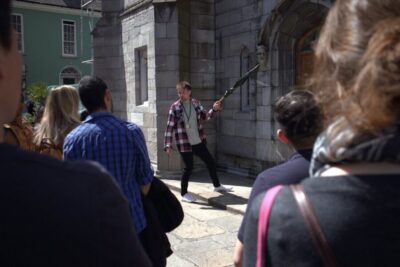 ★ 4.9Highlights and Hidden Gems Walking TourFrom $272,140 reviews
 ★ 5.01916 Rebellion Walking TourFrom $271,605 reviews
 ★ 5.090 Minute Dublin Walking tour and Sightseeing tipsFrom $21916 reviews
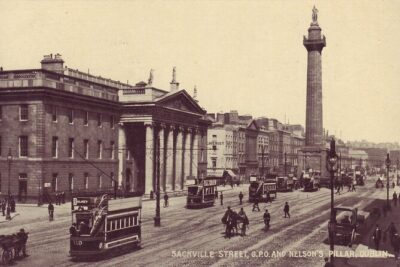 ★ 5.02-Hour Historical Walking Tour from DublinFrom $22875 reviews
 ★ 5.0Dublin Traditional Irish 3 Course Meal Walking Tour with LocalFrom $107755 reviews
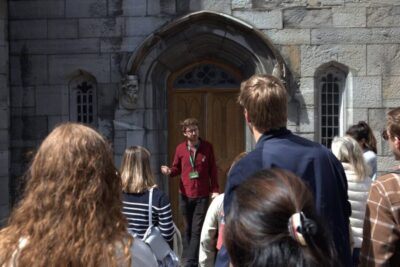 ★ 4.9Mythology, Folklore and Legends Walking TourFrom $27703 reviews
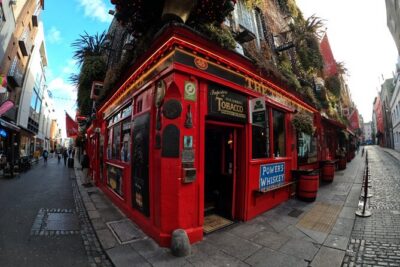 ★ 5.0The Dublin Private Walking TourFrom $163701 reviews
Browse the lists this tour appears in