
Reviewed · DUBLIN HISTORY & LITERARY TOURS
Women Of Ireland: Trailblazers & Pioneers
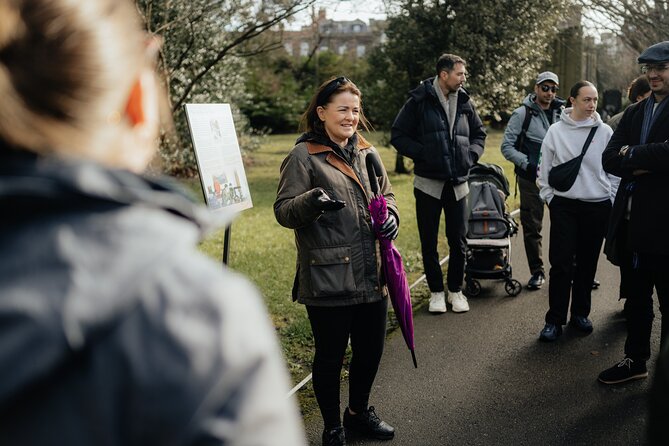
Women changed Ireland, and Dublin remembers them. This small-group walk with Unearthed Tours turns famous names like Oscar Wilde, James Joyce, and W.B. Yeats upside down, focusing on the women you might not hear about as often. I love the small-group feel and the way the guide’s storytelling keeps the route lively instead of turning it into a facts-only lecture.
What I like most is how the pacing works, with short stops that still cover real people and real causes. One thing to consider: this tour is mostly an exterior and street-side experience, since it does not enter the Royal College of Surgeons or Dublin Castle, so you are not getting museum-style access at every stop.
Key Highlights You Should Know
- A women-first Dublin route that keeps the focus on independence, activism, and everyday courage.
- Short, well-paced stops (about 15 minutes each) that are easy to follow without rushing.
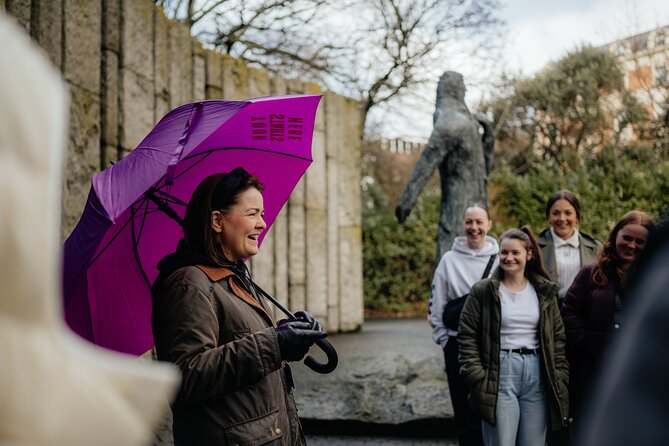
- Guides who tailor the tour to the group, including guides named Tara and Ciarán from past runs.
- Dubh Linn Gardens entry for a change of setting when the tour covers Veronica Guerin.
- Limited to 14 travelers, which makes it feel more personal than big-group sightseeing.
- Central meeting and ending points, with an easy start at St Stephen’s Green and a finish by Dublin Castle’s gardens.
How This 90-Minute Women-Of-Ireland Walk Fits Your Day
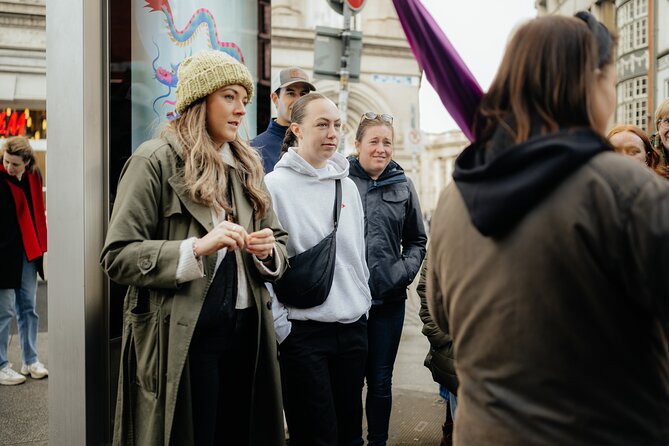
This is a 1 hour 30 minutes guided walk built around a simple idea: you get an organized route across central Dublin, but you are not stuck in one place for a long time. It starts at 11:00 am in St Stephen’s Green at the Wolfe Tone Sculpture, and it ends in the gardens area near Dublin Castle, specifically by Dame Street.
Because each stop is about 15 minutes, you will feel the day stay moving. That matters if you are also juggling jet lag, a tight sightseeing schedule, or you just do not want to commit to a half-day tour. The plan also keeps things flexible, since you can treat it like your Dublin orientation, then continue on at your own pace afterward.
The tour uses a mobile ticket, and it is described as eco-friendly with a small group size capped at 14. That combo tends to mean less waiting around and more time spent actually hearing the stories.
Practical note: since the tour does not enter every site, you should still expect a fair amount of walking between points around Dublin. Comfortable shoes will do you a favor.
You can also read our reviews of more tours and experiences in Dublin.



St Stephen’s Green and the Bust of Countess Markievicz
You kick off at St Stephen’s Green, with the guide introducing the bust of Countess Markievicz and her role in the fight for independence. Starting here is smart because it sets the theme early: this is not about celebrity name-dropping, it is about political courage and the kind of involvement that changes a country.
This first stop also gives you a quick mental map for the rest of the route. Once you understand the independence thread in the opening, the later stops about uprisings, suffrage, and rebellion make more sense as connected stories rather than separate trivia.
The timing is also friendly. You are there for about 15 minutes, long enough to understand the big idea, short enough that you are not stuck out in the cold too long.
Royal College of Surgeons: Women Tied to the 1016 Rising (No Building Visit)
Next up is the Royal College of Surgeons. The guide talks about the women who held RCSI during the 1016 rising, including Margaret Skinneder. Important detail: the tour does not enter RCSI, and admission is not included.
This kind of stop can sound less exciting if you are the type who wants inside access. Still, it works because the guide is bringing you to the doorstep of a place and tying it to the people connected to it. If you like story-based sightseeing, you often get more value from a route that keeps moving and uses street-side context than from a long indoor session.
If you do want to see RCSI up close, consider pairing this tour with separate time for the sites that matter most to you. This tour is designed to give you the women-first storyline across multiple locations, not to replace every museum visit.
Mercer Street Upper and Margaret Anne Cusack, The Nun of Kenmare
At Mercer Street Upper, the guide explores the story of Margaret Anne Cusack, nicknamed The Nun of Kenmare. This stop is about 15 minutes and described as free to attend, since admission is free for this part.
I like this stop because it adds a different kind of Irish rebellion and reinvention. Not every important woman story is only about public marches or political speeches. When the tour brings in Cusack, it broadens what you think the role of a powerful woman can be.
Also, Mercer Street Upper tends to be a strong choice for a walking tour because you can sense you are in the middle of Dublin life rather than stepping into a staged museum environment. The tour keeps it human scale, and that makes the stories easier to hold onto as you move to the next stop.
Ship Street Great and Hannah Sheehy-Skeffington, Suffragette Activism
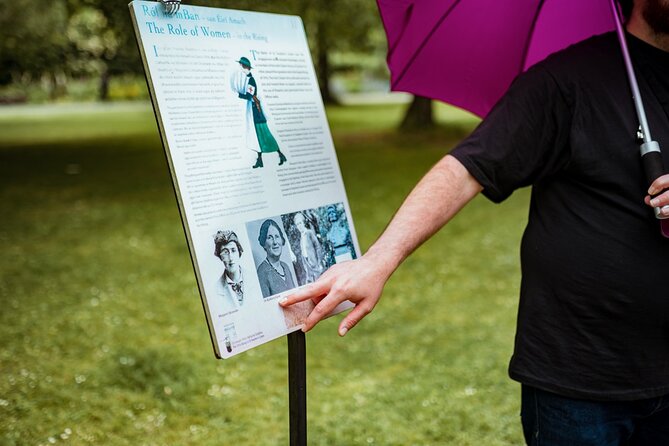
Ship Street Great is where the tour turns toward the suffragette movement and Hannah Sheehy-Skeffington. Like the earlier street stops, it runs for about 15 minutes and admission is free.
This is a good pivot point. After you have heard about independence and rising-related roles, suffrage activism helps you see a longer arc of women pushing for change. You start to notice how the tour frames these women not as side notes, but as drivers of major shifts.
If you prefer your history with a clear through-line, this is where you can feel it. The tour keeps linking themes across different locations, and by now you have enough context to follow the bigger pattern.



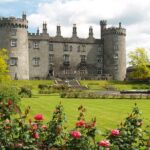


Dubh Linn Gardens: Veronica Guerin and a Change of Pace
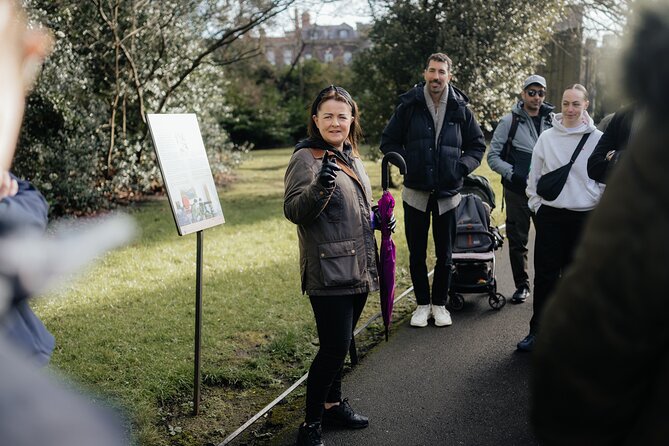
Dubh Linn Gardens is one of the standout moments because the tour enters the gardens. The guide explores the life of Veronica Guerin here, and admission is listed as free for this stop.
Even if you are not a gardens person, this stop is valuable because it breaks the rhythm of streets and sidewalks. A garden entry can feel like a reset button in a walking tour, giving your brain a quieter place to absorb the story. It also helps the tour avoid turning into nonstop narration, which is often where sightseeing fatigue sets in.
Practical tip: treat this like your chance to slow down. You will probably remember more if you take a breath, look around, and actually listen instead of staying half in step-thinking mode. This is the kind of stop where a small pause pays off.
Dublin Castle Finale: Anne Devlin and Modern Ireland
The tour ends at Dublin Castle, but you do not enter the building. The guide finishes with the history of Anne Devlin and talks about modern Ireland. Admission is not included for this part, and the tour does not enter Dublin Castle, even though it finishes nearby in the gardens area.
I like a finale like this because it helps you connect past and present. Even when you only have 15 minutes, you get a sense of how Ireland’s struggles and women’s roles do not stay locked in the past. The tour uses the last stop to point you forward, so you can leave with questions instead of just a pile of names.
Also, finishing near Dublin Castle gardens is handy. Once you are done, you can continue your own exploring around the area without needing to add extra transportation.
The Guide Makes the Difference, Tara and Ciarán’s Storytelling Style
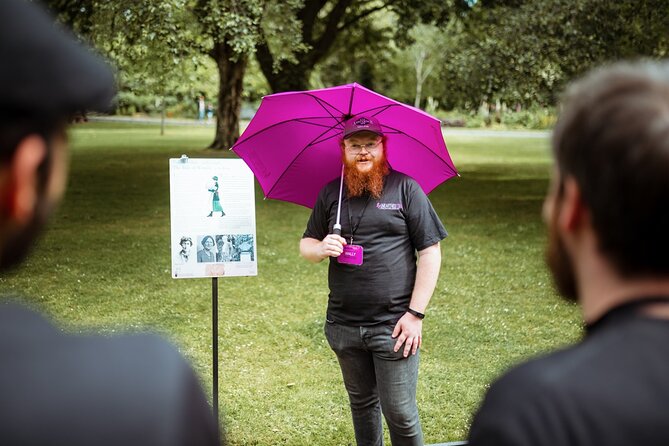
The biggest praise from past experiences is about the guide, and that is exactly what you want from a story-based city walk. Guides named Tara and Ciarán show up in feedback, and both are described as handling different levels of background knowledge while keeping the tour enjoyable and easy to follow.
I especially like the idea that the guide can adjust. In real life, groups vary. Some people come in knowing Irish history basics, others are starting fresh. When the guide can flex, you get a tour that stays engaging for everyone instead of turning into a one-speed lecture.
The pacing also matters. Multiple experiences call out that the tour is well paced and the information feels like it lands at the right moment. That is not a small thing in a walking tour. If the stops drag, the route loses its charm fast. Here, the structure of short segments helps keep energy up.
And there is a consistent theme of enthusiasm. One description even frames the experience as so story-driven it feels like you are being pulled along by the narrative. You do not need every stop to be funny or dramatic, but you do want a guide who can make the material feel alive, and that is clearly the goal.
Price and Value: What $17.35 Covers in Real Terms
At $17.35 per person, this is priced like an accessible activity rather than a premium ticketed attraction. For that cost, you get a guided route, a group size capped at 14, and a tour that covers multiple Dublin stops tied to women across different themes.
The itinerary includes admission-free stops throughout, and it also includes entry to Dubh Linn Gardens. Two stops are marked as not entering major sites, with admission not included at those specific points. Still, the overall structure is built to give you multiple story beats in a compact time window.
What is not included is also clear. You are not getting lunch, and there is no private transportation. If you want a full day out, plan your meal outside the tour and treat it as a focused guided experience that plugs into a larger Dublin plan.
Think of the price as you paying for the guide and the route logic. You are not paying to sit inside a single attraction for hours. You are paying to turn ordinary city streets into a connected women-first storyline.
What the Stops Actually Feel Like as a Visitor
A lot of tours promise a theme, then deliver a list of names. This one is set up to feel more like a guided walk through causes and choices.
You start with independence at St Stephen’s Green, then you move into institutional connections at RCSI without walking into the building. Next, you shift to Margaret Anne Cusack and her The Nun of Kenmare story, and then you jump into suffragette activism with Hannah Sheehy-Skeffington. The route then changes setting for Veronica Guerin in Dubh Linn Gardens, and it ends with Anne Devlin and a modern Ireland framing near Dublin Castle.
That order matters. It keeps you from treating the women as isolated. The tour tries to show that different kinds of courage happen in different places, and that those efforts add up.
The short 15-minute rhythm means you will probably leave with a stronger sense of the theme than you would from a longer tour where each stop becomes too detailed to digest.
Who Should Book This Tour (and Who Might Skip It)
This is a great fit if you want Dublin history that feels human and themed. If you like walking tours that explain why certain people mattered, you will likely appreciate the way the guide connects each stop to a specific woman and a specific topic.
It is also a good option if you have limited time. With a 1 hour 30 minutes duration and a start at 11:00 am, you can still build the rest of your day around it. You can do this as your first guided stop, then branch out on your own afterward.
Skip it if you are mainly chasing inside-access sightseeing. Since the tour does not enter RCSI or Dublin Castle, you will not get that full building experience here. Also, if you want very deep, specialized details about one topic, this format is geared more toward a broad, story-led overview.
Should You Book Women Of Ireland: Trailblazers & Pioneers?
If you want a smart, compact way to learn about women in Ireland without the generic checklist approach, this tour is an easy yes. The small group size, the strong guide-driven storytelling (with examples like Tara and Ciarán), and the way the route moves from independence to suffrage to Veronica Guerin make it feel well built.
The main reason to pause is the limited inside access. Two of the biggest Dublin anchors are discussed from the outside, and admission is not included for those parts. If you are the type who needs every stop to be a ticketed site, you might feel you are missing something.
For most people, though, this is a solid value: $17.35 buys you a structured route through central Dublin, a real guide, and multiple women-first story stops in just 90 minutes.
FAQ
FAQ
How long is the Women Of Ireland tour?
It runs for about 1 hour 30 minutes.
What time does the tour start, and where does it meet?
It starts at 11:00 am at St Stephen’s Green, at the Wolfe Tone Sculpture.
Where does the tour end?
It finishes in the gardens area of Dublin Castle, near Dame Street.
How many people are in the group?
The tour is limited to a maximum of 14 travelers.
Is transportation included?
Private transportation is not included.
What’s included in the ticket price?
You get a tour guide, an eco-friendly format, and a small-group experience.
Are tickets or admissions included for all stops?
Admission is free for some stops, but for the Royal College of Surgeons and Dublin Castle parts, admission is listed as not included.
Does the tour enter Royal College of Surgeons or Dublin Castle?
No. The tour does not enter the Royal College of Surgeons or Dublin Castle.
Is lunch included?
No, lunch is not included.
Can I get a refund if plans change?
Yes, you can cancel for a full refund up to 24 hours before the experience starts.
More Tour Reviews in Dublin
Not for you? Here's more nearby things to do in Dublin we have reviewed


Dublin History & Literary Tours, compared.
 ★ 5.0Dublin Historical Centre Food Tour with 8 Food Tastings & DrinksFrom $1251,718 reviews
 ★ 4.5Dublin Literary Pub CrawlFrom $271,607 reviews
 ★ 5.01916 Rebellion Walking TourFrom $271,605 reviews
 ★ 5.0Dublin Mythology and Folklore Tour with Irish Stories and LegendsFrom $291,003 reviews
 ★ 5.02-Hour Historical Walking Tour from DublinFrom $22875 reviews
 ★ 4.7Historical 2-Hour Guided Walking Tour of DublinFrom $22865 reviews
 ★ 4.9Mythology, Folklore and Legends Walking TourFrom $27703 reviews
 ★ 4.8Jeanie Johnston Tall Ship Irish Famine History TourFrom $16431 reviews
Browse the lists this tour appears in