

Reviewed · DUBLIN WALKING TOURS
Dublin: Medieval History Walking Tour
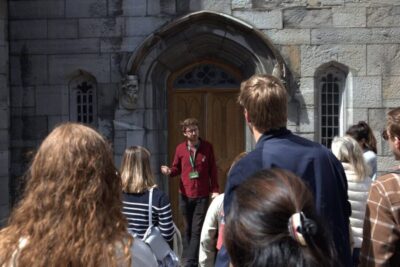
Medieval Dublin feels real when someone points out what you’re looking at. This 3 hour guided walk ties together Dublin Castle and St Patrick’s Cathedral with a simple storyline about Viking-era origins and medieval growth, so your photos make sense. The trade-off is that it is still a walking tour, so it is not the choice if you want lots of sitting down.
I also like the human side of this tour. Guides such as Paula come prepared to adapt, and the walk can be adjusted for families, including time planning around a stroller and a very young child.
Key highlights at a glance
- Dubh Linn Gardens behind Dublin Castle, with stories of early origins and a 13th-century fortress tower
- Chester Beatty Library, plus an introduction to Alfred Chester Beatty’s collection (often described as among Europe’s finest)
- St Patrick’s Cathedral and Christ Church Cathedral, two major stops that frame Dublin’s medieval religious life
- St Audoen’s Church, known for Ireland’s oldest bells and a history that crosses Catholic and Protestant lines
- Cook Street fortification remnants and Viking influence, with visible traces you can actually spot
- Isolde’s Tower, a strong, memorable closer to the medieval thread
Why this Dublin medieval walk is the smart way to start
Dublin’s city center can feel like a pile of great buildings that all blur together unless you get the timeline straight. This tour gives you that timeline, walking you from one landmark to the next while your guide connects the dots between medieval power, early conquests, and changing faith in the city.
At $62 for about 3 hours, you are paying mostly for a live guide and the concentration of key sites in one route. Entry fees are not included, so you are not buying “must-see tickets” in the price. Instead, you get the best use of your time, especially if you only have part of a day in Dublin.
You can also read our reviews of more historical tours in Dublin



Finding your group: start at 5 Crampton Quay near Forbidden Planet
You meet at 5 Crampton Quay, right outside the Forbidden Planet comic book store. That location is handy because it is central and easy to spot, and you can do a quick coffee or snack run before you start.
This matters more than it sounds. On a tight 3 hour walk, being late is painful. With a clear meeting point, you can show up, relax, and let the guide lead the tempo from minute one.
Dubh Linn Gardens and Dublin Castle’s 13th-century core
The tour begins by heading to Dubh Linn Gardens, set behind Dublin Castle. This is the kind of start that helps your brain snap into place, because you are seeing the castle area while the story explains how the city’s power worked.
You also get a specific medieval anchor: the fortress dates back to the 13th century, and the medieval tower gives you a real sense of how long the built environment has been shaping Dublin. If you have ever looked at castles and thought, okay, pretty walls, this stop usually changes that. You learn how the castle related to the city as it grew, and why Viking-era origins matter to what Dublin became.
One practical note: the castle garden area is outdoor-heavy, so wear shoes that handle city pavement. The walk stays city-paced, not countryside slow.
Chester Beatty Library: history you can walk through
Next comes the Chester Beatty Library, where you can see Alfred Chester Beatty’s famous collection. Even if you are not a museum person, I like this stop because it breaks up the cathedral-and-castle rhythm and gives you something focused, personal, and human.
The description highlights the collection as one of Europe’s finest, and that reputation matters. It signals that you are not just passing by a building. You are getting context for why this site holds attention, which is great if your goal is understanding Dublin instead of only checking boxes.
There is also a nice pacing effect here. After a heavy landmark like Dublin Castle, this feels like a palate cleanser. You get a change of mood, and the guide can shift from political history to cultural depth.
St Patrick’s Cathedral: the medieval landmark you cannot ignore
Then the walk moves to St Patrick’s Cathedral. It is described as a major tribute to Ireland’s patron saint, and your guide’s job is to explain why the cathedral matters in Dublin’s medieval story.
I like this stop because it is big on visual impact. Even if you are not into architecture jargon, you can read the mood of the place: solemn, central, and built to last. Your guide also connects it to the surrounding gardens and the cathedral facade, so you are not just staring at one angle.
A drawback to consider: cathedral areas can be busy, and you may spend a little time waiting for a clear path to see and listen. If you prefer quiet sightseeing, I would plan your mindset for occasional crowds rather than expecting an empty room.






Christ Church Cathedral: continuing the story in the next breath
After St Patrick’s Cathedral, you head to Christ Church Cathedral nearby. This stop matters because it keeps the medieval theme moving without starting over. You are still in the core where Dublin’s religious and political influences met.
The tour framing makes Christ Church feel like a continuation, not a second separate attraction. You learn how the city’s medieval life shaped what these institutions became, and you can compare the vibe of both cathedrals with fresh perspective.
St Audoen’s Church and the bells that carry both sides
Next is St Audoen’s Church, described as a place with both Catholic and Protestant heritage. The highlight here is the mention that Ireland’s oldest bells toll in this church.
That detail is the kind of thing you remember later. A bell is not just a sound cue, it is a symbol of continuity in a city that has changed rulers, faiths, and borders. When your guide points this out, the place feels less like a background stop and more like a living hinge between eras.
It is also a meaningful contrast with the cathedral stops. Cathedrals tend to dominate the skyline, while St Audoen’s can feel more grounded in daily religious history. If you like stories that are less “royal” and more “people lived here,” this is a strong moment.
Cook Street fortifications: spotting Viking influence in everyday streets
From there, the walk traces remnants of medieval fortifications along Cook Street, with a connection to Viking influence. This is where the tour becomes especially rewarding if you enjoy noticing details you would miss alone.
Stones and street lines can look random until a guide tells you what to look for. Here, the guide uses the city layout to make the medieval defenses legible, and that turns the streets into a readable document rather than a backdrop for photos.
If your feet get tired, this is still a good section because the guide’s explanations help you slow down mentally even if you are moving physically.
Isolde’s Tower: a strong medieval ending you can picture
To close, you reach Isolde’s Tower, described as an iconic medieval building steeped in Dublin lore. This final stop is designed to land the narrative you have been walking through.
I like end-points like this because they give your brain a visual summary. After cathedrals, libraries, and churches, Isolde’s Tower offers a more storybook medieval feel, so the whole tour sticks together.
Price and value: what $62 buys for 3 hours
At $62 per person for a 3 hour guided walk, the value is mainly in three areas.
First, you are getting concentration. Instead of jumping between far-flung attractions, you are moving through the medieval core with a guide who knows how to link stops.
Second, you are buying explanation. You are not paying for entry fees, but you are paying for a guide who can turn “I saw a building” into “I understand why it mattered.”
Third, you have flexibility built into the experience. You can choose a shared group or a private walking tour, and there is private group availability if you want a quieter pace or more personalized Q and A.
If you are trying to keep costs tight, this is a good option because you can treat entry fees at each site as optional depending on your interests and what is required on the day.
Guide quality: the difference between facts and a real story
The supplied guide reviews consistently point to something I care about: the guide’s ability to mix facts with storytelling and to stay friendly while doing it.
Paula and Catherine are specifically mentioned as pleasant, knowledgeable, and full of historical facts and tales. One standout theme is flexibility, including the way a guide can help a group plan their time and adjust for a stroller and a very young child. That kind of adaptability makes the tour feel less like a rigid checklist.
It also helps that the guides are doing live, real-time interpretation rather than reading off a script. You end up with time to ask questions, and the conversation can turn the walk into something you remember, not just something you complete.
How the route works for different kinds of visitors
This tour is a great match if:
- You like medieval history but do not want to spend your day researching timelines
- You enjoy seeing major landmarks with context, not just sightseeing snapshots
- You want a guided structure for a limited time in Dublin
It may be less ideal if:
- You want a fully indoor, low-walking experience
- You need a completely slow pace with frequent long breaks, since the format is still a walk through city sites
The good news is that private group options can help if you want a tighter match to your comfort level, and the tour notes it is wheelchair accessible.
Should you book this Dublin medieval history tour?
If you are spending limited time in Dublin and you want your medieval sightseeing to make sense, I would book this. The stops cover the essentials, from Dublin Castle area history to cathedrals, then into the more lived-in medieval layers of St Audoen’s and the street traces on Cook Street.
I would skip it only if you already know the medieval timeline well and you prefer self-guided browsing with no guide shaping the order. Otherwise, paying for a good guide for a focused 3 hour route is a smart way to get more out of Dublin than wandering alone.
FAQ
How long is the Dublin Medieval History Walking Tour?
It lasts about 3 hours.
How much does it cost?
The price is listed as $62 per person.
Where do I meet the guide?
You meet outside the Forbidden Planet comic book store at 5 Crampton Quay.
What is included in the price?
You get a private or shared group walking tour with a live guide. Entry fees and food or drinks are not included.
What languages are available?
The live guide is available in English, French, Spanish, and Italian.
Can I cancel and get a refund?
Yes. Free cancellation is available up to 24 hours in advance for a full refund.
More Historical Tours in Dublin



More Tours in Dublin


More Tour Reviews in Dublin


Not for you? Here's more nearby things to do in Dublin we have reviewed


Dublin Walking Tours, compared.
 ★ 5.0Dublin Highlights and Hidden Gems Guided Walking TourFrom $296,020 reviews
 ★ 4.9Highlights and Hidden Gems Walking TourFrom $272,140 reviews
 ★ 5.01916 Rebellion Walking TourFrom $271,605 reviews
 ★ 5.090 Minute Dublin Walking tour and Sightseeing tipsFrom $21916 reviews
 ★ 5.02-Hour Historical Walking Tour from DublinFrom $22875 reviews
 ★ 4.7Historical 2-Hour Guided Walking Tour of DublinFrom $22865 reviews
 ★ 5.0Dublin Traditional Irish 3 Course Meal Walking Tour with LocalFrom $107755 reviews
 ★ 4.9Mythology, Folklore and Legends Walking TourFrom $27703 reviews
Browse the lists this tour appears in