
Reviewed · DUBLIN WALKING TOURS
Dublin: Macabre History Walking Tour
Dublin gets dark on this city walk. You start by the Spire on O’Connell Street, grab a guide holding a yellow umbrella, and move through back streets on both sides of the river for stories of Cuchulainn and Dublin’s grim 19th-century corpse trade. It is part history, part dark theatre, and it sticks because you see sights you would never notice on your own.
I love how the guide turns each stop into a clear scene, with humour and quick answers, whether your guide is Peter or Rob. I also love that the walk is active, about two hours, and includes the big set pieces like the statue of Cuchulainn’s death, grave robbing stories by the mortuary, and a finale near the cathedral. One thing to consider: if you want nonstop gore, the tour can feel more story and atmosphere than outright blood and guts.
Key highlights worth showing up for
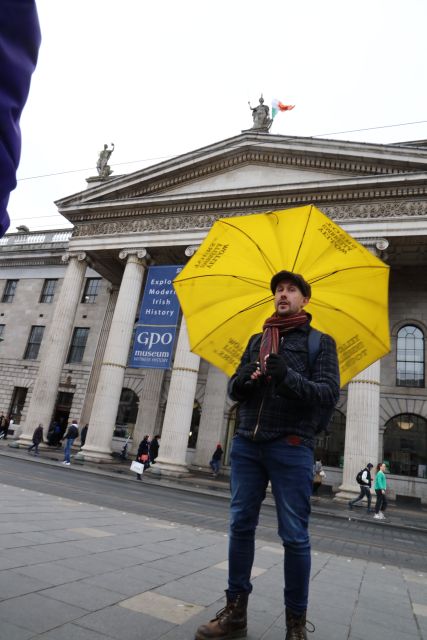
- Meet by the Spire on O’Connell Street with a yellow umbrella (and yes, you might spot more than one)
- Cuchulainn’s death legend, including the raven story tied to the statue
- 19th-century grave robbing, set beside the city mortuary and told as a gritty business
- Plague-era medieval quarantines and public executions, plus darker criminal tales like the legless serial killer
- Close to the old city walls, with stories that include mummified corpses and man-eating rats
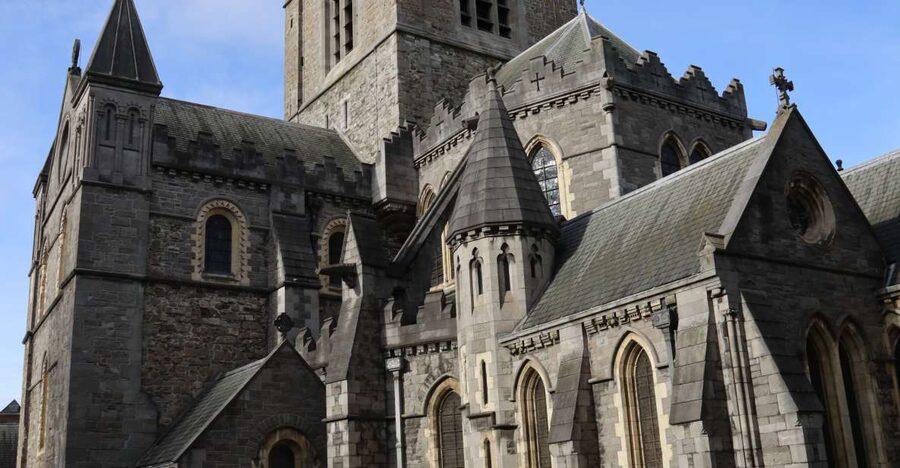
- A dramatic wrap-up near the cathedral, with Dublin’s famous brothel keeper and a death by fire at the stake
First stop: finding the Spire and that yellow umbrella
This tour is simple to join, and it starts right in the middle of the action. You meet beside the Spire on O’Connell Street, and the easiest trick is to look for the guide’s yellow umbrella. It is a very clear meeting point, but a small practical note: you might see more than one yellow umbrella, so give yourself an extra minute to confirm you have the right group before you start walking.
No hotel pickup or drop-off is included, so you’ll want to plan to arrive on foot or by public transport. The payoff is that you jump straight into the older streets quickly, rather than spending time waiting for a bus or van. From the first minute, the guide sets the tone, and you can tell this is built for people who enjoy real local storytelling, not a lecture.
Because it ends back at the meeting area, you do not have to worry about getting stranded across town when the two hours are up. You finish where you started, with enough energy left to keep exploring Dublin’s pubs and shops on your own terms.
You can also read our reviews of more historical tours in Dublin


Two hours of macabre, paced for real walking
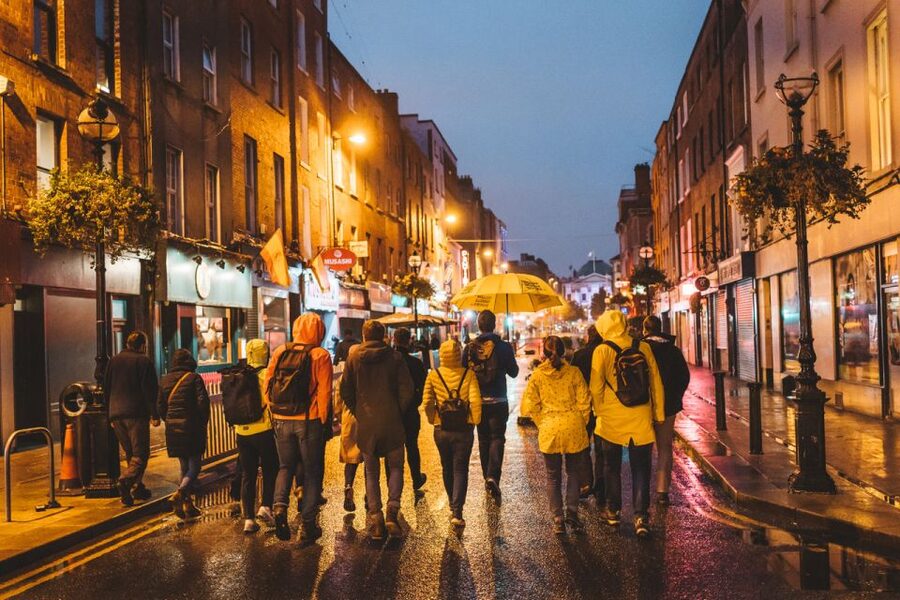
The format is a guided walk through Dublin’s old city center. You will cross and re-cross the river area, so you get that sense of moving between neighborhoods and eras, not just looping around the same couple blocks. Expect a steady walking pace, with stops where the guide can talk, point, and bring the story to life.
Two hours sounds short until you realize how much ground you cover on foot in a busy city. It is long enough to hit several time periods, from older legends to more recent grim events, but short enough that you can still do other things the same day. If you are pairing this with a pub night or another walking route, it fits neatly as a before-dinner activity.
One more practical detail matters: this is not aimed at families. It is not suitable for children under 18, and the content leans into murder, punishment, and gruesome folklore. If you like your history dark but still entertaining, you are exactly the target audience.
Cuchulainn’s death: the statue moment you’ll remember
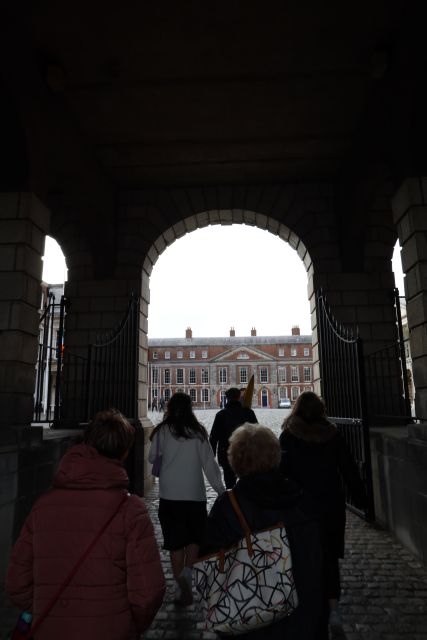
One of the tour’s signature anchors is the statue tied to Cuchulainn’s death. The story version you hear here is vivid: a mighty warrior whose eyes are pecked out by the raven sitting on his shoulder. Even if you have never met Irish myth before, this is easy to follow because the guide connects the legend to where you are standing.
This stop works because it is not just about the myth as text. You look at a real object in a real streetscape, and you hear why that story stuck around. It makes myth feel local, not like something sealed inside a book.
It also sets expectations for the whole walk. The tour’s macabre style is not random shock value. The guide uses big, recognizable story beats like this one, then slides into the less famous corners of Dublin’s past: what people feared, what they punished, and what they talked about in the dark.
If you are the kind of person who likes to see how a city’s public art connects to older narratives, you’ll love this portion.
Grave robbing beside the mortuary: history with a grim business model
Another major thread is the 19th-century story of grave robbing, specifically described as a thriving trade beside the city mortuary. The angle here is important. Instead of treating it like a one-off horror tale, the guide frames it like an economy, with people benefiting from stolen bodies and desperate circumstances.
You will hear about the darker end of what it meant to handle death in a busy city, and how that shaped what ordinary people did and believed. The tour does not linger in gore for its own sake. It focuses on the social reality, the timing, and the way institutions and underworld activity could overlap.
This is also where the walk gets extra street-level. You are near old features and structures tied to the way Dublin handled bodies and burial at different times. That makes the stories feel grounded, even when the subject matter is grim.
If you want a tour that gives you more than spooky sound effects, this stop is a big reason why. You come away understanding how macabre stories grow out of very real systems.
Close to the old city walls: mummified corpses and rat-driven dread
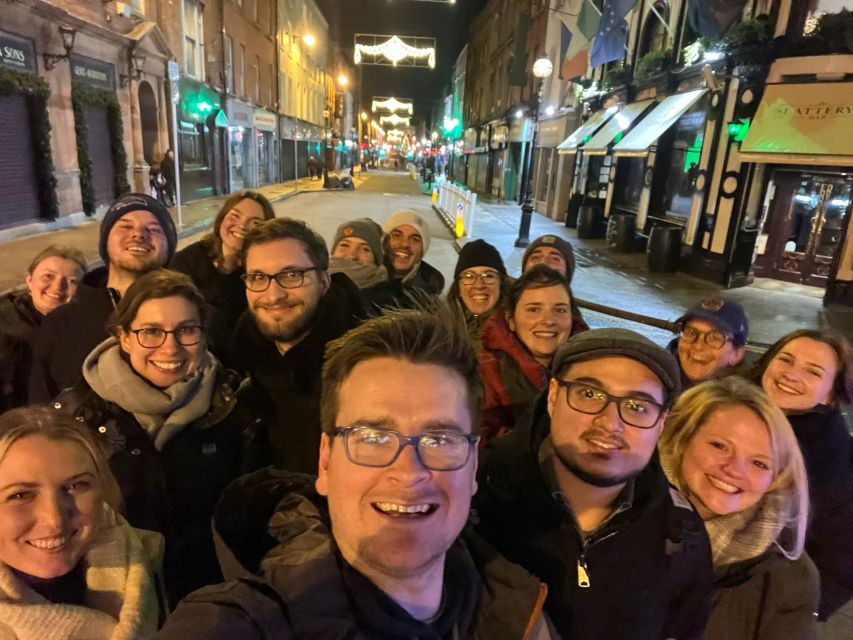
As you head toward areas near the old city walls, the tour turns up the folklore and the uneasy imagery. You hear about mummified corpses and the kind of local fear that survives long after the original events. The guide ties these stories to places where people would have noticed odd smells, strange rumors, and unusual sights.
Then comes one of the highlights people tend to remember: man-eating rats. It sounds like a legend you might expect in a cartoon, but in this walk it becomes part of a bigger picture about urban life, disease fears, and the way cities explain problems when science is not the only answer.
This is where having a strong guide really matters. The best moments are the ones where the guide makes the story feel like a conversation you are having on the sidewalk, not a script read from memory. The guides you might meet, like Peter and Rob, are praised for delivering stories with humour and drama while keeping them clear.
If you are worried the tour will be too scary, you might be surprised by how often it becomes entertaining. It is macabre, yes, but it is also smart storytelling.






Quarantines, executions, and the legless serial killer twist
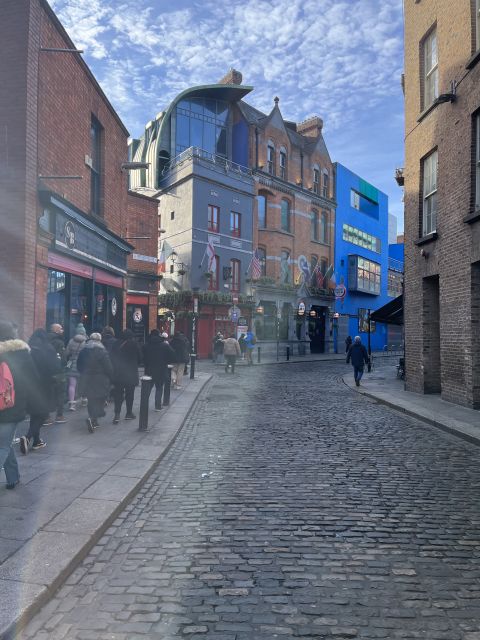
Not every stop is about old legend. You also get darker episodes from the city’s more documented past, including medieval quarantines and public executions. Hearing these topics while walking through central Dublin makes them feel less like distant cruelty and more like something that shaped daily life.
Quarantines, in particular, help you understand what cities did when illness and fear spread faster than people could handle. The guide connects the idea of separation and control to the lived reality of crowded streets and outbreaks. You do not just hear that quarantines existed. You hear what they meant for ordinary movements, rumours, and stigma.
Public executions add a different angle. You feel how spectacle worked in a city, how punishment sent messages, and how crowds turned grim events into public lessons. It is not comfortable, but it is memorable history.
Then the tour brings in a criminal tale: the legless serial killer. This part plays like a mystery, with the guide using pace and emphasis so the story lands without getting confusing. Even if some parts are more legend-shaped than courtroom-shaped, the guide makes it coherent and explainable where possible, so you are not lost.
Walking both sides of the river: why the route matters
A key detail is that the tour takes you around the old city center on both sides of the river. That routing choice is not random. It helps you understand Dublin as a city of movement, where different sides of the water could feel different, trade different goods, and host different kinds of events.
You are also more likely to spot clues as you walk. Streets, narrow lanes, and building edges help you picture how people moved in earlier centuries. When the guide describes quarantines, executions, or the city’s death-related industries, the setting actually supports the story.
This is one reason the tour can feel more vivid than a bus ride. On foot, you see scale and tight turns. You also notice the spaces where crowds might have gathered. Even if you are not a “dark history” person, that physical context is worth it.
And because the walk is designed as a loop back toward where you started, you get the satisfaction of finishing with your bearings. You do not just take in stories and disappear, you keep your day coherent.
The finale near the cathedral: fire at the stake and a brothel keeper’s end
The ending portion comes with one of the tour’s most dramatic characters. Near the cathedral, you hear about Dublin’s most famous brothel keeper and her untimely demise by fire at the stake. This is the kind of story that gives the whole walk its edge, because it blends reputation, power, and the city’s harsh punishments.
It also shifts the mood from purely grim and procedural to more character-driven. You start to see how people became legends, how businesses survived, and how the consequences could turn brutal quickly. The guide keeps the focus on story clarity, so even the heavy material feels like you understand the arc.
Once you hit that finale, the route brings you back to the meeting point on O’Connell Street. That matters. You do not end somewhere far away where your only option is to scramble for a taxi. You step back into the city center with a mind full of details and a map in your head.
If you’re planning dinner or a show after, you will like having the walk finish where everything is easy.
Price and value: why $19 makes sense for this format
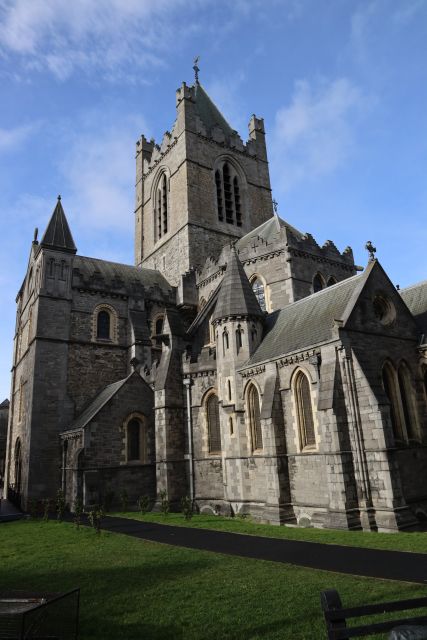
At about $19 per person, this tour is priced like a good add-on, not a big splurge. Two hours is a sweet spot, and it is a walking format, so you are paying for time with a guide and story stops rather than for transport or tickets.
The bigger value is the kind of content you get. This is not the standard “big sights and vague background.” You get specific macabre threads, including Cuchulainn’s death, grave robbing beside the mortuary, quarantines, public executions, and the man-eating rats legend. That mix feels niche, and niche tours are often priced higher because they are not built for everyone.
Also, the guide attention seems strong. Many participants report small-group vibes, including cases with just a few people, which is where a $19 tour can feel more personal than it should. If you like asking questions and getting direct answers, you are more likely to get that here than on larger group walks.
Is it perfect value for horror buffs? If you want only blood and shock, you might feel it leans a bit more toward theatrical storytelling than extreme gore. But if you want dark stories that connect to real streets and real eras, $19 feels fair.
Who should book, and who should skip
This tour is a great fit if you enjoy history with attitude. You like stories that are specific, slightly unsettling, and clearly tied to places you can actually stand in. If you also enjoy good storytelling, you’ll appreciate the way guides like Peter and Rob are praised for humour, clarity, and keeping things moving.
You might want to skip it if you need kid-friendly content. It is not suitable for children under 18, and it includes executions and murder themes. You should also consider skipping if you want the experience to be strictly factual and totally untangled from legend. Some parts lean into lore and dark folklore, and that is part of the charm.
If you are on a first Dublin visit, this also works well. It adds a different lens to the city beyond museums and traditional landmarks. And it gives you street-level context you can carry into your next walks.
Should you book the Dublin macabre history walking tour?
I think you should book if you want a 2-hour guided walk that mixes Irish legend, dark city life, and punishment-era history in a way you can visualize on foot. With a meeting point at the O’Connell Street Spire and an ending back near where you started, it is easy to plug into a travel day.
If your idea of a macabre tour means nonstop gore, set expectations a notch lower. The strength here is storytelling and atmosphere, not shock for shock’s sake. For most adults who like dark tales and strong guides, it is a smart, affordable way to see Dublin with fresh eyes.
FAQ
Where is the meeting point?
You meet beside the Spire in the middle of O’Connell Street. Look for the guide holding a yellow umbrella.
How long is the tour?
The tour duration is 2 hours. Starting times can vary, so check availability to see what works for your schedule.
How much does it cost?
The price is $19 per person.
Is hotel pickup or drop-off included?
No. Hotel pickup and drop-off are not included.
Is the tour wheelchair accessible?
Yes, the tour is listed as wheelchair accessible.
Is the tour suitable for children?
No. It is not suitable for children under 18 years.
What language is the guide?
The live tour guide speaks English.
Can I pay later and cancel if plans change?
Yes. You can reserve now and pay later, and cancellation is free up to 24 hours in advance for a full refund.
More Historical Tours in Dublin


More Tours in Dublin


More Tour Reviews in Dublin


Not for you? Here's more nearby things to do in Dublin we have reviewed


Dublin Walking Tours, compared.
 ★ 5.0Dublin Highlights and Hidden Gems Guided Walking TourFrom $296,020 reviews
 ★ 4.9Highlights and Hidden Gems Walking TourFrom $272,140 reviews
 ★ 5.01916 Rebellion Walking TourFrom $271,605 reviews
 ★ 5.090 Minute Dublin Walking tour and Sightseeing tipsFrom $21916 reviews
 ★ 5.02-Hour Historical Walking Tour from DublinFrom $22875 reviews
 ★ 4.7Historical 2-Hour Guided Walking Tour of DublinFrom $22865 reviews
 ★ 5.0Dublin Traditional Irish 3 Course Meal Walking Tour with LocalFrom $107755 reviews
 ★ 4.9Mythology, Folklore and Legends Walking TourFrom $27703 reviews
Browse the lists this tour appears in