
Reviewed · DUBLIN WALKING TOURS
Dublin LGBTQ Pride Historical and Cultural Walking Tour
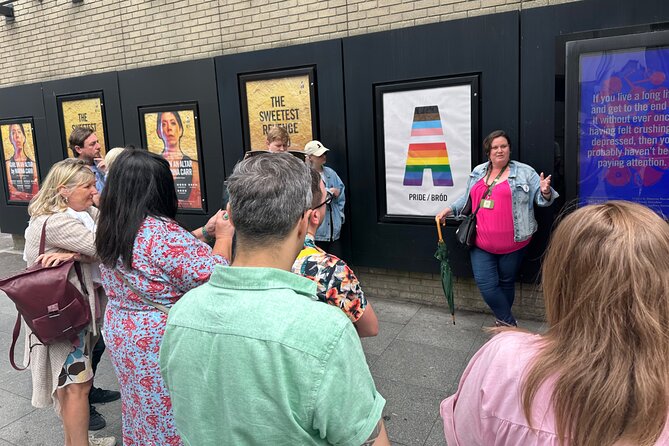
One walk makes Dublin feel personal fast, because it follows queer history through the streets you already recognize. This tour pairs famous sights like Temple Bar and Trinity College Dublin with the people and moments behind them, so you walk away with names, context, and a clearer picture of how Ireland’s LGBTQ+ community grew and fought for rights.
I especially like that it stays city-center and hands you a ready-made route, with stops that mix culture and activism. I also like the guide energy, because people leading this walk are praised for being animated, and for pulling attention to stories that often get missed.
The main thing to consider is simple: it is still a walking tour. You’ll want moderate fitness, and you will be moving through Dublin’s busiest core, so wear shoes you trust.
Key takeaways before you go
- Temple Bar to Dublin Castle: you cover major landmarks plus queer-specific locations in one 2-hour loop
- Free stops are common: many locations are listed with free entry for the tour time, with Trinity College admission not included
- Culture meets activism: the Abbey Theatre and Liberty Hall stops connect art, public life, and rights movements
- You’ll notice the details: the route includes Meeting House Square by Sean Harrington Architects and the Anna Livia waterway moment
- A guide who tells the whole story: expect stories that include both community wins and the hard parts
- Capped group size: the tour limits the headcount to a maximum of 100 for a more conversational pace
Why This Queer Walking Tour Makes Dublin Feel Real
Dublin is made for walking tours. The twist here is that you are not just sightsee and move on. You’re learning how queer life took shape in specific places, across institutions, and through real public events.
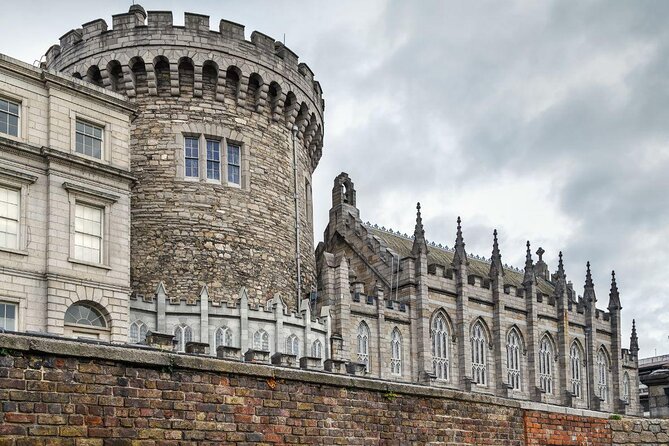
I like that the tour uses well-known stops as memory anchors. Temple Bar and Dublin Castle are easy to find, and that helps the history stick. Then the guide fills the spaces in between with the people and controversies that shaped LGBTQ+ life in Ireland.
This is also the kind of tour that treats history as something you can still see. You’ll look at buildings and think, okay, this is where something happened, or where someone stood up, or where a community carved out space.
You can also read our reviews of more historical tours in Dublin


Price and Time: Is 29.02 Good Value for 2 Hours?
At about $29.02 per person for roughly 2 hours, the pricing feels fair, especially because many stops are set up as free-entry moments during your visit. That means you are paying mainly for the guide and the story thread, not a stack of ticket fees.
Trinity College Dublin is the one notable exception listed with admission not included. So you should plan for that possibility if you want to see everything inside the campus area during the tour time.
Also, this is a walking format with a route through central Dublin. You get variety without needing a taxi hop every few minutes. For most visitors, that alone is part of the value: the tour helps you build an efficient outline of what to do next.
Starting at Temple Bar: Meeting Point and How the Tour Flows
You’ll meet at 3 Crown Alley, Temple Bar (D02 CX67). That’s a smart start, because Temple Bar is already a visual landmark, and it gives you a fun first setting while the guide sets the tone.
The tour then keeps moving through the city, with short stops around 10 minutes each. That shorter format works well when you’re combining history and street-level landmarks, because you’re not stuck listening forever at one spot.
One more practical note: this tour is listed as being near public transportation. So if your day in Dublin changes, you’re not locked into a far-off starting zone.
Temple Bar, the GPO Museum, and a Photo-Friendly Bridge Moment
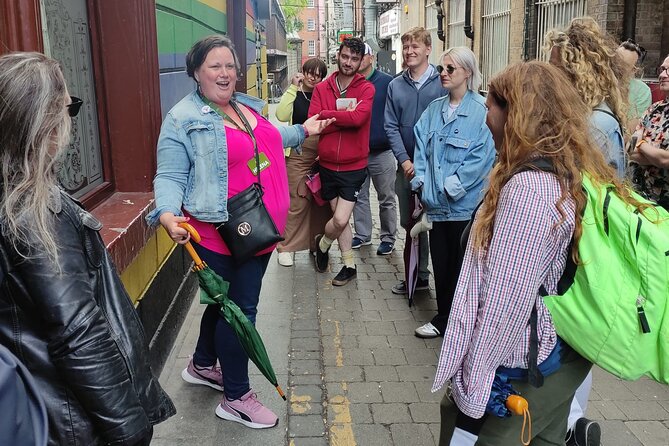
You start in Temple Bar, then head into the history thread. Temple Bar is more than nightlife here. The tour uses it as a gateway, first by pointing out the LGBTQ+ headquarters connection in the Temple Bar area, and then by looping back later to show how the neighborhood changed over time.
Next up is GPO Museum, an iconic building tied to the 1916 Easter Rising. What makes this stop interesting is the way it connects political history with queer figures associated with that same week. You’re not learning queer history in a separate box, you’re seeing how it overlaps with Ireland’s larger turning points.
Between stops, there is also a crossing of Dublin’s most famous, most photographed bridge. It’s a quick photo moment, but it also acts like a transition in the story. You move from one landmark chapter to the next, and your brain has a clear sense of direction.
Abbey Theatre and Liberty Hall: Art Icons and Rights Pressure
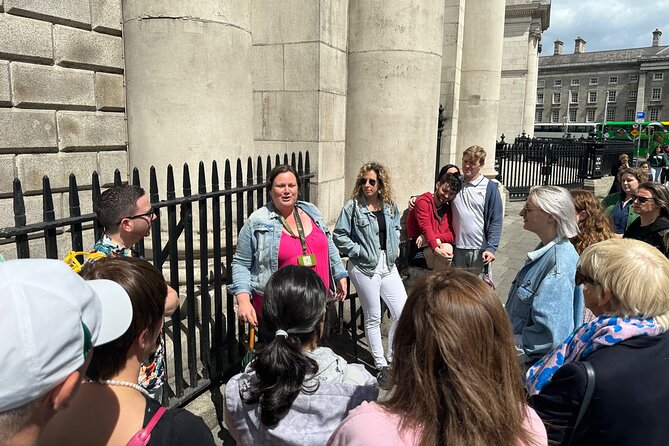
The Abbey Theatre stop is about Ireland’s national stage. Here, the guide brings in LGBTQ+ icons and how theatre and public storytelling shape modern attitudes. Even if you’re not a theatre person, this stop gives you a way to understand why culture matters, because Irish public life has often leaned on art as a driver.
Then you shift to Liberty Hall. This part matters because it tackles a specific history point: the first ever gay pride parade in Ireland. The tone here can be heavy, and that is part of why the tour works. You get the public progress story, but you also hear about the conditions that made those moments difficult and risky.
This stop also includes a focus on a trans activist figure tied to the movement. Even without a long museum stop, you come away with names and themes you can look up later.






Trinity College Dublin and College Green: Famous Arch, Hidden Alumni
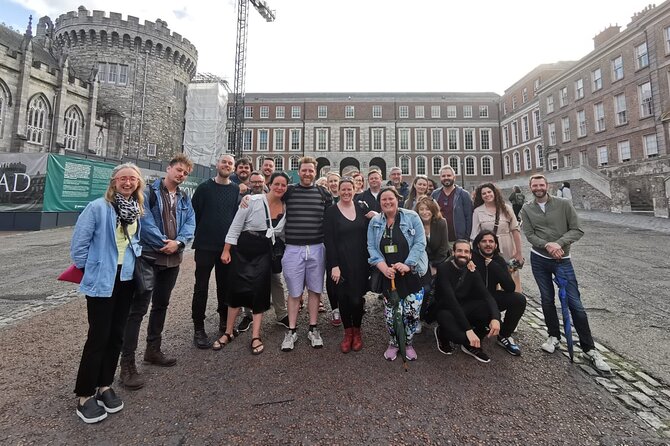
At Trinity College Dublin, you get a different angle on visibility. The tour points you toward famous areas like the old arch and the broader College Green area, then connects that setting to LGBTQI+ alumni.
This is one of those stops that can surprise people. The buildings feel old and formal, and the tour makes the connection between institutions and the individuals who passed through them. It’s a reminder that queer life was not only underground, it also existed alongside mainstream education and elite cultural spaces.
One caution: admission is not included for Trinity College on this tour. So if you want to do more than the tour’s viewpoint and explanations, budget time for additional tickets outside the tour price.
Meeting House Square, Anna Livia, and the 1980s Hope Thread
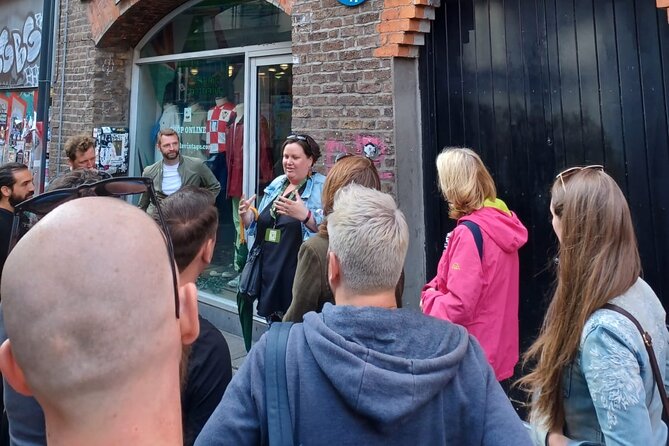
After Trinity, the walk brings you to Meeting House Square, designed by Sean Harrington Architects. This stop is aimed at the 1980s queer Dublin story, with the emphasis on people who brought hope and light when the community needed it most.
Then you hit the Anna Livia moment. The tour has you straddle Dublin’s fabled waterway area, tying the city’s identity to the people moving through it. Even if you’ve seen River Liffey before, the framing helps you notice Dublin as a living stage, not just a backdrop for photos.
What I like here is the pacing. Instead of every stop being purely political, this section gives you emotional variety. It’s still history, but you’re also getting a sense of community resilience and how people built support systems.
Back Through Temple Bar: Gay HQ, Then the George Bar
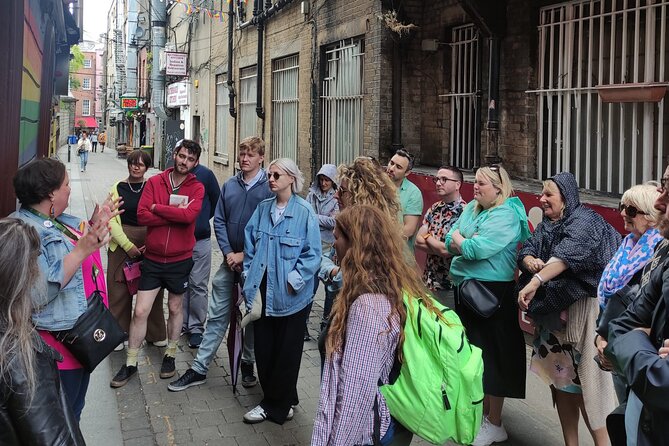
The walk loops back into Temple Bar for a key site: the location of Ireland’s first bona fide Gay headquarters. The details matter here, because the description includes more than a meeting room, it includes café, disco, cinema, and more. That tells you the headquarters functioned like a community hub, not just an admin office.
Then the route heads to The George Bar, described as Dublin’s oldest operating gay bar. This is the part where history turns into a living map of where to go next. You’ll hear why the bar has remained central to LGBTQ+ city life.
If you’re the type who likes to follow the story into the present, this sequence is a payoff. You can get ideas for where to spend time after the tour ends, and you do it with a framework instead of random bar hopping.
Ending at Dublin Castle: A Long View of Dublin’s Center
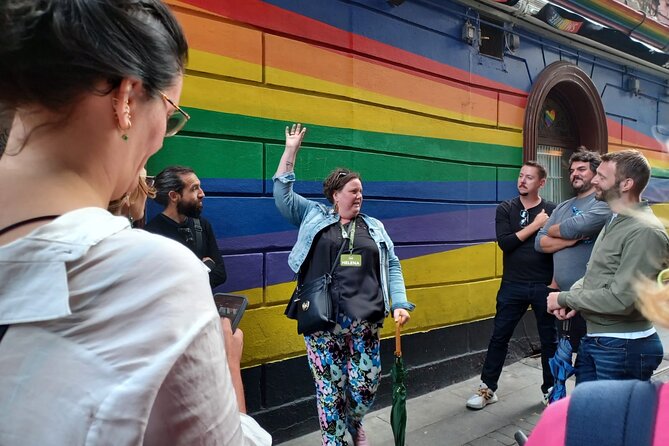
The tour finishes at the upper courtyard of Dublin Castle, with its centuries of history. Ending here works because it’s a strong visual capstone. You began in a nightlife district tied to queer headquarters history, and you end in the seat of national power.
That contrast makes the queer timeline feel bigger than one neighborhood. Even though you’re walking a short route, you’re covering how queer life interacted with mainstream institutions and public spaces.
If you want a smart plan after the tour, keep your next stop close by. Dublin Castle is central, so it’s easy to move onward for dinner, a drink, or a museum visit without losing your bearings.
Who This Tour Fits Best (and Who Might Want Something Else)
This is ideal if you:
- Want a 2-hour, city-center introduction to LGBTQ+ history in Dublin
- Enjoy walking routes that mix big landmarks with smaller, specific queer sites
- Like having a guide connect buildings to people and events, not just facts
- Want a tour that includes both the hopeful side and the harder realities of rights struggles
It may be less ideal if you:
- Don’t like walking and prefer sitting tours
- Need long breaks at stops, because each stop is short and the pace stays moving
- Are mainly interested in a museum-only experience, since this is street-level and viewpoint-based
Guides, Storytelling Style, and the Real Reason People Recommend It
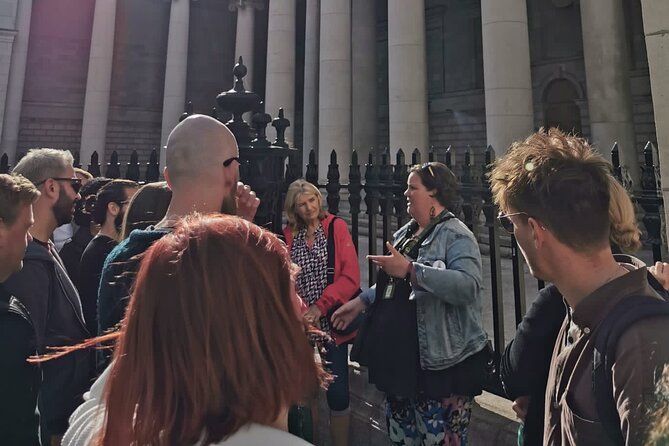
The most praised aspect is the way the guide holds attention. People highlighted an energetic, informed approach, with a focus on LGBTQ+ history and also connections to women’s rights movements in Ireland.
Another big win is that the tour doesn’t treat queer history as a side note. It centers people and moments that might otherwise be ignored. You also get a sense that the guide knows how to point you beyond the tour, toward places to continue the day, including where queer nightlife options are located.
For me, that is the real value: you leave with context and with directions for your own next moves in Dublin.
Should You Book This Dublin LGBTQ Pride Historical and Cultural Walking Tour?
Book it if you want a straight-to-the-point way to understand Dublin through a queer lens, without spending your whole day hopping between far-flung stops. The price is reasonable, and many stops are listed as free, which keeps your budget predictable.
Skip it if you strongly prefer museums over walking, or if you know you will not manage the city-center walking pace. Also consider Trinity College, because admission is not included, and that may affect what you can do during your time there.
If you’re on the fence, think about this: Dublin is easy to tour by yourself. What isn’t easy is connecting these exact places to the people and moments that shaped LGBTQ+ life in Ireland. This tour does that work for you.
FAQ
How long is the Dublin LGBTQ Pride Historical and Cultural Walking Tour?
It’s about 2 hours long.
Where does the tour start and end?
The tour starts at 3 Crown Alley, Temple Bar, Dublin. It ends at the upper courtyard of Dublin Castle.
Is admission included at all the stops?
Admission is listed as free for several stops, but Trinity College Dublin admission is not included.
What language is the tour offered in?
The tour is offered in English.
What kind of group size should I expect?
The tour has a maximum of 100 travelers.
Do I need a special level of fitness?
The tour is listed for travelers with a moderate physical fitness level.
More Historical Tours in Dublin


More Tours in Dublin


More Tour Reviews in Dublin


Not for you? Here's more nearby things to do in Dublin we have reviewed


Dublin Walking Tours, compared.
 ★ 5.0Dublin Highlights and Hidden Gems Guided Walking TourFrom $296,020 reviews
 ★ 4.9Highlights and Hidden Gems Walking TourFrom $272,140 reviews
 ★ 5.01916 Rebellion Walking TourFrom $271,605 reviews
 ★ 5.090 Minute Dublin Walking tour and Sightseeing tipsFrom $21916 reviews
 ★ 5.02-Hour Historical Walking Tour from DublinFrom $22875 reviews
 ★ 4.7Historical 2-Hour Guided Walking Tour of DublinFrom $22865 reviews
 ★ 5.0Dublin Traditional Irish 3 Course Meal Walking Tour with LocalFrom $107755 reviews
 ★ 4.9Mythology, Folklore and Legends Walking TourFrom $27703 reviews
Browse the lists this tour appears in