
Reviewed · DUBLIN WALKING TOURS
Small Group Bucket List Sights Walking Tour with a Local Guide
Dublin history fits on your walking shoes. This small-group highlights walk strings together Vikings, saints, and centuries of government, so the city makes more sense fast. I love how a local guide turns famous buildings into a clear story, and I also like the tight 2-hour length that works on a first morning.
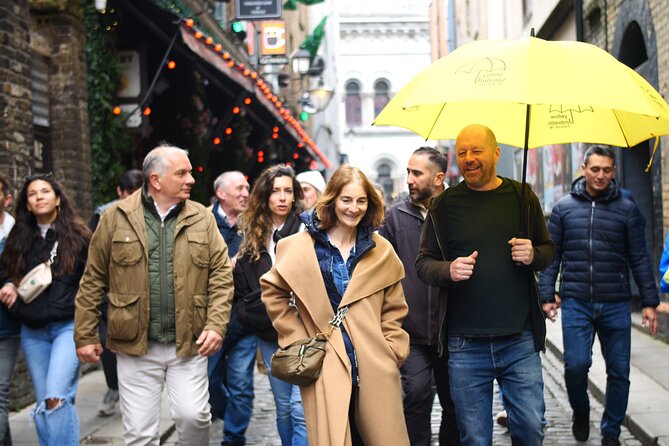
Second, I love the way the guides keep things conversational. Guides like Peter and Martin are praised for answering questions and sharing practical ideas for what to do next, not just reading facts off a page.
One thing to think about: you mostly see these places from the outside. Admission tickets are not included for Christ Church Cathedral, St. Patrick’s Cathedral, or Dublin Castle, so if you want interiors, plan to add them separately.
Key Points You’ll Care About
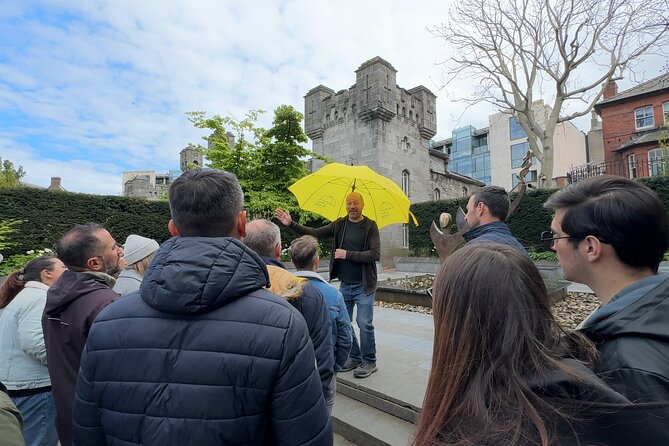
- Small group (up to 25), which makes it easier to ask questions and get route advice.
- Viking-to-modern connections built into the stops, including a bridge walk tied to Celts and the Silicon Docks.
- No paid add-ons required for several highlights, since Dubh Linn Gardens is free and many stops are exterior viewpoints.
- A guide-led orientation through the political center of Dublin, from College Green to Trinity College’s doorstep.
- Mobile ticket and English-only tour make it straightforward to show up and start.
A 2-Hour Walk That Shows You Dublin’s Story, Not Just Its Photos
This tour is designed for orientation. In about two hours, you cover a long stretch of central Dublin, moving from the grand church squares down toward the river and back up again. The payoff is mental, not just visual: you start seeing how Dublin layers eras on top of each other.
I like that it gives you context you can use right away. You’ll learn why Viking arrivals matter to places you already recognize, and you’ll connect later eras, including the city’s religious and political shifts, to what you’re standing beside.
The pacing is also practical. With a small group, you are not stuck behind a crowd forever, and you usually get enough time at each stop to understand what you’re looking at and ask questions.
You can also read our reviews of more guided tours in Dublin



Price and Value: Why $20.52 Can Be a Smart First Stop
At about $20.52 per person for roughly two hours, this is priced like a city orientation tool. That’s the right way to think about it. You are paying for guided time and interpretation across multiple landmark areas, not for a stack of paid museum tickets.
Here’s how the value shows up for you:
- Several key stops are free to enjoy on your own, so you are not forced into extra costs just to see the sights.
- The guide helps you decide what is worth paying for later, since cathedral and Dublin Castle entry are not included.
- You leave with a map in your head. That makes your self-guided walking afterward easier and faster.
If you have limited time in Dublin, this tour is one of those “spend a little now, save time later” choices.
The Simple Route: From Wood Quay to Trinity College Green
You start at Wood Quay, at 121 R137 (near the water), and the tour ends outside Trinity College Dublin on College Green, at Fox House, 37 College Green. The scheduled start time is 10:00 am.
This matters because it sets you up for an easy finish. When you’re done, you’re already in the Trinity College area, which is a good base for whatever you do next: exploring nearby streets, grabbing a coffee, or heading out to a museum you choose based on what you learned.
Also, since the group maximum is 25, it should feel manageable. It’s a walking tour, so wear shoes you trust, but it’s also short enough that you’re not constantly rushing.
Christ Church Cathedral, Where Vikings and Normans Are in the Same Footprint
You begin at Christ Church Cathedral, one of Dublin’s big hitters. The story you’ll hear is the kind that makes Dublin feel alive: Vikings originally built there in wood, Normans later recast it in stone, and then the 19th century brought major renovation fueled by wealth from whiskey.
What I like about this stop is that it teaches you a method for seeing the city. When you understand that sacred spaces can be rebuilt across centuries, you start paying attention to what you normally ignore, like the reasons a building’s style changes over time.
A practical consideration: admission to Christ Church Cathedral is not included. So even if you do not go inside, you can still absorb the basics from the exterior. If you want the interior experience too, buy your own entry ticket later and let this tour be your guide for what to look for.
St. Patrick’s Cathedral and the Guinness Renovation Angle
Next is St. Patrick’s Cathedral, tied to the city’s patron saint story, including the famous legend of driving snakes off the island. You also get the “how it got saved and shaped” angle, since major renovation is credited to the Guinness family, with Sir Benjamin Lee Guinness mentioned in the description.
This stop works well because it balances myth, religion, and real-world money. You’ll learn to separate the legend from the physical changes, then connect both to why the cathedral became such a central landmark.
Like Christ Church, admission to St. Patrick’s Cathedral is not included. That’s not a dealbreaker, since the goal here is orientation and context, but it does mean you need a plan if you want to do an inside visit the same day.





Dubh Linn Gardens: A Quiet Pause and the Chester Beatty Library Setting
After the cathedrals, the tour shifts tone at Dubh Linn Gardens. This is described as the secluded garden home to the Chester Beatty Library area, and it’s also linked to the Viking longboats moored in the 9th century when they arrived in Dublin.
I love stops like this on a city walk because they give your brain a break. After streets full of buildings, you get a calmer setting and a chance to absorb a different kind of history, one grounded in arrival and trade rather than politics and power.
Good news for your schedule: the gardens are free. The description also calls out the Viking connection, so even without paying anything additional, you get meaning from the space you’re in.
Dublin Castle and City Hall: Government Power in Multiple Architectural Styles
Dublin Castle is next, and the tour frames it as the British government center in Ireland for 700 years. You’ll also be guided through its architectural mix, described as medieval, Georgian, Gothic, and modern.
This stop is one of the best examples of why a guided walk helps. Buildings like Dublin Castle can look like “just another big complex” when you arrive cold. With the context, you start seeing how control and administration leave physical marks.
Right by the castle, you also stop at City Hall. Here the emphasis is symbolic: the explanation of the national flag’s significance as peace between Catholic and Protestant, and between North and South. Even if you are not a flag-spotter type, that story gives the city a moral and political center of gravity.
A practical note: Dublin Castle admission is not included. You’ll likely learn plenty from outside viewing, but if you want to go in, plan that as an extra.
Temple Bar Area to Millennium Bridge: Old Streets, Then a Big River View
From Dublin Castle and City Hall, you move toward the Temple Bar area. The tour explains how the area was laid out during the Tudor conquest of Ireland, and then you look at what the neighborhood became known for later: pubs and nightlife.
Even if you’re not hunting for nightlife, Temple Bar is still useful on a morning walk. It helps you connect “what it was built for” with “what it’s famous for now.” That contrast is a Dublin theme.
Then the route heads to Millennium Bridge. Here you get one of the more modern storytelling angles: from east you can take in a view tied to the Celts building their settlement about 2,100 years ago, while looking west connects to the idea of the Silicon Docks inspired by Americans, referenced as happening 21 years prior.
I like this stop because it turns the river into a timeline. Most bridge photos only show water and sky, but this gives you something to look for with intention.
Admission is not included at this point in the description, which is typical for bridge viewing. You are really paying for the guide’s framing and your own viewpoint.
Ha’penny Bridge and Merchant’s Arch: Two Icons, Two Kinds of Contrast
After Millennium Bridge, you cross back over Ha’penny Bridge, described as originally named after the Duke of Wellington. There’s also a mechanical, practical detail included in the tour narrative: thanks to Harland and Wolff, the bridge no longer shakes when you walk over it.
That kind of fact sounds small, but it’s exactly the sort of detail that makes you remember the place. It also helps you notice that Dublin’s landmarks have engineering histories, not just legends.
Next comes Merchant’s Arch, a stop built around contrast. Dublin is presented as a city with opposites at either end of Crown Alley, with Merchant’s Arch at one side and the brutalist Stephenson Tower on the other.
If you like cities that don’t pretend their eras agree with each other, this stop will land. It’s also a good moment for questions, because you can ask how one style replaces another and what that usually means in a city’s development.
College Green and the Molly Malone Statue: The Political Center and the Friendly Face
You continue to College Green, one of the places where Dublin’s “serious civic business” energy is hard to miss. The tour notes that this area includes some of the most beautiful buildings, including banks and parliament, and frames it as the center of government and finance.
If you’ve been walking and feeling like you see a lot of landmarks but not enough logic, College Green is the pay-off. It’s where the city’s institutional roles become easy to visualize.
Then you stop at the Molly Malone Statue. This is a lighter moment, but it’s not pointless. It’s the tour’s way of reminding you that Dublin also packages identity through story and character, not only through buildings.
I’d use this segment as a breather. It’s a good spot to stop, orient yourself, and decide what you want to see next after the tour ends.
Trinity College Dublin: Wrapping Up by the Book of Kells Doorstep
The tour concludes outside Trinity College Dublin on College Green, outside the front gate at Fox House, 37 College Green. Trinity is referenced as home to the Book of Kells exhibition, which you may choose to visit on your own.
This ending is smart. You get a grand university presence right at the finish line, and it gives you an immediate next step if you want one. Even if you do not go inside, you’ll walk away with a clearer sense of where this educational and cultural anchor fits into central Dublin.
Also, given the pace reviews mention, you may find there are moments to pause. One guide experience described quiet, meaningful spots where you could sit and absorb the lesson before continuing, which is a nice way to keep a short tour from feeling like a sprint.
Who Should Book This Tour (and Who Might Want Something Different)
This tour is a great match if:
- You want a first-day orientation and a walking route that links the big-name landmarks.
- You like local storytelling and having time to ask questions.
- You plan to explore more after the walk and want a sense of where things are.
You might consider a different type of tour if:
- You strongly prioritize inside visits to cathedrals and Dublin Castle, since admissions for those are not included in the tour description.
- You dislike city walking. It is manageable for most travelers, but it is still a two-hour walk in central streets.
Families, solo travelers, and couples often do well here because the stops are spaced to keep the walk moving while still allowing explanation and Q&A.
Should You Book It?
Yes, if you’re trying to make your time count. This walk offers a low-cost way to understand Dublin’s major landmarks as part of one connected story, from Viking arrival echoes to later religious and political eras, then back toward the river and the modern city.
If you’re the type who likes to pick attractions based on what you’ll actually enjoy, this tour helps you do that. The guide context also makes it easier to decide later whether you want cathedral interiors or a deeper visit at Trinity.
If your priority is ticketed building entry on every stop, then you should treat this as a guided “see and learn the outside first” plan, and then add the paid entries separately.
FAQ
FAQ
How long is the walking tour?
The tour runs for about 2 hours.
Where do I meet, and where does the tour end?
You start at 121 R137, Wood Quay, Dublin. You end on College Green outside the front gate of Trinity College at Fox House, 37 College Green, Dublin 2.
Is admission included for the cathedrals and Dublin Castle?
Admission tickets are not included for Christ Church Cathedral, St. Patrick’s Cathedral, and Dublin Castle. The tour description notes free access at Dubh Linn Gardens.
What group size should I expect?
This tour is limited to a maximum of 25 travelers.
Is the tour offered in English?
Yes, the tour is offered in English.
What is the cancellation policy?
You can cancel for a full refund if you cancel at least 24 hours before the experience’s start time. Free cancellation is available up to 24 hours in advance.
More Guided Tours in Dublin



More Tours in Dublin

More Tour Reviews in Dublin


Not for you? Here's more nearby things to do in Dublin we have reviewed


Dublin Walking Tours, compared.
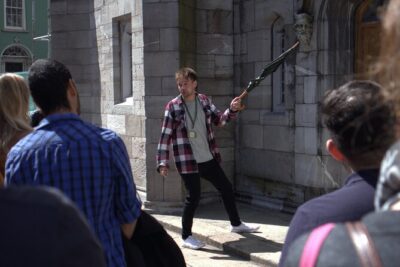 ★ 5.0Dublin Highlights and Hidden Gems Guided Walking TourFrom $296,020 reviews
 ★ 4.9Highlights and Hidden Gems Walking TourFrom $272,140 reviews
 ★ 5.01916 Rebellion Walking TourFrom $271,605 reviews
 ★ 5.090 Minute Dublin Walking tour and Sightseeing tipsFrom $21916 reviews
 ★ 5.02-Hour Historical Walking Tour from DublinFrom $22875 reviews
 ★ 4.7Historical 2-Hour Guided Walking Tour of DublinFrom $22865 reviews
 ★ 5.0Dublin Traditional Irish 3 Course Meal Walking Tour with LocalFrom $107755 reviews
 ★ 4.9Mythology, Folklore and Legends Walking TourFrom $27703 reviews
Browse the lists this tour appears in