
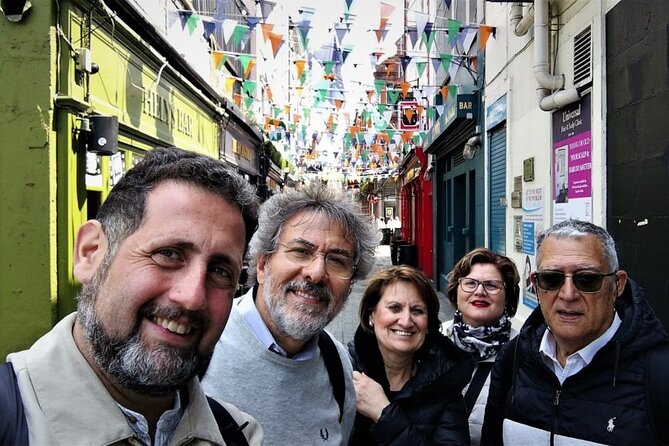
Reviewed · DUBLIN WALKING TOURS
Semi-Private (8people max) 2.5 Hr Dublin Walking Tour
Dublin tells its story best on foot, and this tour keeps it moving. You start at Molly Malone, then glide through the classic hits like Trinity College and Ha’penny Bridge, with time for the legends and the real-life local angle that makes the day feel personal. It’s small, structured, and designed to help you understand why Dublin looks the way it does.
What I like most is the semi-private size (max 8), which makes it easier to ask questions and actually connect with the guide. I also love the pacing, especially the way it blends major landmarks with quick context, so your walk feels like more than a checklist of photos.
One possible drawback: you should be ready for some ticket nuance. Christ Church Cathedral is listed as not included for admission, so you may want to plan for that cost if you decide to go inside.
Key points before you go
- Max 8 people, so your guide can keep the conversation going without rushing you
- Molly Malone meetup makes it easy to find the group and start clean
- From Vikings to present day themes run through multiple stops, not just one location
- Trinity College focus includes the Long Library and the Book of Kells as part of the visit plan
- Temple Bar timing helps you see the area’s story, not only the nightlife vibe
- Weather matters, since the tour requires good conditions for walking
A route that gives Dublin a plot, not just landmarks
This is a 2.5-hour walking tour built like a guided storyline. You’re not wandering aimlessly, and you’re not stuck in a long lecture either. The guide’s job is to connect what you see, like the medieval shapes of cathedrals and the later layers around Dublin Castle, with the “why” behind the city’s reputation.
You’ll also get practical value that matters on a first trip. The tour is designed to point you toward where locals go for food, drinks, and what to do next, including Temple Bar, which is famous, but often misunderstood if you only treat it as a photo stop.
You can also read our reviews of more private tours in Dublin



Start at Molly Malone, then follow the story of hardship and emigration
You meet at the Molly Malone statue on Suffolk St (Dublin 2). It’s a smart beginning because the statue is instantly recognizable, and it gives your guide a chance to set tone right away.
From there, the tour links Molly Malone to the history of famine and the resulting mass emigration from Ireland, including the big connection to the United States. Even in a short stop, this creates a key lens for the rest of the day: Dublin isn’t only a city of bars and monuments, it’s a city shaped by real movement of people and ideas.
Christ Church Cathedral and Dublin’s Viking origin in plain language
Next up is Christ Church Cathedral, with time to learn about its legends and its place in Dublin’s longer timeline. This stop also brings in the Viking era, including how Dublin was founded in 841 and why Vikings still matter when you’re trying to understand Irish history, culture, and traditions.
Practical note: the itinerary lists Christ Church Cathedral admission as not included, so you may want to consider whether you’re just looking from outside or planning for an entry ticket if you want to go deeper inside.
If your goal is to leave Dublin with context, this is a strong stop. Cathedrals can feel like “look, old building” unless someone connects it to the earlier foundations. Here, the guide’s role is to connect the dots so the cathedral stops being vague.
Temple Bar, understood with history and what it used to be
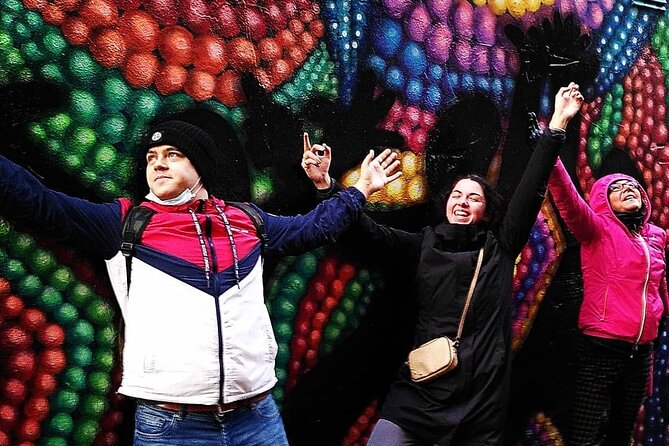
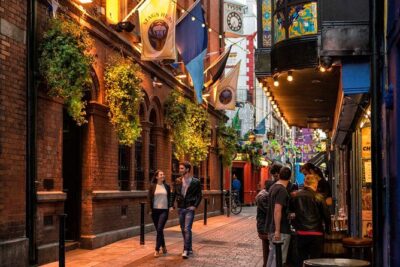
Then you hit Temple Bar, the most famous nightlife district in Dublin. But this tour treats it like culture, not chaos. You get a quick look at the movida side of the city, plus guidance on where to go for food, drinks, and music.
What helps is the tour framing: Temple Bar is explained as an area that used to look very different than the version most visitors see today. That matters because Dublin has a habit of keeping old names while the streets change around them. You’ll walk away with a better sense of how quickly cities reshape their image.
Also, because it’s a small group, you’re less likely to feel like you’re trapped in a loud mob. You can enjoy the energy, then move on.
Trinity College and the Long Room, with the Book of Kells in the mix
Trinity College Dublin is the next big anchor. The tour’s plan centers on the Long Library and the Book of Kells, which are usually the main reasons people carve out time for Trinity in the first place.
Even without going deep into details, it helps to have a guide who can explain the university’s background and the legends that surround it. Trinity is old, but it isn’t just old. It has a vibe that feels like Dublin is talking about itself to the future, not only the past.
In the itinerary, Trinity College is marked as admission ticket free, so this stop fits the tour’s promise of not forcing you into lots of extra logistics mid-walk. Still, if you’re the type who hates surprises, it’s always smart to double-check what’s included for your exact booking date.






Ha’penny Bridge in five minutes, plus the reason for the name
At Ha’penny Bridge, you get a short, focused moment. The guide points out why it’s called Ha’penny Bridge and gives the story behind the name.
This is a good example of how this tour uses small stops well. Five minutes can feel too short on paper, but here it works because you get a clear explanation for what you’re seeing, not just a brief “this is the bridge.”
Dublin Castle, where truth and legend get tangled together
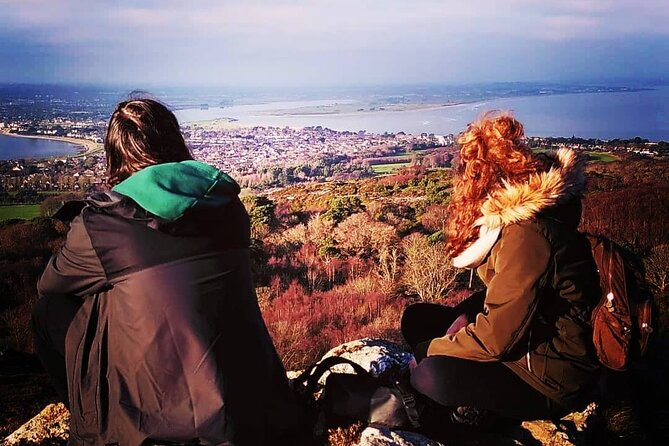
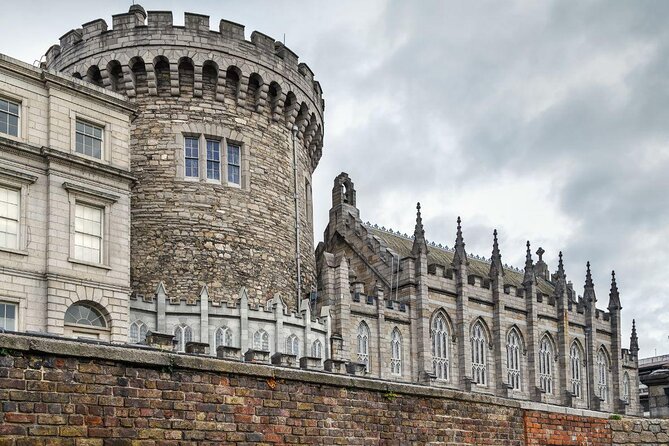
Then it’s Dublin Castle, with time to explore its history, including the Norman invasion question. The tour also plays with a very Irish theme: what is fully proven versus what sits in legend, family stories, and half-truths that stuck around because they’re memorable.
If you’re a fan of story-driven history, this stop tends to land well. In past tours, guides like Sean were praised for writing or sharing a poem connected to the castle area, which shows the kind of storytelling energy you may experience.
This is also one of the best places for atmosphere. The castle grounds give you a sense of how power used to be built in the center of the city, then layered over by later eras.
St Patrick’s Cathedral closes the loop on faith, identity, and story
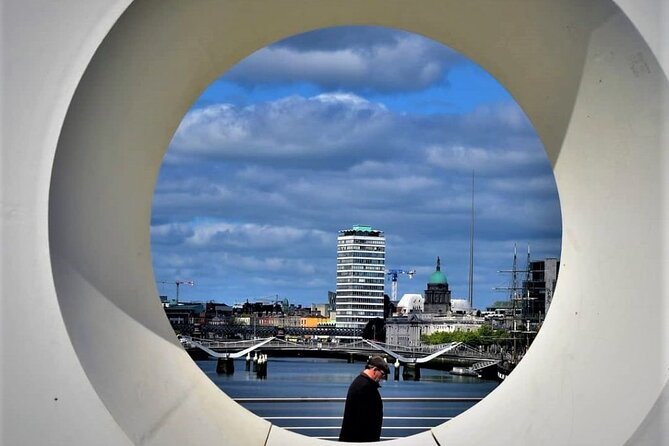
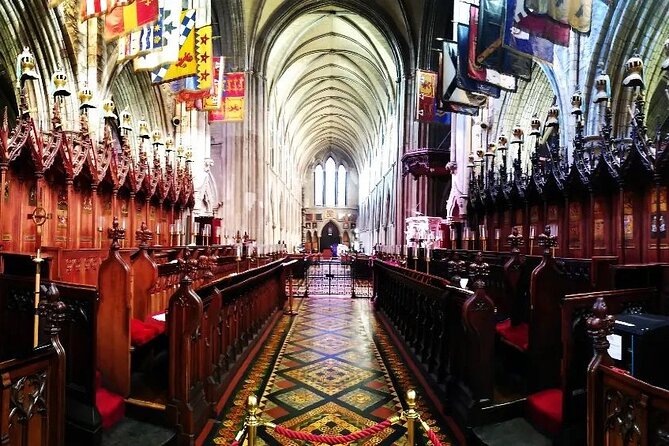
The final stop is Saint Patrick’s Cathedral, tied to the history and legend of Saint Patrick and the cathedral itself. The tour keeps it brief, but it’s a fitting bookend after Dublin Castle.
Walking from castle to cathedral feels like moving between two different kinds of authority. One is political and administrative, the other is spiritual and cultural. Together, the stops help you understand how Dublin became Dublin.
And because the activity ends back at the meeting point, you’re not stuck guessing your way home after the tour.
Guides make the difference, and several names keep showing up
This tour is run by local guides, and the most praised experiences share a clear pattern: friendly, narrative storytelling, with enough interaction that you feel you’re learning in real time.
Some guide names that have stood out include:
- Jimmy, repeatedly praised for a Dublin-native perspective and for keeping the group engaged from the Viking era to modern day. One highlight that matters for you, especially if you want conversation, is how interactive the group experience felt.
- Miriam, praised for storytelling and for adding a cultural lens, not only dates and facts.
- Dermot, noted for checking in during the walk and adjusting to guest interests, plus small extra stops that make the time feel well spent.
- Antonio, praised for mixing history and culture with fun anecdotes and taking his time.
- Sean, praised for a personal poetic moment connected to Dublin Castle.
On the flip side, one lower rating mentioned an English communication issue with a guide named Guilio due to accent. The tour data also shows this is generally a strong experience, but it’s a reminder that language comfort can be part of your decision.
Price, timing, and the value of booking early
At $71.10 per person for about 2 hours 30 minutes, the value comes from three things: small-group format, a guided route that covers major sights plus context, and added local recommendations.
It’s also practical that the start time is 10:00 am, which typically works well in Dublin. You get to see key landmarks before the day’s crowds feel heavier, and you’ll be finished at a time that still leaves you energy for a proper afternoon plan.
One more useful detail: the tour is commonly booked around 49 days in advance. If you have a specific day you want, you’ll likely have better options if you book early rather than waiting until the last minute.
Getting the most out of the walk
A few tips that fit this tour format:
- Wear comfortable shoes, because even “short” stops add up once you’re moving between sites.
- Bring a light layer. Dublin weather can change fast, and this tour requires good walking conditions.
- If you care about inside access, think about Christ Church Cathedral admission not included and ask your guide how it’s handled for your group that day.
- If your schedule is tight, this is exactly the kind of tour that helps you prioritize what to revisit later.
Should you book this semi-private Dublin walking tour?
Book it if you want a first-time Dublin orientation that connects the dots. The route is built around iconic places like Trinity College, Ha’penny Bridge, Dublin Castle, and Saint Patrick’s Cathedral, while also making time for Temple Bar in a more meaningful way. The max 8 size and the strong guide track record (especially with names like Jimmy, Miriam, Dermot, Sean, and Antonio) make it easier to learn, ask questions, and feel like the city is being explained by someone who actually lives there.
Skip it or reconsider if you want a strict “museum-only” day or you’re hoping every major stop is fully included with no admission questions. The itinerary marks Christ Church Cathedral admission as not included, and that’s the main place where costs might surprise you.
If you’re trying to do Dublin in one good morning or just need a strong start with local direction, this tour is a solid choice.
FAQ
How long is the Semi-Private (8 people max) 2.5 Hr Dublin Walking Tour?
The tour lasts about 2 hours 30 minutes.
What is the group size for this tour?
It is a semi-private tour with a maximum of 8 travelers.
Where do I meet the guide?
You meet at the Molly Malone Statue, Suffolk St, Dublin 2, D02 KX03, Ireland.
What time does the tour start?
The start time listed is 10:00 am.
Where does the tour end?
The activity ends back at the meeting point.
Which major stops are included?
The itinerary includes Molly Malone Statue, Christ Church Cathedral, Temple Bar, Trinity College Dublin, Ha’penny Bridge, Dublin Castle, and Saint Patrick’s Cathedral.
Is admission included for all stops?
Christ Church Cathedral is listed as admission not included. Trinity College Dublin, Temple Bar, Ha’penny Bridge, Dublin Castle, and Saint Patrick’s Cathedral are listed as admission ticket free in the itinerary.
Do I need a printed ticket?
This experience uses a mobile ticket.
What happens if the weather is bad?
The tour requires good weather. If it is canceled due to poor weather, you will be offered a different date or a full refund.
Are service animals allowed?
Yes, service animals are allowed.
More Private Tours in Dublin


More Tours in Dublin


More Tour Reviews in Dublin


Not for you? Here's more nearby things to do in Dublin we have reviewed


Dublin Walking Tours, compared.
 ★ 5.0Dublin Highlights and Hidden Gems Guided Walking TourFrom $296,020 reviews
 ★ 4.9Highlights and Hidden Gems Walking TourFrom $272,140 reviews
 ★ 5.01916 Rebellion Walking TourFrom $271,605 reviews
 ★ 5.090 Minute Dublin Walking tour and Sightseeing tipsFrom $21916 reviews
 ★ 5.02-Hour Historical Walking Tour from DublinFrom $22875 reviews
 ★ 4.7Historical 2-Hour Guided Walking Tour of DublinFrom $22865 reviews
 ★ 5.0Dublin Traditional Irish 3 Course Meal Walking Tour with LocalFrom $107755 reviews
 ★ 4.9Mythology, Folklore and Legends Walking TourFrom $27703 reviews
Browse the lists this tour appears in