
Reviewed · DUBLIN WALKING TOURS
Private Walking Tour in Dublin
Dublin can feel like a lot at once. This private walking tour helps you get your bearings fast, then sends you toward the places you’ll want to return to. You start at Trinity College, work your way through major landmarks like the GPO, the Spire, and Ha’penny Bridge, and finish at the Molly Malone statue. I like that it’s private and paced in short, easy chunks, so the city stays fun instead of a blur.
Two things I really like: first, the guides focus on what you’re looking at right now, like bullet marks on GPO’s pillars from the 1916 Easter Rising and the exact role Dublin’s Viking and medieval layers played. Second, you get practical recommendations for what to do next, so the tour doesn’t just end, it sets up the rest of your trip.
One consideration: several big stops have admission tickets not included, like Trinity College Dublin, the GPO Museum, Christ Church Cathedral, St Patrick’s Cathedral, and Dublin Castle. So if you want to go in everywhere, budget extra time and money for tickets.
Key highlights worth your attention
- Private group, small and flexible so you can ask questions without feeling rushed.
- Major Dublin landmarks in a tight loop from Trinity College to Molly Malone.
- A strong 1916 and Liffey focus at the GPO and along the river.
- Free exterior highlights dominate the walk including the Spire, Ha’penny Bridge, and Temple Bar area views.
- Cathedrals and castle stops give you the medieval and political framework for the city.
- Guides who tailor on the fly, including family-friendly pacing for kids.
A Dublin highlights loop that feels personal
This is the kind of tour I recommend when you want the big picture early. You get a structured route, but it’s private, meaning your group sets the tone. The itinerary is built around Dublin’s most photographed scenes and the key “why it matters” context behind them, from early English rule to Irish independence stories to the city’s Viking roots.
The duration is listed as about 2 to 3 hours, and the timing at each stop is short. That’s a plus if you’re jet-lagged or you want a first-day orientation walk. You see a lot of the city’s top landmarks without spending your entire afternoon stuck in long lines.
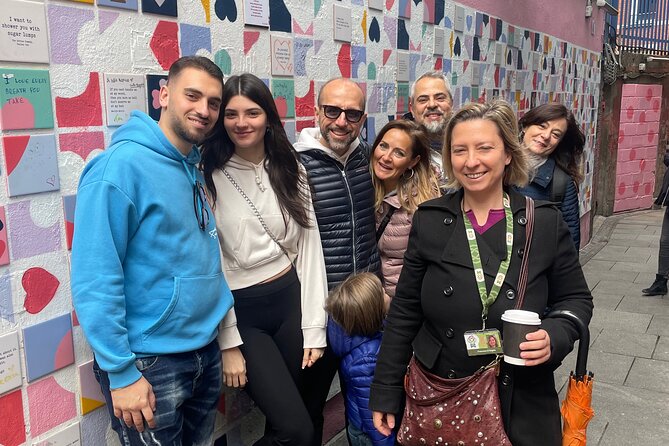
And you can tell the guide matters here. Multiple reviews call out how helpful the guide was for learning the city’s layout and planning what came next. Names that showed up include John, Sinead, Yvonne, and Francesca, and they’re described as engaging, kind, and ready to answer questions. That combination is exactly what makes a walking tour work.
You can also read our reviews of more private tours in Dublin



Trinity College to the GPO Museum: Dublin’s education and uprising story
Your start is Trinity College Dublin, College Green, Dublin 2, with the tour ending near the Molly Malone statue at Suffolk St. That’s a smart way to begin, because Trinity is not just a campus. It’s a whole piece of the city, founded in 1592 under Queen Elizabeth I, and it still feels like a small world of its own.
You’ll spend about 20 minutes at Trinity. Admission is not included, so think of this as a guided look that may include key views and orientation, with the chance to decide on ticketed entry if you want it. What makes this stop special is the list of famous graduates you’ll hear about, including Oscar Wilde, Bram Stoker, and Jonathan Swift. Those names give you a shortcut to understanding why Dublin’s intellectual and literary identity is still so visible.
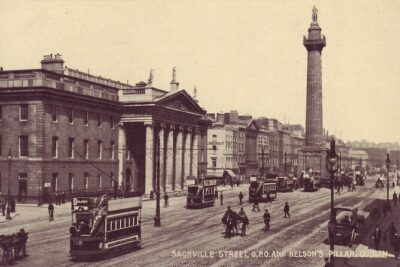
Next comes the GPO Museum, about 15 minutes. This is one of Dublin’s emotional stops because the building is tied to the 1916 Easter Rising. The Irish Volunteers and Irish Citizen Army seized the GPO on Easter Monday, and bullet marks from the fighting are still visible on the front pillars. The guide’s job here is to connect what you see in the street to the bigger story of independence. You’ll come away with a clearer sense of why this area became a symbol of freedom from British rule.
One practical note: admission at the GPO Museum is also not included. If you go inside, you’ll likely spend extra time there than the listed 15 minutes. If you don’t, you can still get plenty out of the exterior and the framing the guide provides.
From the Spire to Ha’penny Bridge: modern Dublin along the Liffey
After the GPO, the route shifts toward the river and iconic street scenes. You’ll see the Spire, officially called the Monument of Light, in about 5 minutes. It’s 120 metres tall, with a base diameter of 3 metres. It was built to celebrate the new millennium, and it’s the kind of landmark that instantly tells you Dublin didn’t stop evolving in the past century. Admission is free here, and that short stop is perfect for photos and orientation.
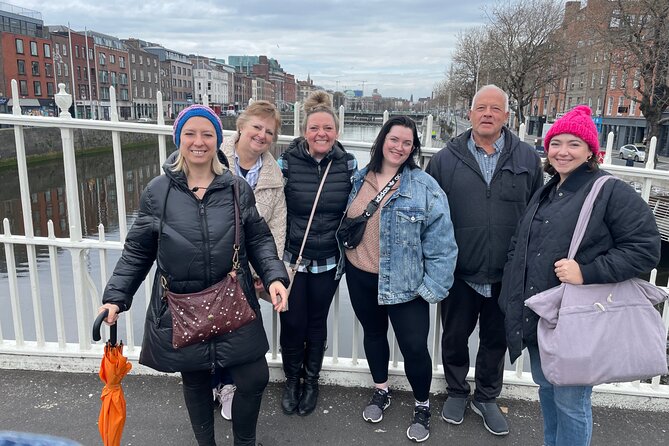
Then you’ll reach Ha’penny Bridge, officially the Liffey Bridge, in another quick 5 minutes. This is one of the easiest “wow” moments because it’s so central to how people imagine Dublin. It’s famous as the city’s first pedestrian bridge, built in 1816. The nickname comes from an old story about how much it cost to cross, half a penny, and the bridge’s tall profile for over 100 years is tied to why the name stuck.
What I like about these river stops is the momentum they create. After the heavier historical stops, you’re back outside, walking, looking, and resetting your brain for the next layer of the city.
Temple Bar, Wood Quay Amphitheatre, and Dublin’s Viking underlayer
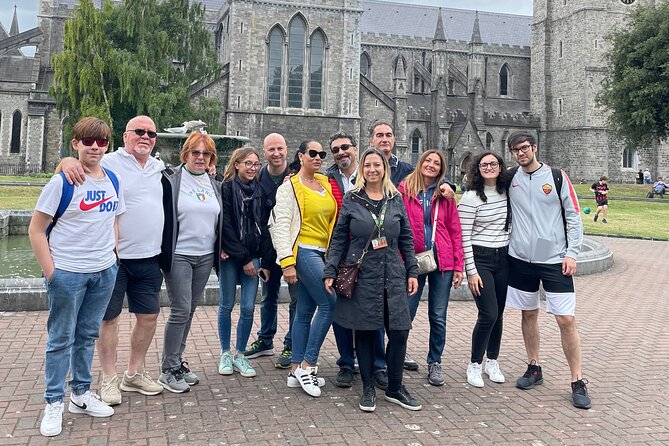
Temple Bar is next, about 15 minutes. This is Dublin’s best-known cultural and nightlife district, and the walking approach works because you’re not forced into one single venue. The tour route is set up to help you see what makes the area feel distinct, including famous pubs associated with traditional Irish music and places where you can sample traditional Irish food.
If you’re traveling with kids or you prefer a calmer pace, you’ll still get something useful here. You get a “this is what people mean when they say Temple Bar” orientation, so you can decide whether to return for music later or simply enjoy the atmosphere from outside.
From there, the tour heads to Wood Quay Amphitheatre, about 15 minutes. This stop is a favorite for people who like the city’s older foundations. Archaeologists discovered what’s described as the biggest Viking settlements outside Scandinavia at the foot of the hill rising toward Christchurch. The Vikings were traders and marauders at first, and then they permanently settled in Dublin in 841 AD. That date lands in a very different world from the 1916 story you saw at the GPO Museum.
The key value here is contrast. Dublin isn’t one era laid over another. It’s multiple eras talking to each other on the same street corners. A quick guided stop like Wood Quay helps you see that without requiring you to spend a whole day in museums.
Christ Church and St Patrick’s: two cathedrals, two ways to understand Dublin
Next you visit Christ Church Cathedral, about 15 minutes. Admission is not included. The cathedral sits in the medieval district, and it has a long connection to pilgrims and visitors for almost 1,000 years. It’s said to have originally been a Viking church, which is a great reminder that even the “stone-and-saints” part of Dublin is built on earlier layers.
You’ll hear about major treasures, including Strongbow’s tomb and a copy of the Magna Carta. If you’re the type of traveler who likes to understand power, documents, and who controlled what, these details give you a map of how Ireland’s story intersects with broader European history.
Then comes St Patrick’s Cathedral, also about 15 minutes. Admission is not included here as well. The building completion date range is listed as 1225 to 1270, and it’s tied directly to Ireland’s patron saint. St Patrick’s baptizing of the Irish Gaelic people is part of the tour’s explanation, connecting legend and religious identity to a specific place you can point at on a walking route. You’ll also hear about Jonathan Swift’s tomb and other treasures.
What I like about visiting both cathedrals in one tour window is the way it changes your viewpoint. You stop treating “religious buildings” as separate attractions and start seeing them as anchors that shaped daily life, politics, and identity over centuries.






Dublin Castle and George’s Street Arcade: power and everyday city life
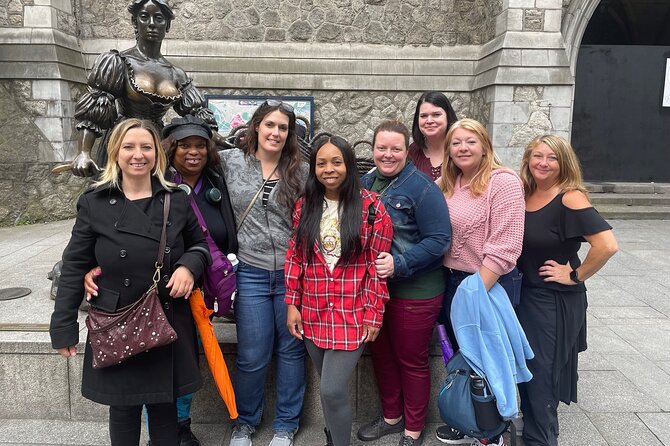
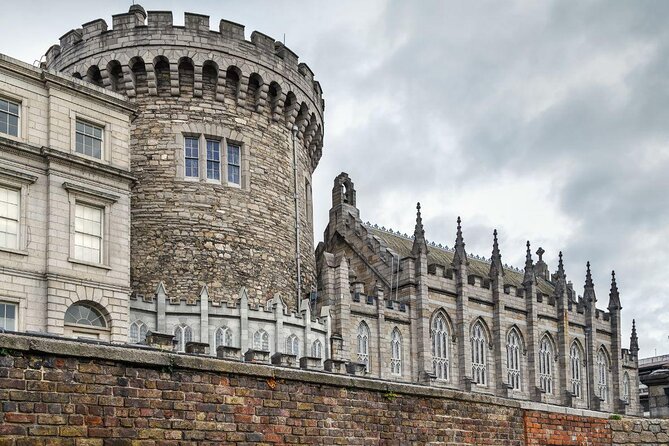
Dublin Castle is next, around 20 minutes. Admission is not included, and it’s a key political context stop. The castle served as the seat of the viceroy, the representative of the English monarch in Ireland, where English rule lasted for more than 700 years. Even if you only get exterior time, you’ll understand why the city’s governance stories matter when you look at plaques, streets, and institutions around you.
The record tower is listed as the only remaining piece of the original medieval castle. The rest of the architecture is described as State Apartments built in the 18th century. That detail helps you see Dublin Castle as a living evolution rather than one single moment.
After that, you’ll pass George’s Street Arcade, about 5 minutes. This is Dublin’s oldest shopping centre and a standout example of Victorian-era architecture. It has been open for nearly 140 years as part of the South city market buildings, with shops and stalls inside. Admission is free.
I love ending with a place like this because it turns the tour into something more human. You’ve spent time with uprisings, kings, cathedrals, and viceroys, and now you get a slice of normal city life, where people browse and snack and move on.
Molly Malone and the end-of-tour city mood
The tour finishes in front of the Molly Malone statue at Suffolk St. This stop is quick, about 5 minutes, and it’s a fun way to close. The statue was unveiled in 1988 to celebrate Dublin’s first millennium. It connects to the famous song Molly Malone, which became the unofficial city anthem.
The tour framing also includes an intriguing mystery: whether Molly Malone was real. One theory says she was based on a woman who died in Dublin in 1699. Even if you don’t take the theory as fact, it’s a good example of how Dublin turns people into symbols.
Finishing at Molly Malone also makes your next choices easier. You’re near areas where you can keep walking, grab a meal, or hop onto public transportation.
Price and ticket reality for $90.11 per person
At $90.11 per person for a private 2 to 3 hour walking tour, you’re paying for the guide and the tight route design. The price can feel steep if you think of it as only a checklist of sights. But if you treat it as an early orientation plus interpretation, it often becomes strong value.
Here’s the honest part: several key stops have admission not included, including Trinity College, the GPO Museum, Christ Church Cathedral, St Patrick’s Cathedral, and Dublin Castle. Spire, Ha’penny Bridge, and other exterior stops are free to view as part of the walk. Temple Bar area viewing is free too, and George’s Street Arcade is listed with free admission.
So the real question for your planning is this: do you want to add paid entry to each of those ticketed sites? If you do, you’ll want to budget extra time and money on top of the tour price. If you prefer to do light entry and use the guide for context, you can keep the day efficient.
Guide style, questions, and how the tour fits families
The reviews around this tour are consistent about one thing, the guide experience. John is singled out for being very knowledgeable about Irish history and for answering questions. Sinead is praised for tailoring the tour around what people wanted, and for taking visitors to places they enjoyed. Yvonne is highlighted as accommodating, especially with time periods of history and their significance for Dublin. Francesca is also praised as friendly and for helping people enjoy a 2-hour walk through the main highlights.
The family angle also matters. One review mentions the guide being accommodating for children aged 6 and 8. That tells you the pacing is workable for kids, as long as you’re okay with shorter stops and walking time outdoors.
You also get something intangible but useful, recommendations for what to do later. One standout comment mentions the guide gave a great lay of the land, especially suggestions for future plans. That’s a big deal on your first day in a new city, because it reduces the guesswork.
Weather, walking pace, and what to wear
The experience requires good weather. That means the tour operator expects you to walk outside for stretches between stops. Dublin weather can change quickly, so dress in layers and wear shoes that can handle wet sidewalks.
As for pace, each stop is short, with minutes assigned. That’s built for moving and learning, not for long museum time. If you want longer stays inside ticketed sites, you might decide to add those entries before or after the tour rather than trying to do it all during the walking window.
Should you book this private Dublin walking tour?
I’d book it if you want a smart first pass through Dublin, especially if you like history that connects directly to landmarks. You’ll like it if you value a guide who can answer questions, keep the walk organized, and also point you toward where to go next.
I’d think twice if you’re the type who wants lots of indoor time at every site, because several admissions are not included and the tour timing is designed for quick, exterior-focused stops. Also, if weather is poor and you hate walking in the rain, you may prefer to reserve indoor-heavy plans for that day.
If your goal is to understand Dublin in a few hours, and then spend the rest of your trip wandering with confidence, this private route is a strong match.
More Private Tours in Dublin


More Tours in Dublin


More Tour Reviews in Dublin


Not for you? Here's more nearby things to do in Dublin we have reviewed


Dublin Walking Tours, compared.
 ★ 5.0Dublin Highlights and Hidden Gems Guided Walking TourFrom $296,020 reviews
 ★ 4.9Highlights and Hidden Gems Walking TourFrom $272,140 reviews
 ★ 5.01916 Rebellion Walking TourFrom $271,605 reviews
 ★ 5.090 Minute Dublin Walking tour and Sightseeing tipsFrom $21916 reviews
 ★ 5.02-Hour Historical Walking Tour from DublinFrom $22875 reviews
 ★ 4.7Historical 2-Hour Guided Walking Tour of DublinFrom $22865 reviews
 ★ 5.0Dublin Traditional Irish 3 Course Meal Walking Tour with LocalFrom $107755 reviews
 ★ 4.9Mythology, Folklore and Legends Walking TourFrom $27703 reviews
Browse the lists this tour appears in