
Reviewed · DUBLIN WALKING TOURS
Dublin Walking Tour: Top 10 highlights
Two hours, ten Dublin icons, one smart route. This walking tour is built to help you see the city’s top sights fast and understand what you are actually looking at, from big landmarks to cultural streets. You will stay outside the buildings, so the focus is on orientation, stories, and street-level details.
I like how the route mixes famous names with a few short side stops you might not notice on your own. You also get history and context from the guide, not just a list of stops, which makes Trinity, the cathedrals, Dublin Castle, and Temple Bar feel connected instead of random.
One thing to consider: the live guide is French, and the tour is only 2 hours, so it is not for slow sightseeing or long museum time. If you are not comfortable with French, you may want to plan for a bit less back-and-forth.
Key highlights you will feel on the street
- French live guide with explanations designed for understanding, not just photos
- Outside-only sightseeing, so you can keep moving without queues inside
- Top 10 landmarks from the Spire to Trinity College, tightly grouped on foot
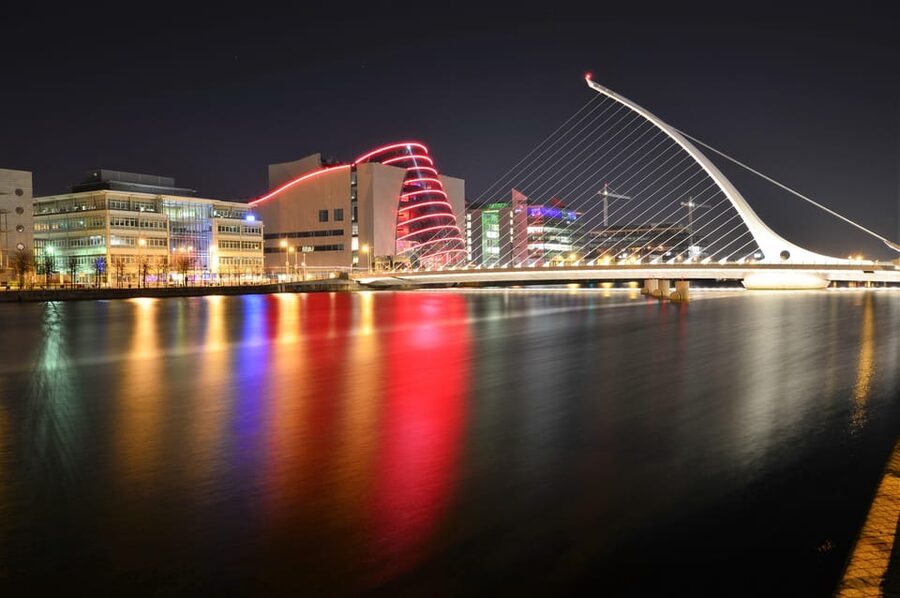
- A river-and-bridge section that helps you read Dublin’s geography quickly
- Cathedral and castle stops that make medieval and religious Dublin easier to place
- Culture stops like Temple Bar and the Guinness Heritage area, explained in plain language
Two hours on foot: how this tour actually helps you

This is the kind of tour that works when you have limited time but still want more than a selfie route. In about 2 hours, you cover central Dublin landmarks that most first-timers struggle to place in relation to each other. Instead of bouncing between far-apart areas, you get a walk that keeps you in the same geographic “story zone.”
I also like that the tour does not pretend you will see everything. It aims for fast clarity: what each landmark is, why it matters, and how Dublin’s layers show up in streets, façades, and squares.
Because you do not go inside, your time stays practical. You are not stuck waiting for entry or spending your energy on indoor rules. You can watch how people move through the city, how the river shapes views, and how districts feel different just by turning a corner.
You can also read our reviews of more tours and experiences in Dublin.



Price and value: what $54 buys you in real terms
At $54 per person for a 2-hour guided walk, this sits in the “pay for direction” category. You are not paying for transport, and you are not paying for ticketed museum time. What you are buying is time and structure, plus a guide who gives history, explanation, and answers.
The best value here is how the tour compresses key sights into a single route. If you tried to DIY this, you would still have to figure out where to start, what order makes sense, and which landmarks connect to the same narrative. Paying for a guide saves you that mental work.
Also, the price makes sense because it includes a live guide for the full 2 hours. That matters more than it sounds. When the guide can respond to questions and keep the pace human, the tour feels like a conversation, not an audio track.
Starting at the Spire: why that first step matters
The tour begins at the foot of the Spire, on the GPO side. This is a smart starting point because the Spire area is easy to recognize, and it helps you anchor your navigation right away. From here, you can understand the city as an interconnected set of streets and landmarks rather than isolated stops.
If you are the type who likes to orient yourself quickly, you will appreciate the “first bearings” vibe. Even if you have never been to Dublin, you can follow along because the opening landmark is visible and central.
Also, you will see how the route starts with civic scale and then gradually moves toward the kinds of places people associate with history, culture, and everyday Dublin life.
From GPO Museum to O’Connell Street: Dublin’s big-city backbone
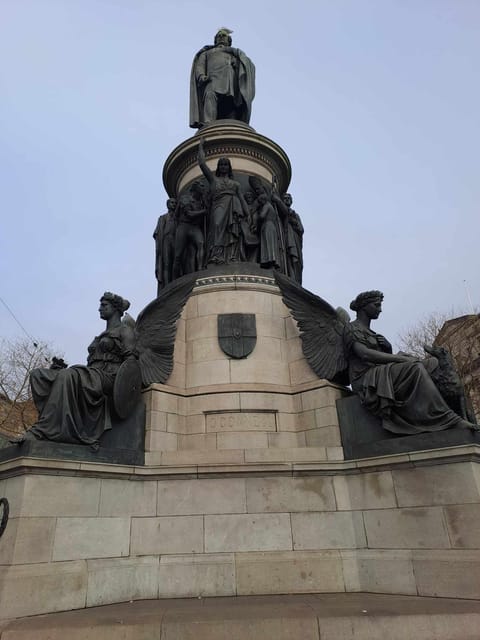
Next you head to the GPO Museum, Dublin area, with a guided explanation. Then the tour moves to O’Connell Street, again with a guide-led stop.
What makes these parts useful is that they ground you in Dublin as a working modern city, not just a postcard of old stone. The GPO area gives you a historic anchor, and O’Connell Street shows you the long, straight artery where the city’s energy concentrates.
A good way to get more out of this section is to pay attention to contrasts. Notice how the “bigger city” feeling changes your sense of distance. Streets like O’Connell Street teach you how to measure Dublin without a map, because your walking rhythm and the sightlines do the work for you.
Ha’penny Bridge and the river moment you will remember

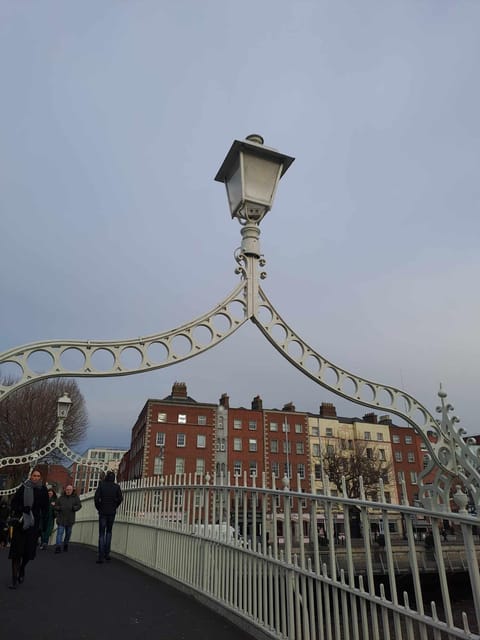
Then you get to Ha’penny Bridge, with guided narration, and you also cover the Liffey and its bridges as a theme. This is one of the most practical segments of the tour because it teaches you how Dublin’s geography shapes the experience.
Bridges are natural viewpoints, and they also act like navigation shortcuts. Once you learn what the river is doing in the middle of town, the rest of your sightseeing makes more sense. You start to “read” distances and directions by water landmarks.
Also, this is where the walking feels most like Dublin. Even when you are thinking about history, you can watch real city movement right around you. It helps the stories stick because your brain connects facts to what you can see at street level.






Temple Bar: culture explained, not just nightlife vibes
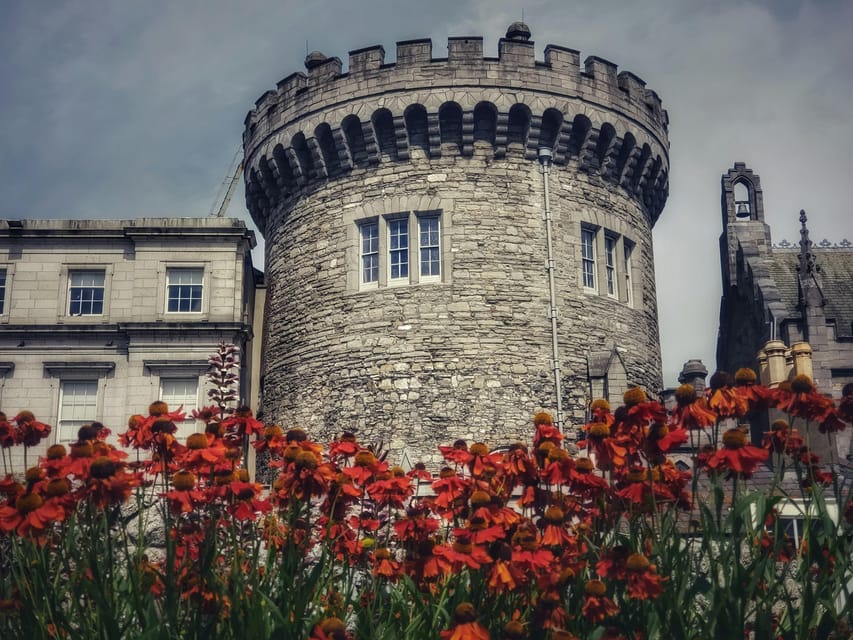
After the bridge area, the tour heads to Temple Bar with a guided stop. Temple Bar is one of those places people tend to either oversell or oversimplify. The value of having a guide here is that you get the broader cultural context without turning the stop into a party-only story.
In my view, this is the ideal kind of neighborhood stop during a short tour. It gives you color and modern identity while the rest of the walk builds toward older landmarks like cathedrals and castles.
If you are thinking about timing, do not stress too much about catching the “perfect” moment. The tour is built around explanation and street observation, so you can enjoy it in the daytime or early evening, as long as you dress for weather and keep walking.
Christ Church Cathedral: seeing religious Dublin from the outside
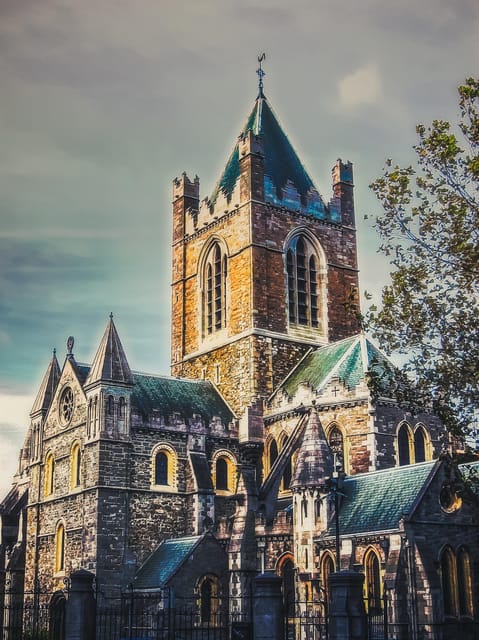
Next is Christ Church Cathedral, Dublin, explained by the guide with outside viewing. Since the tour does not include entry inside, this part is about exterior cues: scale, design style, and how the cathedral fits into the surrounding city streets.
Even without going inside, you can learn a lot because religious landmarks in old European cities tend to function as wayfinding anchors. They pull your attention and they signal “this area has weight.” The guide helps you interpret that weight instead of just admiring a façade.
One practical tip: pause a moment and look at how the cathedral sits in relation to the streets you are walking. Your brain will start to map the center of Dublin in a way that feels natural.
Dublin Castle and medieval Dublin, without the ticket fatigue
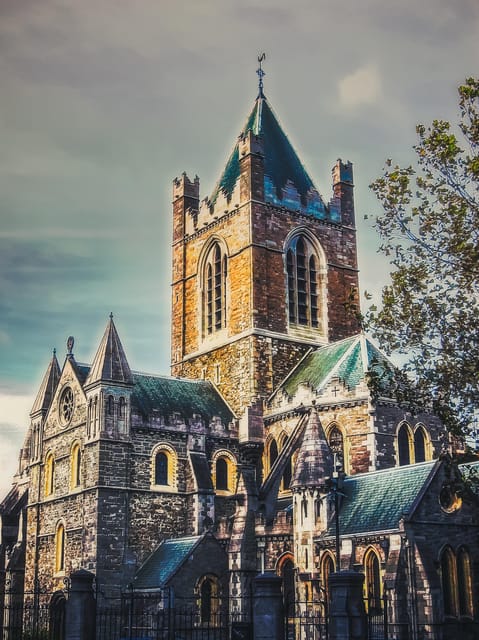
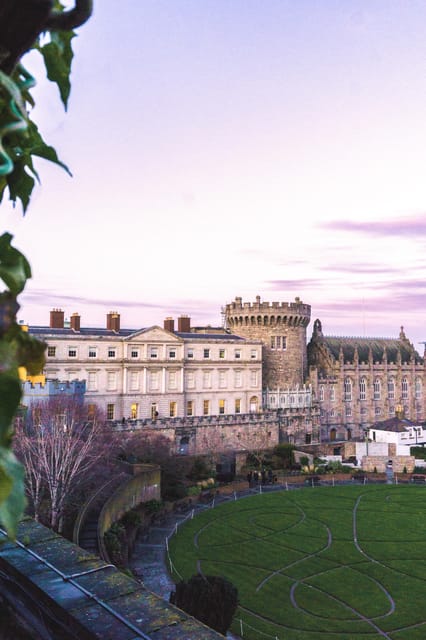
The tour then includes Dublin Castle / Medieval Dublin, with guided explanation and outside-only viewing. This is another strong value stop because castle exteriors are visually dramatic, and a guide can explain what you are seeing in terms of Dublin’s past.
Because you are not going inside, you avoid the “start, wait, enter, queue” rhythm that can eat up limited time. Instead, you keep your momentum and still get the medieval framing that helps everything else connect.
If you like history but hate slow museum pacing, this is a good way to get the overview. You walk away knowing where the medieval thread runs, even if you plan to return later for deeper exploration.
St Patrick’s Cathedral: calm stop, strong contrast
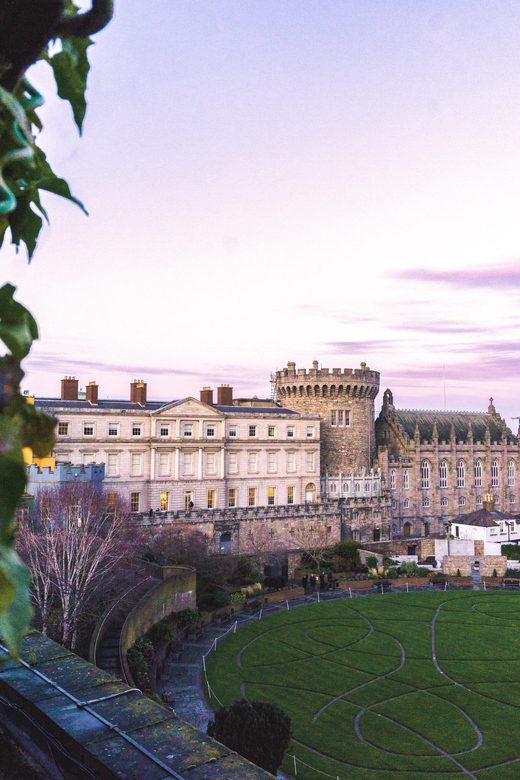
After Dublin Castle, you reach St Patrick’s Cathedral, again with outside explanations. A cathedral stop is not just about architecture. It’s also about mood and pacing. This part tends to feel more reflective in the flow of the walk.
Because your earlier stops include civic and cultural spaces, adding a cathedral here creates contrast. It helps you understand that Dublin is not only streets and districts. It also has enduring places that shape identity across centuries.
To make this section work for you, keep your eyes up and scan the cathedral from multiple angles, as the guide directs you. You are collecting visual information for future memory, not just taking a quick look.
A couple of short side stops: how to handle the unnamed moments
Between the named landmarks, the route includes additional short stops that are guided, but not fully spelled out in advance. Think of these as purposeful pauses for photos, context, and quieter streets where the city tells small stories.
This is actually a plus, because it means the tour is not only “big sign sightseeing.” The guide uses those moments to connect themes and fill gaps in your understanding.
So if you enjoy tours that feel more like walking with a local than marching through a checklist, you will probably appreciate these extra stop points.
Guinness Heritage: Dublin’s modern identity in a historic costume
You also stop at Guinness Heritage, with guided history and explanation. This is a smart inclusion because it reminds you that Dublin’s story is not only medieval stone and cathedrals. It is also industry, culture, and branding that became part of the city’s identity.
Since this is outside-only, the focus is on how Guinness is woven into the place, not on a full-ticket attraction. That makes it ideal for this specific 2-hour format.
If you like learning how businesses and cultural icons shape a city, this will feel like a satisfying bridge between the older landmarks and the modern neighborhoods.
Trinity College Dublin and the walk’s natural finish
The tour ends at Trinity College. That makes sense for two reasons. First, it is a landmark people recognize, so you have an easy endpoint. Second, it gives the walk an academic and cultural “final note” after the cathedrals and castle.
Even if your main interest is history or architecture, Trinity is useful because it changes the tone of the city story. It suggests Dublin’s long commitment to education and culture, not just heritage buildings.
If you have the energy afterward, this is a convenient area to branch into your next plan, whether that is a café break or more independent walking.
What makes the guide experience stand out (especially if you get Matthew)
The best part of tours like this is the guide style, and the feedback you can take seriously here points to one theme: guides who answer questions and keep the pace comfortable.
Some guides, like Matthew, are noted for being very knowledgeable in the practical sense, with a sense of humor and thoughtful answers. Another big praise theme is a guide who can share facts and dates that connect historical Dublin to modern Dublin, so your walk doesn’t feel like two unrelated city versions.
You can help your guide succeed by coming with one or two questions. For example: which landmarks best represent Dublin’s shift from medieval to modern? Or which streets are most important for understanding the city’s layout? When you ask something like that, you usually get a better story than you would from listening passively.
Also, because this tour is in French, I recommend setting expectations: you will get the explanations and Q and A in French. If your French is basic, still go. You can follow the landmarks and key phrases, and you can enjoy the walk even if some details are harder to catch.
Practical tips so this stays fun, not tiring
Bring comfortable shoes. This is a walking tour, so your comfort matters more than your outfit. Dublin weather can also change quickly, so dress for what you will actually face outside.
One more practical note: the tour does not enter buildings. That is great for time, but it also means your enjoyment depends on paying attention to exteriors and street context. If you tend to focus only on interiors, you might find the outside-only format less satisfying.
Who this tour is for
This tour is ideal for:
- First-timers who want a fast, coherent introduction to central Dublin
- Travelers who like history, but prefer it delivered on the move
- People who want to see major sites in a short window without ticket fatigue
- Anyone comfortable with a French-language guide
It may be less ideal if you want long stays in museums, heavy interior exploration, or a bilingual guide experience.
Should you book the Dublin Walking Tour top 10 highlights?
Yes, if your goal is a structured, walkable orientation to central Dublin with history explained in a way you can follow outdoors. For $54, the value comes from having a guide connect landmarks into a story during a short 2-hour window, while keeping things simple with outside-only viewing.
Book it if you like guided walking and want your first Dublin day to feel organized. Consider skipping it only if you strongly prefer deep museum time, want to enter buildings, or need a guide in English.
If you are ready for a smart city overview with a guide in French, this tour is a solid way to get oriented fast and leave with landmarks that actually make sense.
FAQ
How long is the Dublin Walking Tour top 10 highlights?
It lasts 2 hours.
Where does the tour start?
It starts at the foot of the Spire, on the GPO side.
Will we go inside buildings?
No. Explanations are provided outside, and the tour does not include visits inside the buildings.
What is included in the price?
You get a guided walking tour with explanations from the live tour guide.
What language is the guide?
The live tour guide speaks French.
Is the tour wheelchair accessible?
Yes, it is wheelchair accessible.
More Tours in Dublin

More Tour Reviews in Dublin
Not for you? Here's more nearby things to do in Dublin we have reviewed


Dublin Walking Tours, compared.
 ★ 5.0Dublin Highlights and Hidden Gems Guided Walking TourFrom $296,020 reviews
 ★ 4.9Highlights and Hidden Gems Walking TourFrom $272,140 reviews
 ★ 5.01916 Rebellion Walking TourFrom $271,605 reviews
 ★ 5.090 Minute Dublin Walking tour and Sightseeing tipsFrom $21916 reviews
 ★ 5.02-Hour Historical Walking Tour from DublinFrom $22875 reviews
 ★ 4.7Historical 2-Hour Guided Walking Tour of DublinFrom $22865 reviews
 ★ 5.0Dublin Traditional Irish 3 Course Meal Walking Tour with LocalFrom $107755 reviews
 ★ 4.9Mythology, Folklore and Legends Walking TourFrom $27703 reviews
Browse the lists this tour appears in