
Reviewed · DUBLIN WALKING TOURS
Dublin: Sightseeing Walking Tour in German
Dublin clicks when you walk it. This German-speaking small-group tour strings together big-name sights and the kind of side stories you only get with a guide. I liked how easy to follow the explanations were, and I also loved the focus on small, surprising stops that add personality beyond the postcards. One consideration: everything is external only, so if you want to go inside major buildings, you will need a separate plan.
You start on Dame Street at the Tree of Gold statue, then the route gently fans out across central Dublin, including both sides of the River Liffey. The vibe is relaxed, but the pace still keeps you moving through highlights like Dublin Castle grounds, City Hall, O’Connell Street, the General Post Office, and a finish near Trinity College with the Book of Kells.
With a price around $34 and a duration of about 2.5 hours, it is a solid way to get your bearings fast, especially if you speak German or want your day structured for you. The tour is also wheelchair accessible, which makes a big difference for how comfortably you can do a walking route.
Key highlights you should know before you go
- German live guide who keeps the story clear and enjoyable
- Small group feel, so questions do not get lost in the crowd
- External-only stops with plenty of photo opportunities along the way
- A route that covers both sides of the River Liffey, not just one neighborhood
- Story details you can still remember later, like a post-box symbol and a wobbly bridge
Entering Dublin on Foot, the German Tour Angle
If you are doing Dublin for the first time, a walking tour is how you get the city’s rhythm into your legs and brain. This one works especially well because the guide is German-speaking, and the storytelling is set up so you can follow without feeling lost in translation.
I also appreciate that the tour is not only about the obvious stops. You will still see major landmarks, but the guide repeatedly steers you toward the human details, the odd artifacts, and the street-level quirks that make central Dublin feel lived-in.
The other big plus is that it is designed as an introduction. In 2.5 hours, you get a mental map: where Dublin Castle sits in the medieval core, where Temple Bar clusters around Meeting House Square, and how O’Connell Street acts like a long spine through the city center.
You can also read our reviews of more tours and experiences in Dublin.



Starting at the Tree of Gold Statue on Dame Street
The meeting point is the Tree of Gold statue, Crann an Óir, at Central Plaza on Dame Street near the corner with Fownes Street Upper. That location is handy because you are right where Dublin’s central streets connect, so you are ready to walk into the action immediately.
From the first stretch, you are not just ticking off streets. You are stepping into the former Viking and medieval quarter, then moving through places that represent shifting eras of power. If you like tours that help you understand why the city looks the way it does, this start sets you up well.
One practical note: because you will cover a lot of ground over 2.5 hours, wear shoes that handle city pavements. You are outside for the whole walk, even though interior access is not part of the tour.
Dublin Castle grounds and City Hall: where the timeline starts
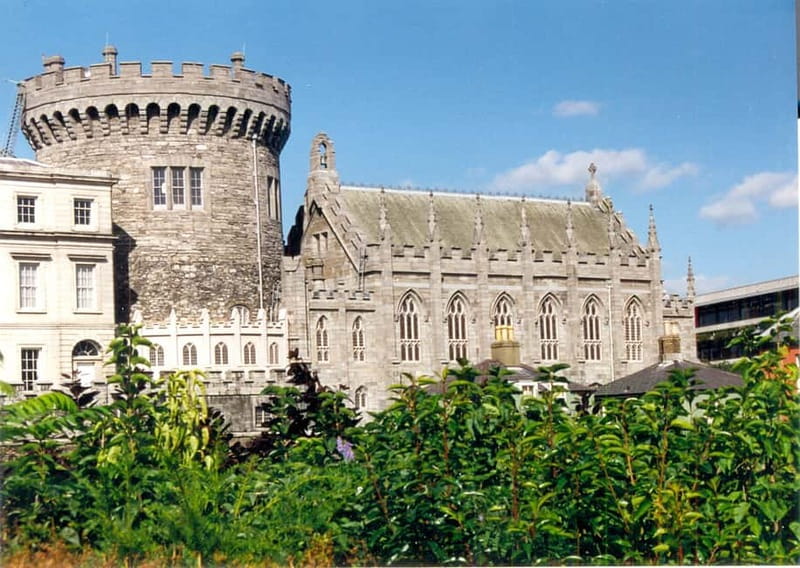
Early on, you will circle through the Dublin Castle area and see it from the outside, including the grounds and gardens. The point is not just to see a famous building. It is to understand Dublin’s long association with administration and authority, and how that history shows up in the way the center is laid out around the castle zone.
Next, you will pass by City Hall. It complements the castle stop nicely because it anchors a different chapter of civic identity. Even as an exterior-only visit, these stops help you build a before-and-after picture of Dublin’s governing story.
A small-group tour matters here. When the guide can slow down for key corners, you do not get rushed past the details that make these buildings feel connected to real lives.
Christ Church Cathedral exterior: belief, architecture, and angles
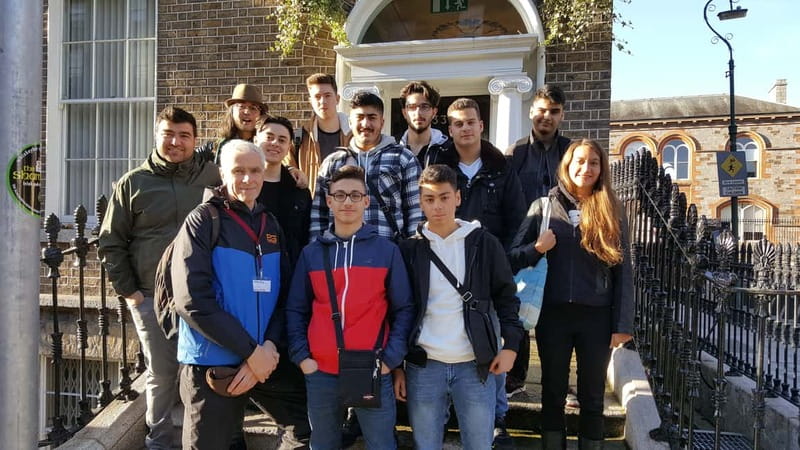
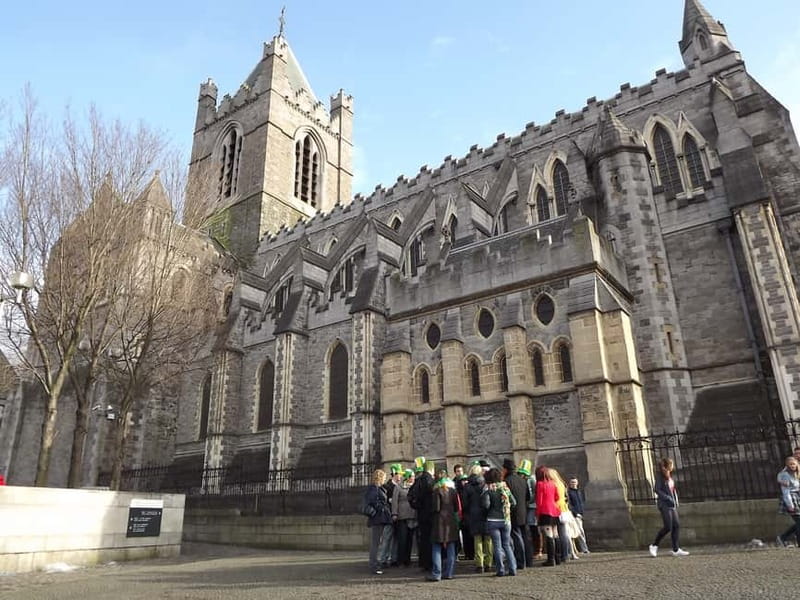
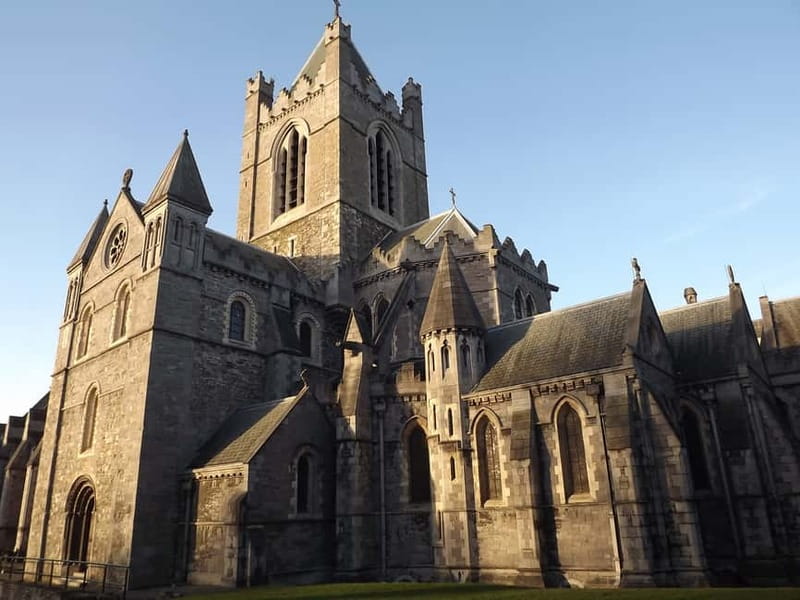
You will also see Christ Church Cathedral, again from the outside. This stop is a reminder that Dublin’s big institutions are not just administrative. They are also religious landmarks that shaped the city’s look for centuries.
I like how cathedral exteriors work for a walking tour. You get the scale and the setting without the time and ticket lines that can chew up your day. And since the tour is focused on an easy-going introduction, it gives you just enough context to make the building mean something.
If you are the type who loves noticing symmetry, stonework, and how old buildings sit against newer streets, you will get more from this exterior approach than you might expect.
Fishamble Street, Smock Alley, and Temple Bar’s Meeting House Square
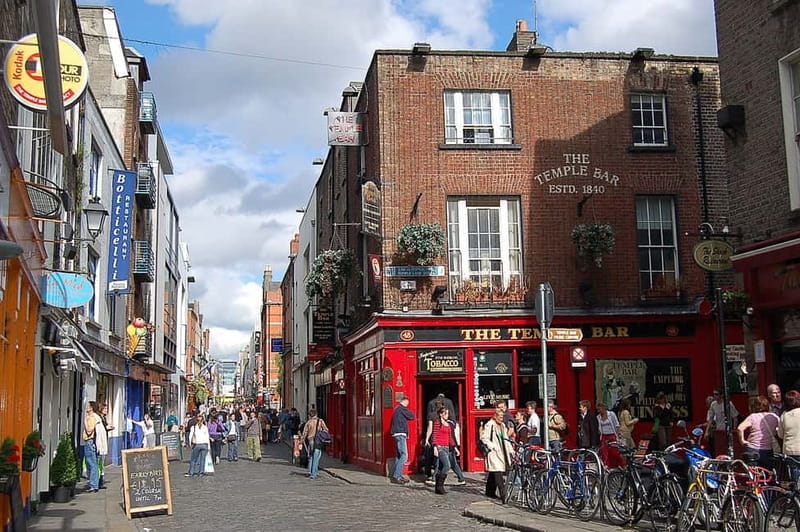
After the medieval core, the walk starts bending into the fun, character-filled heart of the city. Fishamble Street and Smock Alley are the kind of streets where Dublin feels like it has layers you can still touch. This is where the tour’s story side comes alive.
Then you reach Meeting House Square in Temple Bar. Temple Bar is famous, but the tour helps you see it as more than nightlife branding. You get the sense of how the city’s cultural center evolved, and you are guided to places that are memorable even when you are not going inside anything.
This is also a good stretch for photos, because you are walking through classic central Dublin street scenery. Just keep in mind you are still moving, so do not plan on stopping for long.






Millennium Bridge and the River Liffey: feel the city in motion
Crossing near the Millennium Bridge brings you back to the River Liffey, and that river is basically Dublin’s organizing axis. Seeing it during a walking tour helps you understand why certain streets feel like they belong together.
You will also get a story that connects people and symbols to the physical experience of the city. The tour includes a moment where you can feel the effect of a wobbly bridge in the way it is discussed, which is the sort of detail that makes a walk feel real instead of scripted.
If you like when guides give you small sensory and visual cues, this is one of the spots where you will remember the walk more than the buildings.
The Italian Quarter and St Mary’s Church turned café/bar
On the south side of the river area, you will pass into the Italian Quarter. Even if you are not here to eat, it is a meaningful neighborhood marker. It shows how Dublin absorbs immigrant influences and turns them into everyday city culture.
Then you will come to St Mary’s Church, which is now a famous café or bar. This stop is a perfect example of why exterior-only can still feel satisfying. The guide’s framing helps you see how a building’s original purpose does not disappear. It changes form, but the street identity remains.
I like these re-use stories because they do not just explain history. They tell you how Dublin lives in the present.
Henry Street and O’Connell Street: the main artery and the big events
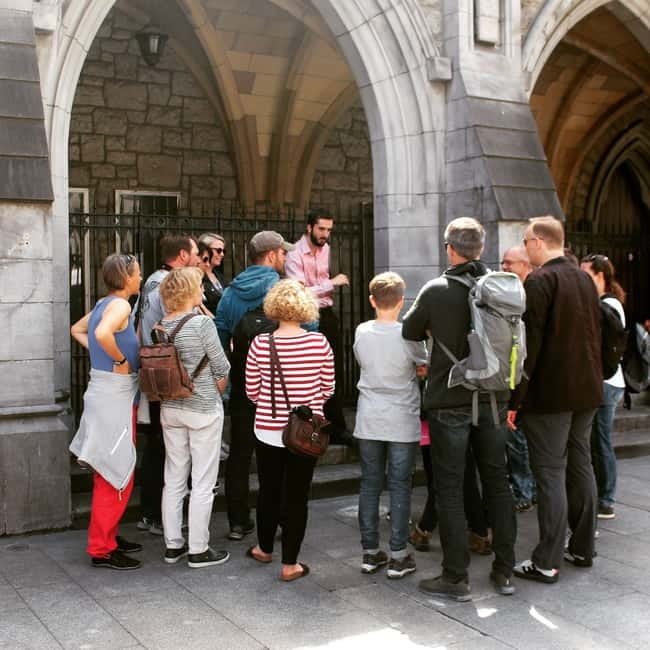
As you work toward O’Connell Street, the route becomes a little more dramatic. You will pass by Henry and Moore Streets, then get onto O’Connell Street itself, one of Dublin’s most recognizable historic thoroughfares.
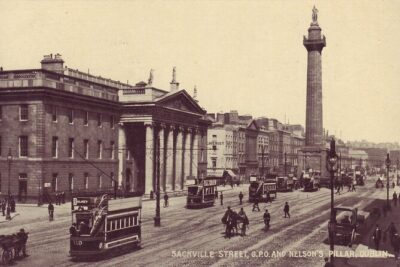
This is where you will start hearing about 1916 in a way that is tied to specific locations you can see. The General Post Office is a major highlight, and the guide explains that it housed headquarters of the rebels of the 1916 Rising. You will also hear that the building and almost the entire street and surrounds were destroyed in the aftermath.
Whether you are a history buff or not, the way this tour points you to the exact corners and facades makes the story feel less abstract. You are standing where the events happened, even if you are only looking from the sidewalk.
The General Post Office and O’Connell Monument: symbols you can spot
The General Post Office stop is built for context. You will pause outside and the guide ties the street scene to the consequences of the uprising. Even without entering, you get a clear sense of why this address became central to Ireland’s modern story.
You will also pass by O’Connell Monument. Monuments work best on foot, because you see how they sit within a real flow of pedestrians and traffic. You get to notice how the monument connects the city’s geography to its memory.
One of the tour’s clever details is how it uses symbols in everyday objects. The walk includes a tale of a post-box that represents Ireland’s transition to independence. These kinds of stories make you look twice at things you would normally ignore.
Former Parliament House (Bank of Ireland) to Trinity College and the Book of Kells
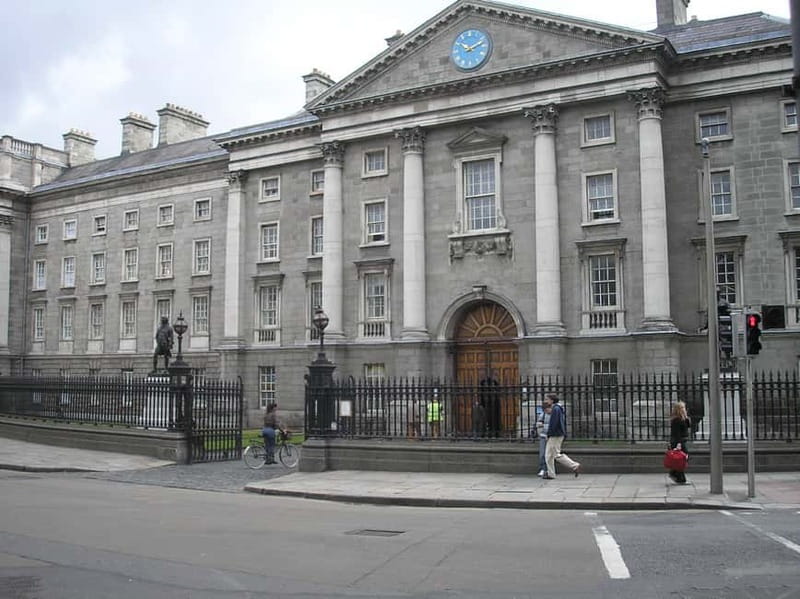
Near the end, you head toward Trinity College and the former 18th century Houses of Parliament, which is associated with the Bank of Ireland. This segment is valuable because it gives you closure on the political and civic thread you have been following since the castle area.
Finally, you finish outside Trinity College, with the tour ending around there and specifically mentioning Trinity’s famed Book of Kells. You will not be going inside on this tour, but finishing near the Book of Kells gives you a strong next step if you want to add a museum or exhibit visit later.
I also like that you finish near a major landmark because it makes your day feel complete. You can peel off after the tour and decide where to go next with a better sense of direction.
Small-group, easy-going pace: what 2.5 hours feels like
This is not a sprint tour, and it is designed to be easy to follow. The small-group setup helps keep the storytelling from feeling like a monologue, and it also makes it easier for the guide to adjust when something needs clarification.
The walk is packed with external viewpoints, so you will spend most of your time outside rather than in timed indoor stops. If that sounds ideal to you, you will enjoy it. If you need indoor breaks or you plan to do multiple attractions back-to-back, plan extra time for your own schedule.
Also, the tour includes the kind of humorous, surprising details that keep your attention. The route includes mentions like Dublin’s first but now defunct full-time cinema, a church that is not a church, a former Lisbon tram now serving as a café, an amusing representation of a da Vinci painting, and even a stark-naked representation of a very famous 18th century composer. Those are the kinds of odd, memorable clues that make the city feel playful while still grounded in real context.
Price and value at $34 for a live German guide
At $34 per person for about 2.5 hours, the value is in what you get beyond transportation. You are paying for a professional, friendly guide and a route that mixes major landmarks with street-level surprises.
If you compare the cost to doing Dublin’s sights on your own, the guide’s storytelling is the difference. It turns buildings into scenes. It turns streets into chapters. It also helps you avoid the common problem of walking past important places without knowing why they matter.
The other value factor is efficiency. In one walk, you cover Dublin’s central spine along O’Connell Street and also reach across to the north side and the River Liffey zone, plus key stops in between. That means less time figuring out routes and more time actually seeing and learning.
Who this tour suits best, and who might want another option
This tour is a great match if you:
- Want a guided orientation to central Dublin
- Prefer German-language commentary
- Like connecting history to locations you can see from the street
- Enjoy relaxed walking and small-group pacing
You might choose something else if you:
- Need interior access at major sites, since visits are external only
- Want a food-focused experience rather than a sightseeing narrative
- Have very limited walking ability, even though the tour is wheelchair accessible
Should you book this Dublin German sightseeing walk?
Book it if you want your first Dublin day to feel organized, story-driven, and easy to follow in German. The small-group format and the mix of famous sights with quirky street-level details make it more than a basic highlights tour. You will finish with a map in your head, a better sense of Dublin’s key historical points like the 1916 Rising locations, and a satisfying endpoint near Trinity College and the Book of Kells.
Skip it if you mainly want museum-style visits inside buildings. Since this tour keeps things external, you will need to add separate entry tickets for interiors if that is your priority. If you are okay with looking, listening, and getting oriented on foot, this is a strong value way to start.
FAQ
Is this tour in German?
Yes. The live tour guide speaks German.
How long is the Dublin sightseeing walking tour?
The duration is about 2.5 hours.
Where does the tour start?
It starts at the Tree of Gold statue (Crann an Óir) in Central Plaza on Dame Street, near the corner of Dame Street and Fownes Street Upper.
Where does the tour end?
The tour ends back at the meeting point (and is described as finishing around Trinity College).
Are there any visits inside buildings?
All visits are external. You may have opportunities to do interior visits after the tour.
What is included in the price?
A professional, well trained guide is included.
Is the tour wheelchair accessible?
Yes, the tour is wheelchair accessible.
What is the cost per person?
The price is $34 per person.
What cancellation options are offered?
Free cancellation is available up to 24 hours in advance for a full refund, and you can reserve and pay later to keep plans flexible.
More Tours in Dublin

More Tour Reviews in Dublin
Not for you? Here's more nearby things to do in Dublin we have reviewed


Dublin Walking Tours, compared.
 ★ 5.0Dublin Highlights and Hidden Gems Guided Walking TourFrom $296,020 reviews
 ★ 4.9Highlights and Hidden Gems Walking TourFrom $272,140 reviews
 ★ 5.01916 Rebellion Walking TourFrom $271,605 reviews
 ★ 5.090 Minute Dublin Walking tour and Sightseeing tipsFrom $21916 reviews
 ★ 5.02-Hour Historical Walking Tour from DublinFrom $22875 reviews
 ★ 4.7Historical 2-Hour Guided Walking Tour of DublinFrom $22865 reviews
 ★ 5.0Dublin Traditional Irish 3 Course Meal Walking Tour with LocalFrom $107755 reviews
 ★ 4.9Mythology, Folklore and Legends Walking TourFrom $27703 reviews
Browse the lists this tour appears in