
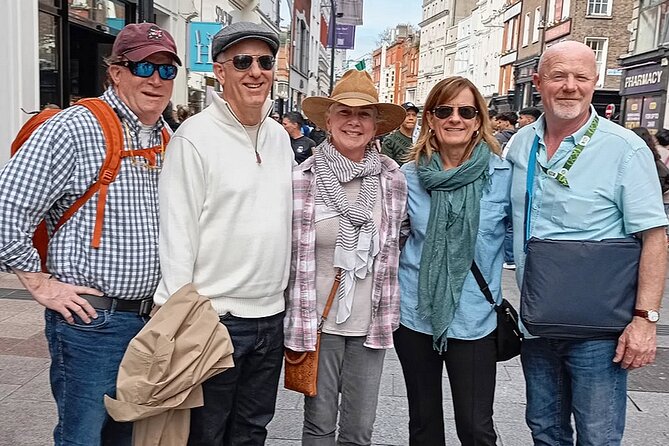
Reviewed · DUBLIN WALKING TOURS
Dublin Private Walking Tour | 3 hour Highlights & Hidden Gems
Dublin hits different when someone guides you. This 3-hour private walking tour strings together Dublin Castle, Trinity College, Temple Bar, and the city’s more reflective spots, all with a licensed guide who brings facts, dates, and stories down to street level. I especially like the way the walk keeps moving, but the pace is still relaxed enough to ask questions. The one drawback is that most stops are short and largely external viewing, so you will not get long museum time.
It starts at the Molly Malone Statue and typically ends near College Green, which is a smart finish point if you plan to keep exploring after the tour. If you want a practical introduction to how Dublin pieces together, this route is a strong fit.
Key highlights you will feel on this walk

- 100 percent private time with a licensed, experienced guide, just for your group
- A tight route that covers famous landmarks plus quieter city corners like St Stephen’s Green and Dubh Linn Gardens
- A clear history arc from medieval Dublin Castle through the 1916 Easter Rising sites
- Flexible ending near College Green or adjusted to match your next stop
- Useful after-tour help, including digital PDF tips for cafes, pubs, and Irish traditional music venues
Why this 3-hour Dublin route works so well
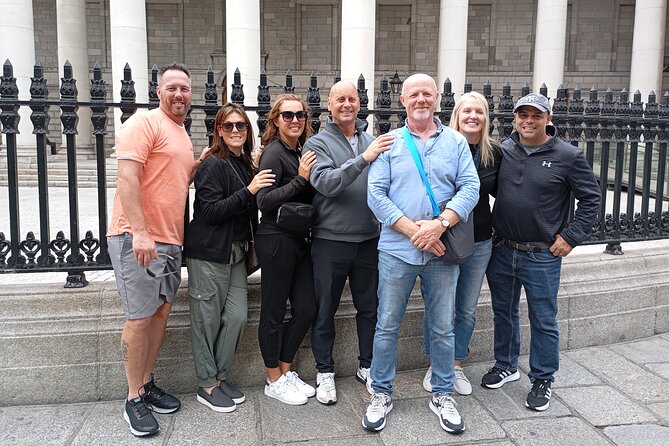
Dublin can feel big on day one. This tour fixes that with a route you can actually remember: power and administration, then education and culture, then music and politics, then reflection and diaspora. You get a guided “map in your head,” which helps you move around the rest of the trip without constantly checking your phone.
The private format matters more than you might think. You can go at your speed, ask follow-ups, and get explanations aimed at your interests, not a scripted group performance. It also helps on a city like Dublin, where one street can go from charming to chaotic in minutes.
At about three hours, you are not committing to a whole day. But you are also not doing a 60-minute “photo tour.” This hits a sweet spot for first-time visitors who want context, plus returning travelers who want a smarter way to see what they already walked past.
You can also read our reviews of more private tours in Dublin



Meeting at Molly Malone, finishing near College Green
You meet at the Molly Malone Statue on Suffolk Street in Dublin 2. That’s a great start because it’s central, and you are already in the zone where Dublin becomes walkable fast.
Most tours end at College Green, which is convenient for hopping toward Trinity College or continuing down toward the south side of the city. The experience also allows you to choose a different end point if you have a timed ticket or a tight schedule. That flexibility is handy if you are pairing this with another must-do, like a cathedral visit.
If plans change, you get free cancellation up to 24 hours in advance, which is a low-stress option when weather or transport schedules wobble. Just keep an eye on the local start time.
Dublin Castle, where rule and administration left their mark
Dublin Castle is one of those places where you can feel history in the stone even if you only see the outside. The tour takes you through an external look, with time focused on what the castle represented when it was the seat of British rule and administration in Ireland, starting from the early 1200s (the first stone dates to 1204).
What I like about this part is that it does not treat the castle like a standalone monument. You get a storyline. The guide connects who held power, why Dublin mattered, and how those decisions shaped everyday life in later centuries.
A possible consideration: since this is an external tour of the castle area, you should not expect a full interior experience. If you want castle rooms and exhibitions, you would likely need a separate ticketed visit.
Molly Malone Statue, the myth that tourists and Dubliners share
The Molly Malone Statue stop is brief, but it’s a good reset after Dublin Castle. The guide uses this moment to connect a real part of Dublin street culture to an iconic figure from the city’s unofficial singing anthem.
I like this kind of stop because it teaches you how legends become city branding. The Molly Malone statue is one of the most photographed sculptures in Dublin, and the guide explains why the story keeps sticking around.
If you are trying to dodge crowds, come with patience. This statue is popular and the surrounding area can be busy, especially later in the day.
Trinity College Dublin and the campus walk you can actually do
Trinity College Dublin is famous for good reasons, and this stop gives you the most practical version of seeing it: an external walk through the grounds. You get a grounding in why it was founded in 1592 by Queen Elizabeth I, and why it remains central to Irish education.
Trinity’s campus is gorgeous, but the real value here is what the guide pulls from it. The walk helps you understand Dublin’s long relationship with scholarship and architecture, and it also gives you a visual sense of the city layout around the college.
A consideration: because entry to interior spaces is not included, and this is primarily an outside experience, you should plan your expectations accordingly. Still, the grounds walk is a smart way to get the feel of Trinity without adding extra ticket lines.
A few more Dublin tours and experiences worth a look

Temple Bar: famous area, smarter way to read the lanes
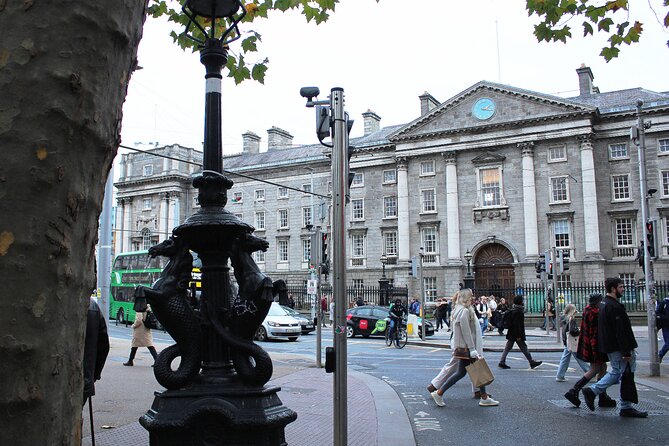
Temple Bar is one of Dublin’s best-known neighborhoods, but the tour helps you see past the label. You spend time in the area, which is about 28 acres, and the focus is on the streets, the side lanes, and the mix of pubs and eateries.
I really like that the guide treats Temple Bar as a living cultural district, not just a nightlife backdrop. You hear how Irish traditional music fits into the neighborhood and how the area earned its reputation.
Drawback to know: Temple Bar can be noisy and crowded. If your group prefers quiet, you may want to treat this as a short immersion, not a long sit-down. This tour gives it enough time to make sense, then moves on.
Ha’penny Bridge and College Green, the city’s geometry lesson

At the Ha’penny Bridge, you get a quick but meaningful vantage point. The guide explains why it’s so iconic, including its wrought iron history and its role linking the south and north sides of the city.
Then College Green gives you the “big picture” view. It’s a three-sided plaza in the heart of Dublin, and the stop is built around the buildings that frame it: Bank of Ireland on the north side, Trinity College to the east, and monuments plus Georgian and Victorian architecture nearby.
This section is great for two reasons. First, it helps you understand Dublin’s center as a connected set of streets and landmarks. Second, it slows your eyes down so you start noticing details like facades and how the city’s institutions sit against the sidewalks.
Powerscourt Townhouse Centre, a Dublin address people often miss

Powerscourt Townhouse Centre is the kind of place you could walk past on your own. Here, you get the story of the original 18th-century residence for the Viscount Powerscourt and Lady Elizabeth, and you learn how it operated as a social hub for Dublin’s elite.
The “value” of this stop is not shopping time. It’s the way the guide turns a tucked-away building into a clue about who shaped Dublin society when the city was expanding in power and wealth.
It’s also a short stop, so if you want deeper time inside shops or galleries, you will want to plan to return later.
St Stephen’s Green, where you can reset between stories
St Stephen’s Green Park is about 22 acres of gardens, lakes, paths, and sculptures. The tour gives you a short walking pause in the middle of all the city landmarks, which helps your brain keep the history in order.
This is where I’d suggest you do one thing: slow down and look at the layout. A city park like this tells you something about Dublin’s priorities when public space became a way to balance the density of streets.
A consideration: if the weather is hot or windy, the park can still feel like an outdoor pause. Bring water and wear shoes that handle uneven paths.
Dubh Linn Gardens, a quiet Dublin pocket with character
Dubh Linn Gardens is presented as a hidden-feeling green space, and the guide explains the unique brickwork and Celtic-pattern details that make it memorable even in a short stop. It’s the sort of place that reminds you Dublin has small-scale design choices, not just big monuments.
I like that the guide frames it as a story you can spot with your own eyes, rather than only pointing from afar. If you enjoy noticing small details in public spaces, you will probably enjoy this one.
Because the stop is brief, keep your expectations realistic. You are looking, learning, and moving on.
Edward Delaney’s Famine Memorial and what it asks you to remember
Then the tour turns solemn. The Edward Delaney’s Famine Memorial pays tribute to victims of the Great Irish Famine of 1845, with sculptures of emaciated figures that symbolize starvation and displacement.
If you have any sensitivity to heavy themes, this stop is the most intense moment on the walk. I think it’s still worth including because it gives the history behind the diaspora a physical place to stand, not just a page in a book.
A practical note: take your time with this one. You do not need to rush through it to keep the tour schedule. The guide sets the tone for respectful viewing.
Parliament House and the question of what you can enter
Next comes Parliament House, with a focus on the original House of Lords, now associated with Bank of Ireland. The guide explains its early 18th-century construction and frames why this building matters to how Irish governance evolved.
There is an important reality check: entry is subject to times and opening. So if the interior door is open, you may step in. If it is not, the tour will still give you the context from the outside.
This is one reason I like doing this tour early in your trip. If you are back in the area later and the interior was closed that day, you might be able to revisit.
Music Wall of Fame, Wolfe Tone, and Dame Lane’s 1916 moment
Dublin has always had a talent for turning ideas into public reminders. The Wall of Fame celebrates legendary Irish bands and singers who shaped Irish and world music, and the guide connects that musical identity to Dublin’s wider culture.
Then you move into national pride and political memory with the Theobald Wolfe Tone statue, who is known as a father of Irish nationalism and connected to the 1798 rebellion. This stop helps you understand why certain figures become repeat names in street-level memorials.
The final stretch at Dame Lane centers on the Easter Rising. The guide shows a copy of the original Irish Proclamation, issued April 24, 1916, declaring an independent republic and outlining rights like equal citizenship. This is the part that ties the earlier “power” story to the push for self-determination.
Even in short time windows, these stops make you feel that Dublin’s politics are not only in museums. They are in wording on plaques and placement of statues on streets you can walk every day.
What you actually get for $144.03 per person
At $144.03 per person for a private three-hour walk, you are paying for time with a licensed guide and the flexibility of a custom-feeling route. You are not paying for a stack of museum entrances. In fact, ticketed attraction entry is not included.
So the value equation looks like this:
- You get: expert historical overview, personal attention, and practical Dublin orientation advice.
- You do not get: food and drink, plus entrance to ticketed sites.
What makes it feel worth it is the guide style described by many past visitors: high energy, strong prep with facts and dates, and a knack for making stories stick. Some groups note the guide even brings extra materials like a photo portfolio and may add songs, which can turn dry facts into a moment you remember later.
Also, the timing matters. This tour is frequently booked about two months in advance, so reserving early can help you lock in the slot you want.
Practical tips to get more out of the walk
A walking tour is only as good as what you do before it starts. Here’s how to make this one land:
- Wear comfortable walking shoes. The route is fairly central, but it’s still a lot of pavement plus stairs and curbs.
- Bring a light layer. Dublin weather changes fast, and you will spend most of the time outdoors.
- If you care about photography, tell the guide early. You’ll get the best spots at the best moments.
- Plan your meals after the tour. You will get PDF recommendations, but it helps to walk first so you know what area you want to eat in.
If you want the best match for your interests, this is the kind of tour where asking questions works. You can steer the guide toward architecture, political history, or the cultural side tied to traditional music.
Who should book this Dublin private walking tour
This tour is a strong fit if you:
- want a first-time Dublin orientation that goes beyond landmarks
- like history that connects to what you see on the street
- prefer a private experience where you can ask questions and go at your pace
- want practical help after the walk, including restaurant, pub, and Irish traditional music venue recommendations
It may be less ideal if you:
- want long interior visits at ticketed sites
- are traveling with very young children. The tour is not recommended for babies or children under 5 years.
Should you book this tour?
Yes, if you want a smart, high-impact Dublin introduction without the stress of planning every stop. The price makes sense when you factor in the private guide, the historical storytelling thread, and the practical orientation help you get to use immediately afterward.
Book it especially if you enjoy street-level history and you want the city’s politics, culture, and memorials explained in plain language. Skip it if your top priority is museums and long ticketed interiors, because this walk leans toward exterior viewing and short, well-chosen stops.
FAQ
How long is the Dublin private walking tour?
It runs for about 3 hours.
How much does the tour cost?
The price is $144.03 per person.
Is this tour private?
Yes. It is a 100 percent private experience, so only your group participates.
Where do we meet the guide?
You meet at the Molly Malone Statue, Suffolk St, Dublin 2, D02 KX03, Ireland.
Is pickup available?
Pickup is offered. You can meet at hotels listed or at a city center accommodation, or you can meet at the central meeting point at Molly Malone.
What’s included in the tour price?
Included are a certified guide-led private tour, an expert historical overview, dedicated personal attention, and digital PDF recommendations for cafes, restaurants, pubs, and Irish traditional music venues. You also get Dublin orientation advice.
Are entrance tickets to attractions included?
No. Entrance into ticketed or paid attractions is not included. Some entries may depend on opening times, such as Parliament House.
Is the tour suitable for children?
It is most travelers can participate, but it is not recommended for babies or children under 5 years.
What language is the tour offered in?
The tour is offered in English.
More Private Tours in Dublin


More Tours in Dublin






More Tour Reviews in Dublin



Not for you? Here's more nearby things to do in Dublin we have reviewed


Dublin Walking Tours, compared.
 ★ 5.0Dublin Highlights and Hidden Gems Guided Walking TourFrom $296,020 reviews
 ★ 4.9Highlights and Hidden Gems Walking TourFrom $272,140 reviews
 ★ 5.01916 Rebellion Walking TourFrom $271,605 reviews
 ★ 5.090 Minute Dublin Walking tour and Sightseeing tipsFrom $21916 reviews
 ★ 5.02-Hour Historical Walking Tour from DublinFrom $22875 reviews
 ★ 4.7Historical 2-Hour Guided Walking Tour of DublinFrom $22865 reviews
 ★ 5.0Dublin Traditional Irish 3 Course Meal Walking Tour with LocalFrom $107755 reviews
 ★ 4.9Mythology, Folklore and Legends Walking TourFrom $27703 reviews
Browse the lists this tour appears in