
Reviewed · DUBLIN WALKING TOURS
Dublin: Hidden Gem Walking Tour with Local Guide
Tallaght holds stories you never expect. This 2-hour walk with local guide Sophie turns overlooked streets into a clear timeline, from ancient roots to names tied to world events. I love how the tour links famous figures to real places, especially with letters and writings you’re shown along the way.
I also like the practical payoff. You get a Dublin Mountains viewpoint during the mythology stop, and the finale includes basic Irish you can use right at a bilingual café in Tallaght Village. One consideration is that the experience requires good weather, so plan to bring layers and be ready for a reschedule.
Key highlights before you go
- Small-group feel (max 12): easier questions, slower pacing, more conversation.
- Letters, poems, and name-to-place storytelling: you’re not just hearing dates.
- Irish language practice at the end: a simple way to keep the tour in your day.
- Dublin Mountains views from Tallaght: history with fresh air.
- Stops built around real local figures: Katharine Tynan, William Howard Russell, Alice Furlong.
Why Tallaght, and why this 2-hour route works
Dublin is famous for its center. Tallaght is famous for… not being the center. That’s exactly why this walk feels good value. You get a concentrated dose of local history without the stress of bouncing across multiple neighborhoods.
The pacing is built around short, focused stops, usually 5 to 15 minutes each. That matters because it keeps the information from turning into a lecture. It’s also handy if you’re visiting Dublin for a few days and want something different from the usual city highlights.
At $18.05 per person for about 2 hours, the pricing feels fair when you consider the walk-style format and that the stops are marked as free admissions. You’re paying for interpretation and storytelling, not museum entry fees. This is the kind of tour that makes a small area feel big, in the best way.
One more reason it works: the route runs between places that connect naturally, from Kingswood Heights down toward Tallaght Village. You don’t spend the day figuring out where to go next. The guide does that part for you.
You can also read our reviews of more guided tours in Dublin

Starting in Kingswood Heights: Tallaght’s ancient beginnings
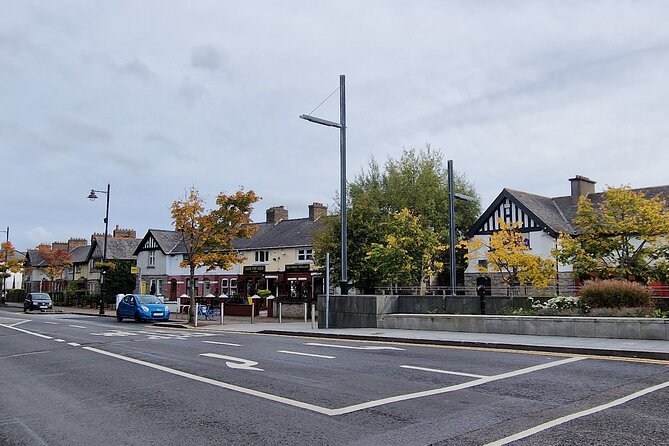
You begin in Kingswood Kilnamanagh, Dublin, and the tour kicks off with a quick orientation to Tallaght’s beginnings in ancient Irish history. That first stop is important even if you think you already know Dublin history. It frames the whole day, so later stories land with context instead of feeling random.
You’ll also get a sense of the area’s geography early. Kingswood Heights sits like a foothill entry point to Tallaght, which helps when you reach the viewpoint later. If you like walking tours where the streets themselves teach you something, you’ll appreciate the way the route sets up your mental map.
This isn’t a stop where you stand around for ages. It’s short, calm, and designed to get you oriented, then move you onward.
Whitehall and Katharine Tynan: Yeats links you can walk to
One of the tour’s standout themes is how Tallaght connects to major Irish literary circles. At a former residence connected to Katharine Tynan (Whitehall), you hear about her life, her friendships, and her writing.
This is where the day gains extra flavor. You’re not only told that she was connected to famous names. You’re shown content from Katharine’s letters, including her correspondence with W.B. Yeats and George William Russell (AE). That letter-based storytelling makes people feel real, not just like names on a school sheet.
The guide also brings in AE’s description of Katharine as the earliest singer in that awakening of imagination known as the Irish Renaissance. It’s the sort of detail that helps you understand why literary Ireland mattered beyond drawing rooms.
Potential drawback here? If you’re the kind of visitor who prefers hands-on historic sites, this stop is more about conversation and reading excerpts than seeing a museum-grade interior. Still, the trade-off is the personal, character-driven storytelling.
William Howard Russell: war reporting, Crimean to America
Next you head toward Belgard Road and a different kind of historical figure. William Howard Russell, born in Jobstown, Tallaght, is considered one of the first war correspondents.
This stop is a great example of how the walk breaks the stereotype that Dublin history is only about politics and rebels. You hear how his reporting became synonymous with the role of a war correspondent, and you get an outline of the range of what he covered for The Times.
You’ll learn about his earlier reporting that touched on meetings of Daniel O’Connell and the Great Famine, then move through major conflicts like the Crimean War and the American Civil War. The scale is huge for a tour that stays within Tallaght.
There’s also a human connection to tie it together. You get a brief look at his friendship with Charles Dickens. That link gives you a familiar literary name, then shows how Tallaght produced someone who helped shape how the world saw war.
As with the literary stop, this is likely to be more listening and looking at shared writings than exploring a preserved room. But the storytelling style seems designed to keep you engaged, and the walk keeps you from getting stuck in one place too long.
Oisín in the Land of Youth: mythology plus a Dublin Mountains view
At Belgard Road again, the tour shifts into mythology. You get a background on Irish myth, then the guide brings you to one of Ireland’s best-known legends, Oisín I dTír na nÓg (Oisín in the Land of Youth). You’ll also be shared a bilingual version in Irish and English, which is a nice touch if you want to hear how the language works without feeling tested.
What makes this stop especially memorable is the setting. You’ll have a lovely view of the Dublin Mountains. That matters because it turns a mythology conversation into an actual sense of place. Even if you’ve heard Oisín stories before, seeing where the story feels connected to the land changes how it sticks.
Practical note: you might want a light layer here. Views can mean wind, and the tour includes open air time at this point.



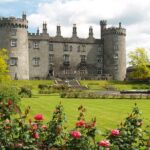
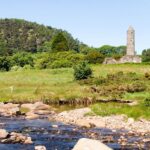

Tallaght Aerodrome, Urney Chocolates, and how businesses shaped the town
Belgard Retail Park is where the tour gets practical and local in a different way. You learn about the former Tallaght Aerodrome, including its role across several major periods: WW1, the Irish War of Independence, and the Irish Civil War.
Then the story shifts from aviation to everyday goods, which is a clever move. You’ll hear about the Gallagher family and how they brought Urney Chocolates into being. The guide also explains how Urney became part of Tallaght’s identity for decades and later closed in 1980. The tour even touches on how the brand lives on.
This stop helps you understand why places feel the way they do. Brands are not just products. They create jobs, street activity, and a shared local memory. Hearing that story in context gives you a new lens for anything you might see in Dublin suburbs, not only Tallaght.
There’s also a brief mention of another well-known brand, Jacob’s, which operated in Tallaght for a time. The point is not to memorize brand histories. It’s to show that the area has always been shaped by industry, not only by political events.
Possible consideration: this section may feel more story-driven than site-based. If you’re hoping for physical remnants of the aerodrome, you may not find dramatic structures. The value is in how the guide reconstructs the timeline through shared details.
From TU Dublin Tallaght campus to modern Tallaght growth
At TU Dublin, Tallaght Campus, you zoom out. The tour examines how Tallaght transformed in just a few decades, especially during the 1970s and 1980s. You’ll hear that Tallaght in the 1980s was one of the fastest growing urban centres in Western Europe, and that kind of statistic helps you understand why Tallaght feels modern in parts but still rooted beneath the surface.
You’ll also learn what it meant for local people. The guide frames the growth against an Ireland dealing with economic difficulties, high unemployment, and high emigration. That context matters because it turns urban development from a fact into a human story.
If you’ve ever wondered why some Dublin neighborhoods grew fast and others didn’t, this is where you get a local explanation. And because it’s still part of a walking tour, it doesn’t feel like a textbook chapter.
St Maelruain’s Church: monastery roots to Alice Furlong’s Irish language work
One of the most important pairs of stops comes around St Maelruain’s Church of Ireland.
First, the guide explains that the church now stands on a former monastery site. In ancient Ireland, monasteries at Finglas and Tallaght were known as the two eyes of Ireland. That phrase is striking because it frames religious sites as essential organs in a wider cultural system.
You’ll also hear about St Maelruain himself and how the present-day church came into being. The stop is short, but it gives you a foundation for understanding why religion and learning mattered locally.
Right after that, you shift focus to a person connected to the grounds: Alice Furlong, buried there. You learn she was a founding member and one of the vice-presidents of Inghinidhe na hÉireann (Daughters of Ireland). That’s a big name for Irish cultural activism, and Tallaght is not just a backdrop, it’s part of her story.
You also learn she was a talented poet and writer, and that she advocated for the Irish language. During this stop, you’re shared poetry, including works in Irish. Professional translations into English are provided, which is a practical help if Irish is not your strong suit.
If you want one reason to book this tour, this is it. These are the stops where Tallaght stops feeling like a suburb and starts feeling like a place that helped move Irish culture forward.
Tallaght Village ending: Fenian Rising, Dickens, cottages, and the steam tram
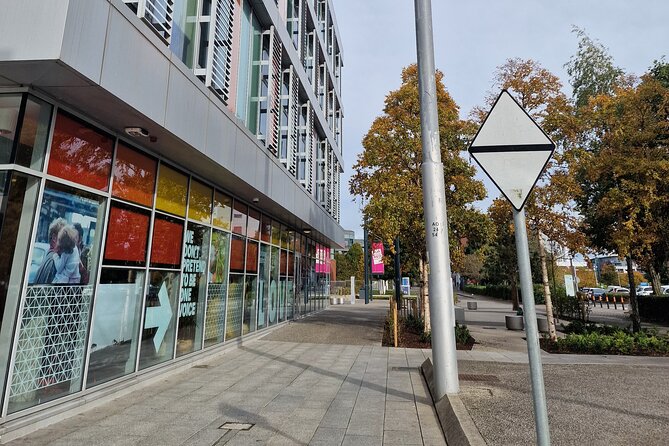
The last stretch leads you into Tallaght Village and caps the walk with a mix of rebellion-era history, local architecture, and transport.
At the Village Green, a plaque commemorates the Fenian Rising of 1867. You learn about Tallaght’s role in that rising, and the guide also shares writings from Charles Dickens related to this period. That echoes the earlier Russell-Dickens link, so Dickens becomes a quiet thread that ties multiple stops together.
Then you end at the cottages in the village designed by architect Thomas Joseph Byrne, one of the most influential architects of the day. Architecture is easy to overlook on history walks, but here it serves as evidence. Buildings are a time capsule you can point at.
The guide also briefly mentions the Dublin and Blessington Steam Tramway, which ran through the area before closing in 1932. It’s a reminder that Tallaght’s growth and identity weren’t only shaped by politics or literature. Moving people also shaped it.
To close, you’re taught some basic Irish and encouraged to use it at a special local café right in the heart of Tallaght Village. That last part is small, but it’s smart. It turns a language moment into something you can actually do that day.
What to bring, and who this tour suits best
This tour is an easy win if you enjoy street-level history, local names, and guided context. It also suits you if you want something to balance a typical Dublin itinerary. After a day of major sights, a walk like this gives you a different Dublin angle.
Bring:
- Comfortable walking shoes for uneven sidewalks and short hillside segments
- A light rain layer, especially since good weather is required
- A charged phone for the mobile ticket
Who should book:
- History fans who like connections, letters, and stories tied to place
- People who want to practice Irish in a low-pressure way
- Anyone curious about how Dublin suburbs evolved, from rural beginnings to urban growth
Small-group size helps a lot here. With a maximum of 12 people, you’re more likely to get questions answered and not just listen in the back line.
Should you book this Tallaght tour?
If you’re trying to learn more about Dublin beyond the usual downtown highlights, I think this tour is worth your time. The best part is the way it keeps linking people to places, from Katharine Tynan and William Howard Russell to Alice Furlong and the Fenian Rising sites.
I’d book it if you like conversation and you want a practical introduction to Tallaght’s layers, not just a list of facts. The only hard no is weather. If conditions are poor, the tour may be rescheduled, so check plans.
Overall, at $18.05 for a guided 2-hour walk that mixes literature, war correspondence, mythology, and Irish language practice, it’s strong value. You’ll leave seeing Tallaght differently, and that’s the point.
FAQ
How long is the Dublin Tallaght Hidden Gem Walking Tour?
The tour lasts about 2 hours.
What is the price per person?
The price is $18.05 per person.
What language is the tour offered in?
The tour is offered in English.
Is a mobile ticket provided?
Yes, it includes a mobile ticket.
Where do I meet the guide?
You start at Kingswood Kilnamanagh, Dublin, Co. Dublin, Ireland.
Where does the tour end?
The tour ends at Tallaght Village at R819, beside a bilingual Irish/English café.
How many people are in the group?
The maximum group size is 12 travelers.
What if the weather is bad?
This experience requires good weather. If it is canceled due to poor weather, you will be offered a different date or a full refund.
Are service animals allowed?
Yes, service animals are allowed.
More Guided Tours in Dublin


More Tours in Dublin

More Tour Reviews in Dublin


Not for you? Here's more nearby things to do in Dublin we have reviewed


Dublin Walking Tours, compared.
 ★ 5.0Dublin Highlights and Hidden Gems Guided Walking TourFrom $296,020 reviews
 ★ 4.9Highlights and Hidden Gems Walking TourFrom $272,140 reviews
 ★ 5.01916 Rebellion Walking TourFrom $271,605 reviews
 ★ 5.090 Minute Dublin Walking tour and Sightseeing tipsFrom $21916 reviews
 ★ 5.02-Hour Historical Walking Tour from DublinFrom $22875 reviews
 ★ 4.7Historical 2-Hour Guided Walking Tour of DublinFrom $22865 reviews
 ★ 5.0Dublin Traditional Irish 3 Course Meal Walking Tour with LocalFrom $107755 reviews
 ★ 4.9Mythology, Folklore and Legends Walking TourFrom $27703 reviews
Browse the lists this tour appears in