

Reviewed · DUBLIN WALKING TOURS
Dublin (Dun Laoghaire) Top-Rated Coastal Walking Tour
A coastal walk beats a straight city day. This one strings together Dun Laoghaire, Dalkey, and the in-between villages with a human scale and a local guide. You get maritime stories, plus real stops like the James Joyce Tower & Museum (with the spiral-stair climb).
I love the simple logistics. The meeting point is easy at the DART station area, and you finish at Dalkey DART, so you can ride back to Dublin without stress. I also like the variety packed into a half-day, from harbor history and castle ruins to parks and seaside swimming spots.
One thing to plan for, it is a real walking tour. Some paths can be uneven, and the day can run long enough that you will want good shoes and a snack plan.
Key things you should know before you go
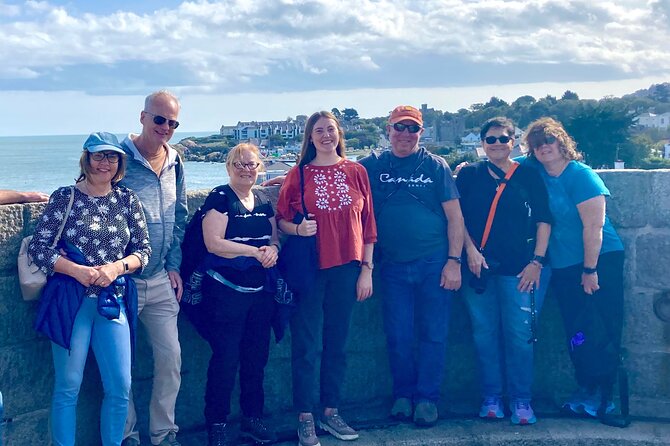
- Easy start at Dun Laoghaire, right by the harbor area and DART station
- Spiral staircase included, via the James Joyce Tower & Museum entry
- Coast, villages, and castles in one loop ending at Dalkey DART
- Small group size (max 20 people) so you can actually ask questions
- Good rest stops, and the pace is designed to feel steady
- Weather matters, since it is a coastal walking experience
Why Dun Laoghaire to Dalkey feels like a real Dublin side trip
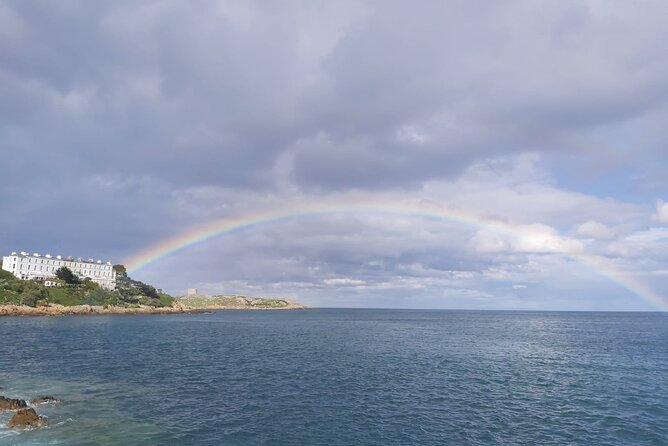
Dublin can be loud and central. This tour gives you the opposite. You trade crowds for coastline air, local lanes, and the kind of scenery Irish families actually use on weekends.
The best part is the theme. Instead of only telling you big national facts, you hear how these towns grew around sea work, rail lines, and repeated waves of history. That is why the stops hit differently: harbors, parks, railway-related lanes, a Norman castle site, and the kind of viewpoint that makes you stop and just look out.
And yes, the day is guided, so you do not have to guess what you are seeing. With Marina leading, you get context fast, plus recommendations for where to eat and what to do when you reach Dalkey.
You can also read our reviews of more tours and experiences in Dublin.



Meeting at the harbor, then finishing at Dalkey DART
The meeting point is 1 Harbour Rd, Dún Laoghaire. It is close to public transit, and it is easy to find once you are on the right side of the DART. Many people appreciate this part because it reduces the early-day scramble.
The tour ends at Dalkey DART station. That matters because it lets you decide your own pace after the walk. You can train back to:
- the city center
- Dun Laoghaire (your start area)
- or another DART stop along the way
I like end-to-end transit like this. It turns the coastal walk into a true half-day plan instead of a one-way hike where you must figure everything out later.
Dun Laoghaire Harbour: where the maritime story begins
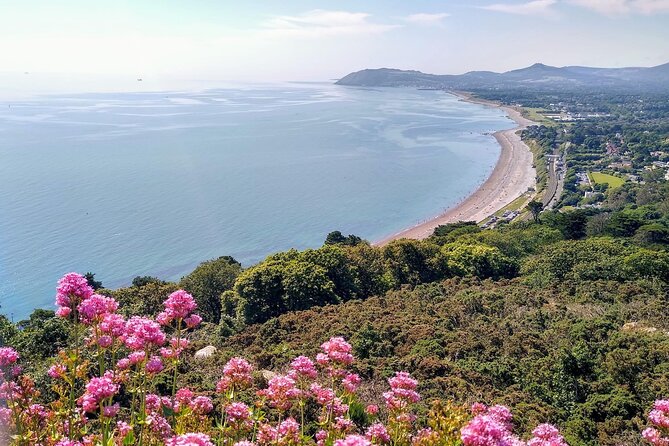
Your first major stop is Dun Laoghaire Harbour and the pier area. You stand there and hear the history of the pier and harbour, and you connect it to how people worked, traveled, and traded along the coast.
This is a smart opener. Harbors are where geography becomes economics. When you understand why a pier mattered, everything else you see later, like the industrial past in nearby harbors, starts making more sense.
Practical note: this is a short stop. You are not getting stuck inside for hours. You get the core story, then you start walking while your brain is still tuned to the theme.
People’s Park and the Sunday farmer’s market bonus
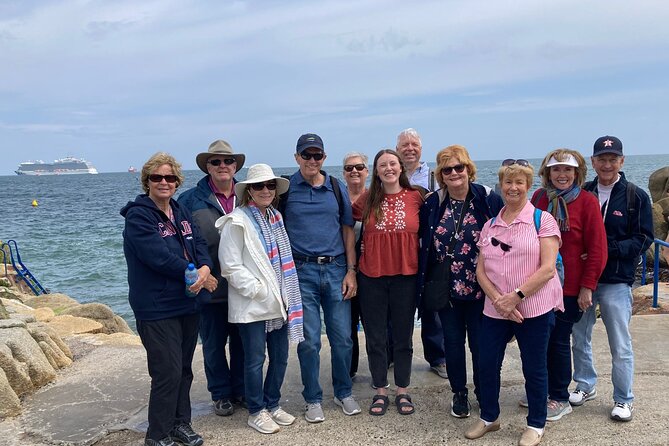
Next comes People’s Park, a local green space with a calmer vibe than the waterfront. The tour uses it as a breather and a way to show the area as something lived in, not just photographed.
If you go on a Sunday, the tour spends extra time exploring the farmers market. Even if you do not buy anything, it adds a real sense of daily life in the suburbs, not just heritage sites.
This is also where the pacing starts to feel friendly. The stop length is short, but it breaks the walk into manageable chunks.
The Metals laneway: rail-era history in a small corridor
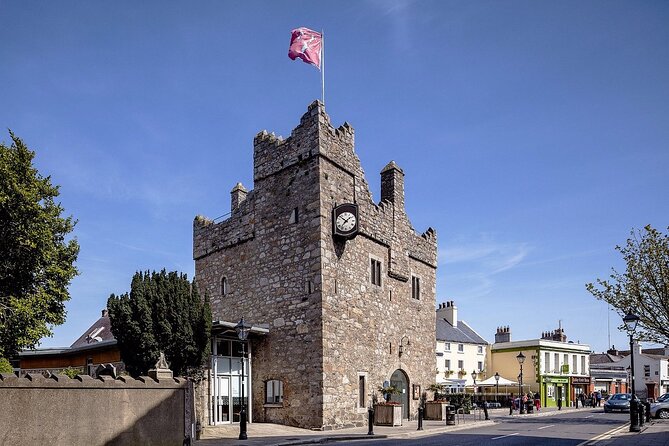
Then you hit The Metals, a historic laneway with railway connections. This kind of stop is easy to skip if you are walking on your own, because it is not the headline attraction you expect in Dublin.
But it is the kind of detail that makes a coastal tour feel specific. You learn how infrastructure shaped where people moved and how the coast connected to the wider city.
It is also a quick stop, which helps the tour stay on time. You get enough story to care, then you are out the door again.






Through typical Irish village streets and the seaside swimming point
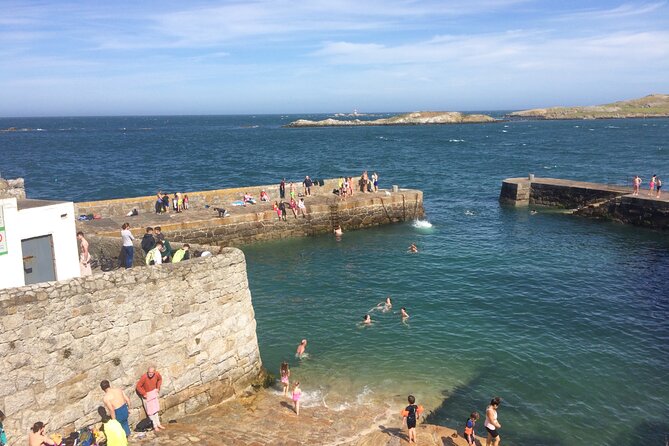
After the tighter, history-heavy bits, the route shifts into something more everyday. You pass through a typical Irish village and keep moving toward the coast.
One of the standout moments for many people is seeing Dublin’s most famous swimming point. The area associated with this is Sandycove, and it is famous because people swim there even when the water feels wildly cold by outside standards. You will hear why it became a local magnet.
This stop works even if you do not swim yourself. It is a culture moment. You get to see how people use the coastline like it belongs to them.
If you are visiting in a busy season, you still will not feel trapped by crowds. The tour approach keeps you moving through viewpoints and small streets instead of lining up behind the same few attractions.
James Joyce Tower & Museum: the spiral climb and rooftop views
The big ticket item in the day is James Joyce Tower & Museum. You enter the museum, hear the history, and then climb the spiral staircase up to the rooftop viewing point.
This is often the moment people remember most, because stairs change how you experience a viewpoint. You are not just standing there. You earn your perspective.
The museum time is about 20 minutes, so you get a quick, focused visit rather than a long indoor detour. It also means you can keep the overall pace without the day collapsing into “museum time.”
One heads-up: the James Joyce Tower & Museum can have closures on certain days (for example, some Mondays). If your schedule is tight, it is worth sanity-checking day-of opening times so you do not lose the best part of the visit.
Bulloch Harbour: seals, industry, and modern-day use
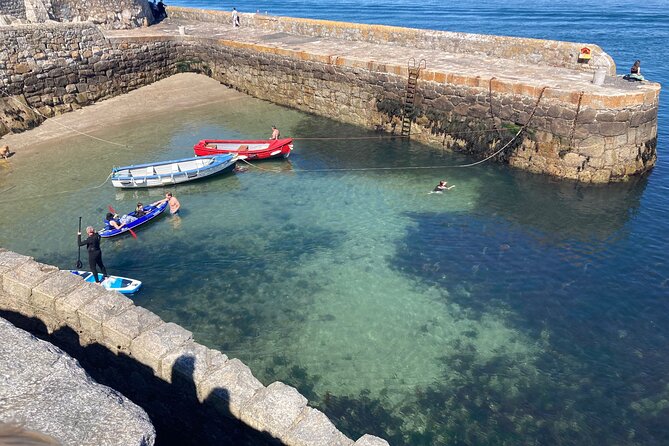
At Bulloch Harbour, the tour turns toward a smaller, quieter harbour village feeling. You look out over the water, hear about its industrial past, and also what it is used for now.
A fun detail here is the chance to see seals. People report seeing them lounging on rocks or in the water. Even when you do not spot wildlife, the harbour setting does the job. It is scenic, but it is also practical, because you understand the working coastline behind the pretty postcard view.
This stop is short, which is good for energy. You get the story and move on before the day turns sluggish.
Bulloch Castle ruins: the medieval layer near the coast
Next is Bulloch Castle, a medieval ruin. You see the site and hear how the area around Dalkey once contained seven castles, with three of them connected to what you see during the tour.
Ruins can either feel like dead stones or like a living timeline. Here, you get the second version because the guide ties the ruins to broader local history, instead of listing facts.
A real perk: you get this in a walking sequence that keeps the coast in view. So instead of only looking up at a ruin, you keep anchoring the story to geography.
Dalkey: Viking and Norman threads, plus practical dining ideas
The final stretch is Dalkey, described as one of the more affluent villages in Dublin. The tour focuses on local history, including Viking connections, and it also brings in Norman and castle heritage stories linked to the Dalkey area.
You also get a look at a castle site related to Norman history and a view of a village island from the railway angle. The point is to show how the coast, religious history, and incoming cultures all layered into what you see today.
At the end, your guide typically shares recommendations for nightlife and dining in Dalkey. That is more useful than you might think. When you end at Dalkey DART, you often still have time for a pub, a late lunch, or an early evening stop, and the guide helps you avoid guesswork.
What the pace is really like, plus shoe and weather advice
This is a walking tour that most people can do. Still, take seriously that it is not a gentle stroll the whole way. You will want good walking shoes, not flip-flops, especially because some pathways can be uneven.
One thing that stands out in the day’s feedback is that the pace feels comfortable. Stops are short, rest opportunities exist, and the guide keeps you moving without turning history into a lecture marathon.
Bring a simple strategy:
- Wear shoes with solid grip
- Bring a light layer, because coastal weather shifts fast
- Plan your food timing so you are not starving mid-afternoon
Also, good weather matters. Since it is a coastal walking experience, the tour requires decent conditions.
Value check: what $114.65 buys you, and what you still handle
At $114.65 per person for about 3 hours 30 minutes, this tour is priced like a quality guided experience, not just a route. You also benefit from the fact that all fees and taxes are included, plus a local guide.
The part that helps justify the cost is that James Joyce Tower & Museum entry is included. Admission plus guide time usually adds up quickly if you do this on your own.
What is not included is also clear:
- snacks
- train fare
- transportation to and from the meeting point
So the value depends on how you plan your day. If you already have the DART figured out and you will eat nearby afterward, the cost feels fair for the amount of ground and the number of meaningful stops. If you were hoping for a self-contained, no-extra-cost day, you will likely want to budget a little extra for snacks and transit.
Group size is capped at 20 people, which tends to support a more personal feel and better question time.
Who should book this coastal walking tour
This is a strong fit if you want:
- a break from central Dublin sights
- coastline views plus real local context
- history that connects to harbors, rails, and village life
- a day plan that ends conveniently at Dalkey DART
It is also a smart option for people who already saw major Dublin attractions and want something with a different flavor. If you are short on time but still want a proper Dublin area experience, the half-day format works.
If you hate stairs or long walking segments, reconsider. The spiral climb at James Joyce Tower is part of the tour, and the overall route is designed around moving from stop to stop along uneven coastal paths.
Should you book it?
If you want an easy-to-follow Dublin suburb walk with story, views, and a museum stop that actually includes the rooftop climb, I think this is worth your time. The combination of Dun Laoghaire Harbour, the village and rail clues, and the ending in Dalkey DART makes it feel efficient and fun, not stretched out.
Book it if you:
- like guided walking tours
- want something more local than the big-city checklist
- can handle 3.5 hours of movement and a few uneven stretches
Skip it if you:
- need a fully seated tour
- cannot do stairs
- only want major Dublin landmarks and nothing else
FAQ
How long is the Dublin (Dun Laoghaire) top-rated coastal walking tour?
The tour is about 3 hours 30 minutes.
Where does the tour start and where does it end?
It starts at 1 Harbour Rd, Dún Laoghaire, Dublin, Ireland. It ends in Dalkey at Dalkey DART station.
What is included in the tour price?
The price includes all fees and taxes, a local guide, and admission to the James Joyce Tower & Museum.
What is not included?
Snacks, train fare, and transportation to and from the meeting point are not included.
What group size should I expect?
The tour has a maximum of 20 people.
What happens if the weather is bad?
This tour requires good weather. If it is canceled due to poor weather, you will be offered a different date or a full refund.
Can I cancel for a full refund?
Yes. You can cancel up to 24 hours in advance for a full refund.
More Tours in Dublin

More Tour Reviews in Dublin
Not for you? Here's more nearby things to do in Dublin we have reviewed


Dublin Walking Tours, compared.
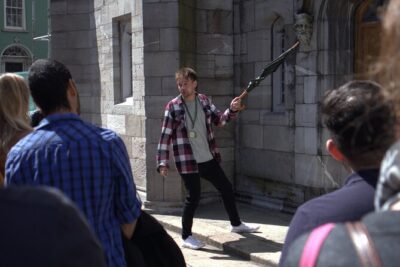 ★ 5.0Dublin Highlights and Hidden Gems Guided Walking TourFrom $296,020 reviews
 ★ 4.9Highlights and Hidden Gems Walking TourFrom $272,140 reviews
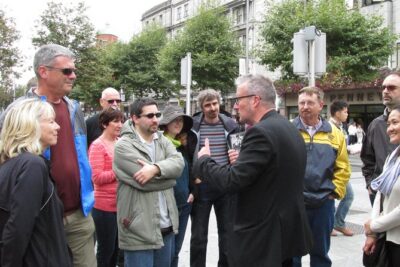 ★ 5.01916 Rebellion Walking TourFrom $271,605 reviews
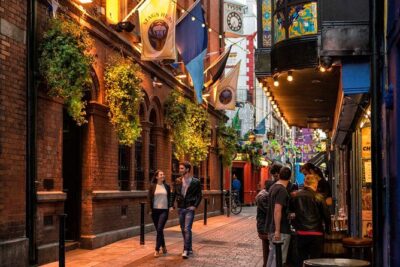 ★ 5.090 Minute Dublin Walking tour and Sightseeing tipsFrom $21916 reviews
 ★ 5.02-Hour Historical Walking Tour from DublinFrom $22875 reviews
 ★ 4.7Historical 2-Hour Guided Walking Tour of DublinFrom $22865 reviews
 ★ 5.0Dublin Traditional Irish 3 Course Meal Walking Tour with LocalFrom $107755 reviews
 ★ 4.9Mythology, Folklore and Legends Walking TourFrom $27703 reviews
Browse the lists this tour appears in