
Reviewed · DUBLIN WALKING TOURS
Dublin: Bucket List Sights Walking Tour
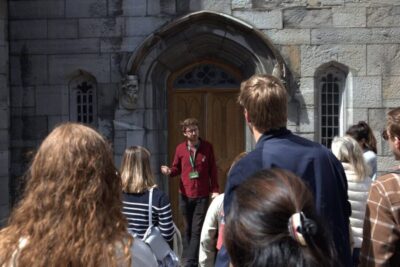
Dublin’s story starts with stone and saints. This 2-hour walking tour strings together the city’s big landmarks with clear, human explanations, from Viking origins to modern-day American influence. I especially like the way the guide, Peter, answers questions and keeps things personal, and I also love the smart path through places you can later revisit on your own. One thing to consider, though, is that it is a lot of famous stops in a short time, so wear comfy shoes and be ready for steady walking.
You’ll see Christchurch Cathedral and Trinity College in the same morning-style ramble, but you’ll also learn the “why” behind them, not just the dates. The route moves through the old center, crosses key bridges, and gives you enough context to understand how Dublin grew from Celtic settlement to Viking city to British seat of power and beyond. The main drawback? Because it covers many sites, you might want a longer stay if you prefer time to linger inside each building.
Key highlights you should care about
- Christchurch Cathedral’s Viking-to-Norman-to-19th-century transformation, explained in plain language
- St. Patrick’s Cathedral, tied to the patron saint legend and Jonathan Swift’s connection
- Dublin Castle, showing how medieval and Georgian layers sit inside the same power center
- Temple Bar’s Tudor-era core, plus why the neighborhood became the pub and live-music hub
- Liffey views from the Celtic settlement area to the Silicon Docks, connecting old and new Dublin
- Book of Kells finale at Trinity College, a strong capstone for your first visit
Starting at Christchurch Cathedral: Dublin’s timeline in one block
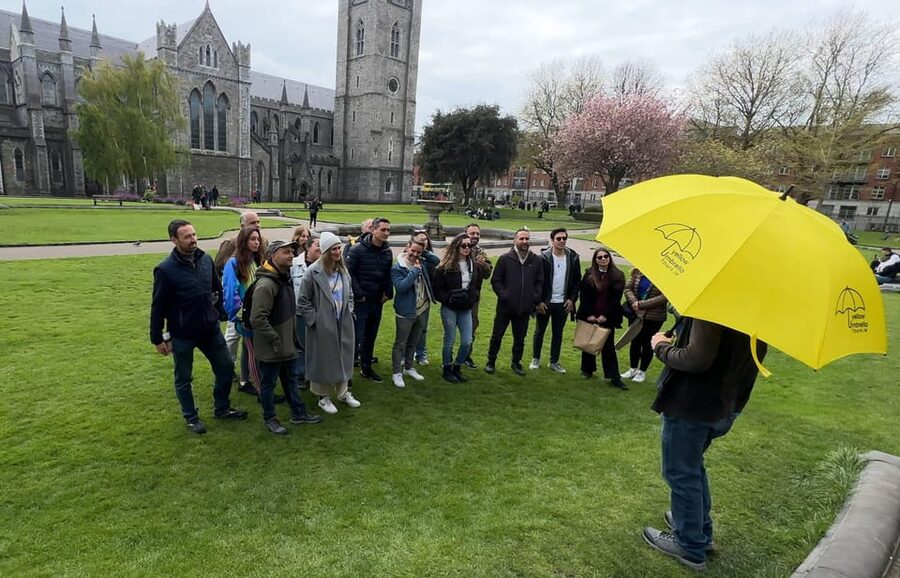
Most first-time Dublin plans start with a single “must see.” This one starts with a better idea: Christchurch Place, right by Christchurch Cathedral, where you can ground the whole day in one clear story. You look up at a major church, then the guide walks you through how Dublin’s layers built up over time.
Christchurch Cathedral is one of those places where the building you see is only part of the point. The tour notes how the earliest version was linked to the Vikings, originally built in wood, then later recast in stone by the Normans. The explanation also leads you to the big visual you can’t miss today, the 19th-century neo-Gothic cathedral shaped by history and donations. If you like architecture but hate information overload, this is a great start point.
Practical tip: Christchurch Cathedral is your orientation anchor. After this tour, you’ll know where you are in the older city grid, and you’ll find it easier to choose what to revisit without feeling lost.
You can also read our reviews of more tours and experiences in Dublin.



St. Patrick’s Cathedral and the Swift connection
Next comes St. Patrick’s Cathedral, and the tour frames it around Dublin’s patron saint, including the story about him banishing snakes from the island. Even if you do not treat legends as literal history, they are part of how people remember a place.
This stop also brings you to something a lot of literature-minded visitors will appreciate: Jonathan Swift, the former dean, who wrote Gulliver’s Travels. The tour’s emphasis is that the church is not only a spiritual landmark. It is also a cultural one, tied to the writers who shaped English-language literature.
You also get a straight shot at a restoration story. The tour credits Sir Benjamin Lee Guinness for generosity in the 1860s, pointing out how the building you see today benefited from people with means stepping in at the right moment. That helps you read the cathedral as something cared for, not something left to time.
What to consider: cathedrals can mean crowding and lines, depending on day and hour. This walking tour approach keeps you moving, so if you love slow, quiet interior time, you may want to plan a separate visit later.
Dubh Linn Garden: where the river story meets the library area
After the cathedral circuit, the tour shifts toward the river-adjacent history around Dubh Linn Garden. This stop is useful because it connects the religious landmarks to the city’s older geography.
You learn that the Vikings moored Long Boats here around twelve hundred years ago. That single detail changes how you picture the early city. You start thinking in terms of arrivals by water, trade, and settlement decisions, not just famous buildings.
The tour also points out the Chester Beatty Library area nearby. Even if you do not plan to go in during the tour, it is a good heads-up. It is the kind of place you can add later if you want a calmer indoor follow-up.
Small practical note: this stretch is a nice reset from the grand-cathedrals feel, but it still keeps momentum. If you are sensitive to walking time, pace yourself and take a breath when you can.
Dublin Castle: power, independence, and layered architecture
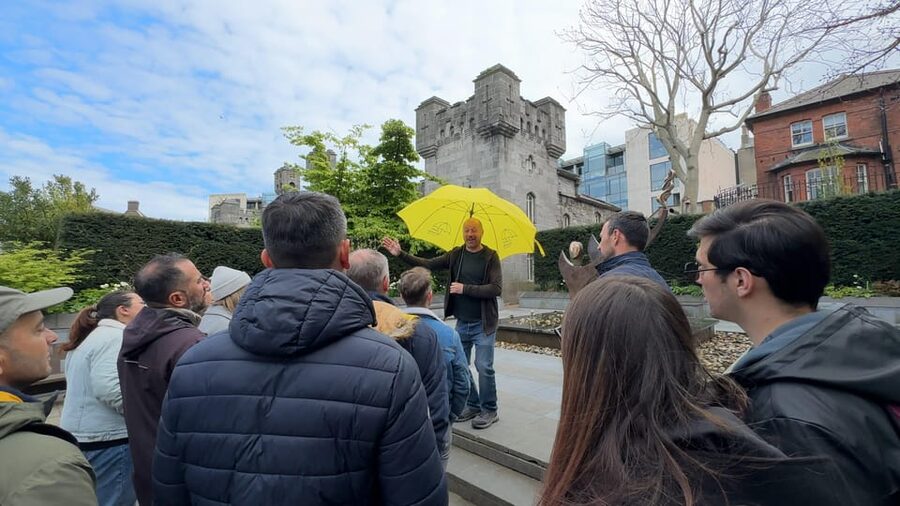
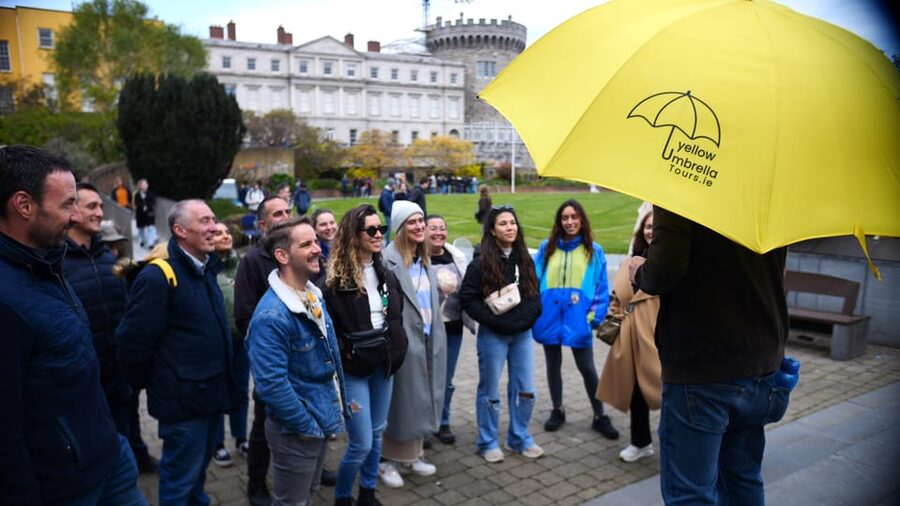
Now you move into the most politically loaded stop on the walk: Dublin Castle. The tour keeps this leg grounded in what the site did historically, calling it the center of British government in Ireland for about 700 years, until independence in 1922. Then it adds the handover moment connected with Michael Collins and the Irish Free State.
That context matters because Dublin Castle can look like a single “big complex” to a casual passerby. With the historical framing, you can better understand why the grounds feel official and controlled. You also start noticing the architectural blend. The tour highlights how you explore both lower and upper courtyards, with a mix of medieval and Georgian architecture.
This is one of the best stops for travelers who want more than photo ops. When a guide explains why power centers look the way they do, you leave with better pattern recognition for other European capitals.
What to watch: courthouse and castle-style campuses can be strict about movement. Since the tour is a walking format, you likely will not have endless time in every corner. Treat the stop as a “see and understand” moment, then consider returning if you want more depth.
Temple Bar: Tudor-era streets and why pubs became the brand

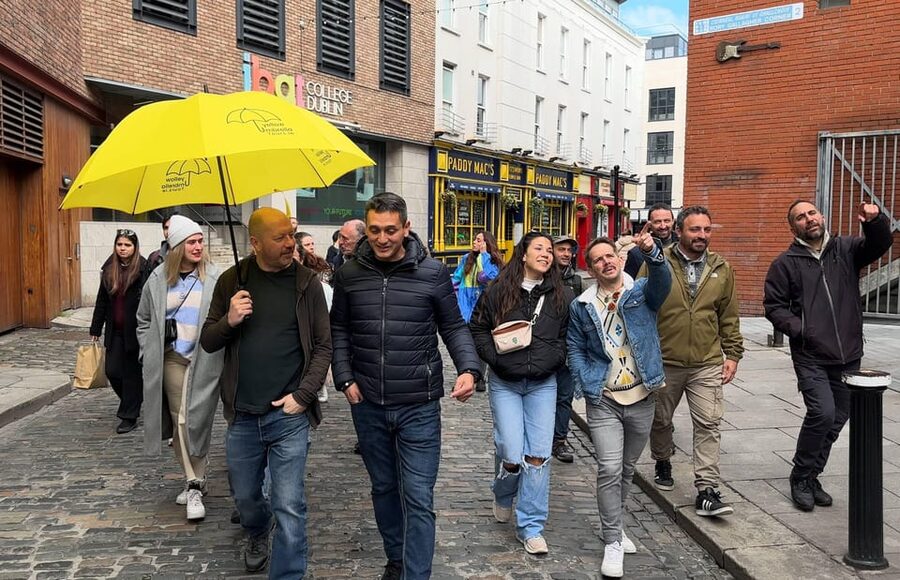
From Dublin Castle, you head toward Temple Bar, and the tour’s approach here is balanced. Yes, it is famous for live music and lively Irish pubs. But it is also one of the city’s older areas.
The guide points out the Temple Bar district as one of the oldest parts of the city dating to the Tudor Conquest in the 16th century. That helps you stop thinking of Temple Bar as only a party zone. It is also a historic neighborhood with old street bones, now known for entertainment.
If you like people-watching, this is where you get it. You see the sense of place that comes from pubs clustered together with music as a main event. Even if you plan to avoid the busiest hours, the district still works as a “Dublin mood” stop.
Consideration: if nightlife crowds are not your thing, Temple Bar at peak times may feel intense. The tour gives you a view of the neighborhood’s character, but you can choose when and how long to return afterward.





Over the River Liffey: from Celtic settlement to the Silicon Docks
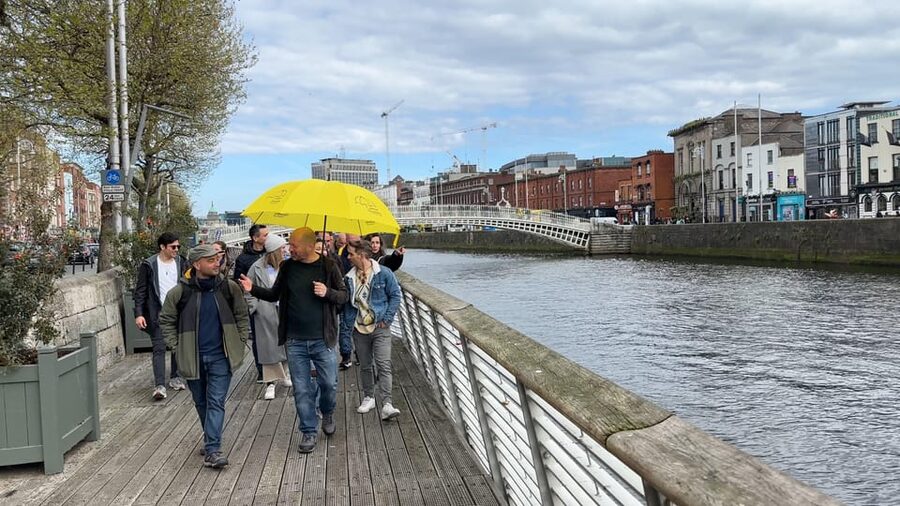
One of the most thoughtful parts of this walk is crossing the story from medieval Dublin to modern Dublin. The tour takes you over the River Liffey to the north side for a view that stretches from the original Celtic settlement about 2,100 years ago up to the Silicon Docks, influenced by the Americans in the 21st century.
This is where you get one of the tour’s biggest strengths: it ties time periods together instead of treating Dublin’s history like separate museum rooms. You look at the skyline and understand that the city’s identity did not vanish, it just changed its job description over the centuries.
When you do it as a walking tour, the geography becomes the lesson. The river is the hinge. On one side you feel older Dublin, on the other you sense more modern momentum.
Tip: bring your phone for quick panoramic shots. The view line gives you something you can refer to later when you plan where to go next.
Ha’penny Bridge, Merchant’s Arch, and a quick hit of brutalist design
After the Liffey stretch, the walk returns with Ha’penny Bridge, which is one of Dublin’s most recognizable crossings. The tour then moves through Merchant’s Arch and onto Crown Alley, where it points you toward Central Plaza and mentions Sam Stephenson’s brutalist behemoth.
Brutalism is a love-it-or-leave-it style, but this tour does something helpful. It does not ask you to admire it blindly. It gives you a named reference point so you know what you are looking at, and why it looks the way it does.
This is a good section for travelers who want variety. If your day is only old stone and medieval church faces, you might feel like you missed “real Dublin.” A short brutalist moment corrects that.
Also, these short transitions keep the walking tour from feeling like one long hallway of sightseeing. You get different visual textures, which makes the route more fun.
College Green and Molly Malone: government, finance, and a friendly legend
Next comes College Green, where the tour rewards you with strong Georgian neoclassical architecture. The guide connects the look of banks and parliament-like buildings to the city’s role as a financial and government center, described as what considered itself the 2nd city of the Empire.
That is a key takeaway. You are not just looking at pretty façades. You are seeing what Dublin looked like when it had serious administrative weight.
Then you get an iconic street-level moment: Molly Malone, Dublin’s favorite daughter, outside St. Andrew’s Church. The tour’s framing makes her more than a statue. She becomes a human marker in the middle of big institutions and grand buildings, like the city reminding you it has stories that live in everyday life.
If you like photo stops that feel tied to something, Molly Malone is a solid one. It also gives you a sense of where the “old city story” still feels personal.
Trinity College and the Book of Kells: a satisfying finale

Every Dublin first-timer tour needs a strong ending, and this one finishes at Trinity College, outside the front gate. The big draw is the Book of Kells exhibition, and the tour makes this the capstone.
Why it works: you start the walk with the city’s early religious power and history, then you end with a centerpiece of Irish art and learning. It is a neat arc from what Dublin believed, to what Dublin governed, to what Dublin preserved and shared through manuscripts and scholarship.
If you plan your time wisely, you can go from the tour straight into the Book of Kells area. Even if you only have limited time later that day, you will have better context for what you are seeing.
One more thought: Trinity College is a “slow down” kind of place. If you have only seen it from outside before, this tour gives you the reason to pay attention, not just the reason to take a photo.
Price and what $19 buys you in real sightseeing time
At $19 per person for a 2-hour guided walking tour, the value is the mix: big sights plus interpretation. You are paying for someone to stitch the city’s story together while you walk between stops, which is the part most DIY plans struggle with.
Two things make the price feel fair here:
- You get multiple major landmarks that are far more meaningful when connected, rather than visited one by one.
- The guide interaction sounds personal and responsive, with Peter adapting to people’s English level and answering additional questions with recommendations for the rest of your stay.
One consideration: if you are the kind of traveler who wants deep time in a single building, a short 2-hour format may feel fast. But if your goal is a smart first sweep that helps you choose what to do next, this is exactly the kind of value you can use.
Who this walking tour is best for
This tour suits you if:
- You want an efficient Dublin primer that covers both historic power and everyday street life
- You like guides who actually talk, not just recite facts
- You are a first-time visitor who wants a sense of the city’s layout and stories before choosing later activities
It might not be ideal if:
- You prefer long museum-style stays at each stop
- You have very limited mobility beyond what a walking tour can handle, even though it is described as wheelchair accessible
Should you book this Dublin highlights tour?
Yes, with a few smart conditions.
Book it if you want a first pass that gives you names, connections, and context at each major stop, and if having a guide like Peter who answers questions and adjusts to your comfort level matters to you. The route also helps you see how Dublin links Viking origins, British rule, and modern reinvention in one continuous walk.
Skip or rethink it if you know you will want to linger deeply inside one or two of the major sites and you do not want a packed path. In that case, you might prefer a longer, slower plan focused on fewer stops.
FAQ
How long is the Dublin Bucket List Sights Walking Tour?
The tour runs for 2 hours.
Where do I meet the guide?
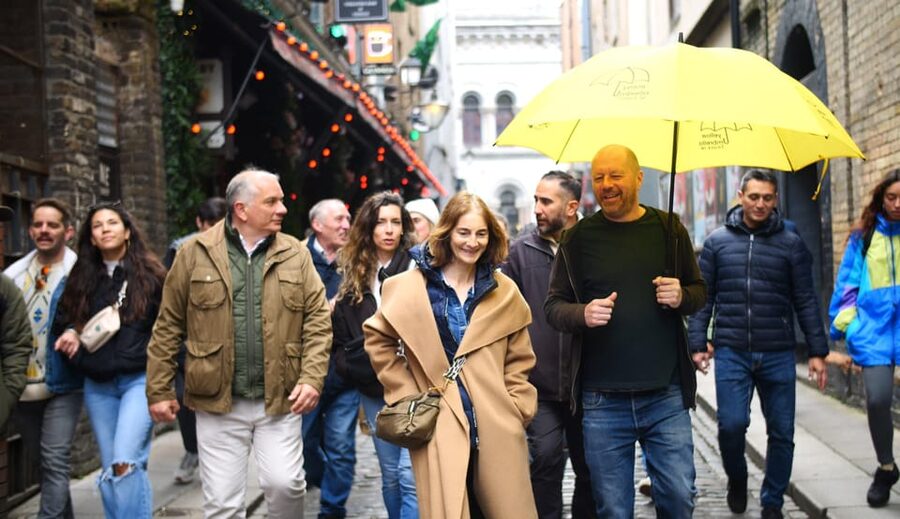
Meet your guide across the road from Christchurch Cathedral, outside the Bull and Castle, and look for the yellow umbrella.
Which sights are included on this tour?
You’ll visit or see key stops including Christchurch Cathedral, St. Patrick’s Cathedral, Dublin Castle, Temple Bar, and Trinity College (for the Book of Kells exhibition), plus several bridge and street landmarks along the way.
Is the tour wheelchair accessible?
Yes, the tour is listed as wheelchair accessible.
Is the tour conducted in English?
Yes, the live tour guide is English.
Is cancellation allowed after booking?
There is free cancellation up to 24 hours in advance for a full refund, and you can reserve now and pay later.
More Tours in Dublin

More Tour Reviews in Dublin
Not for you? Here's more nearby things to do in Dublin we have reviewed


Dublin Walking Tours, compared.
 ★ 5.0Dublin Highlights and Hidden Gems Guided Walking TourFrom $296,020 reviews
 ★ 4.9Highlights and Hidden Gems Walking TourFrom $272,140 reviews
 ★ 5.01916 Rebellion Walking TourFrom $271,605 reviews
 ★ 5.090 Minute Dublin Walking tour and Sightseeing tipsFrom $21916 reviews
 ★ 5.02-Hour Historical Walking Tour from DublinFrom $22875 reviews
 ★ 4.7Historical 2-Hour Guided Walking Tour of DublinFrom $22865 reviews
 ★ 5.0Dublin Traditional Irish 3 Course Meal Walking Tour with LocalFrom $107755 reviews
 ★ 4.9Mythology, Folklore and Legends Walking TourFrom $27703 reviews
Browse the lists this tour appears in