
Reviewed · DUBLIN CITY TOURS
From Dublin: Belfast and Giant’s Causeway: 2-Day Guided Tour
Titanic, then basalt cliffs, in two days. This guided route links Belfast’s shipbuilding story with the raw drama of the Giant’s Causeway. You also get cliff-top ruins, a classic rope-bridge photo stop, and just enough Belfast time to wet your appetite for a longer stay in Northern Ireland.
What I like most is how the schedule mixes big-ticket landmarks with smaller, characterful stops like Monasterboice and St. Peter’s Cathedral in Drogheda. The second standout is that you’re not guessing transportation between far-flung places, which matters when you’re moving from Dublin to Belfast, then out to County Antrim’s coast. One thing to consider is that this is a two-day touring style with plenty of driving, so you’ll want to keep your expectations realistic for downtime in Belfast.
If you’re the type who enjoys seeing how people and places connect, this works. You’ll see why Belfast matters to the modern world, then you’ll be out where the land itself tells an older story. Wear comfortable shoes, because the stops you’re visiting reward good footing.
Key highlights worth planning around
- Titanic Belfast with guided context: you’ll follow the ship’s story from early Belfast ambition to the famous launch and loss
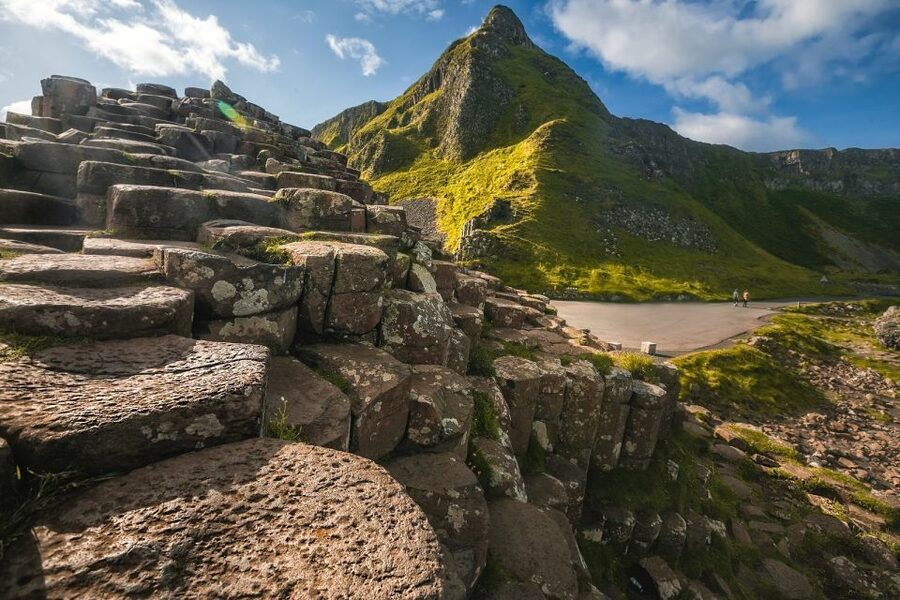
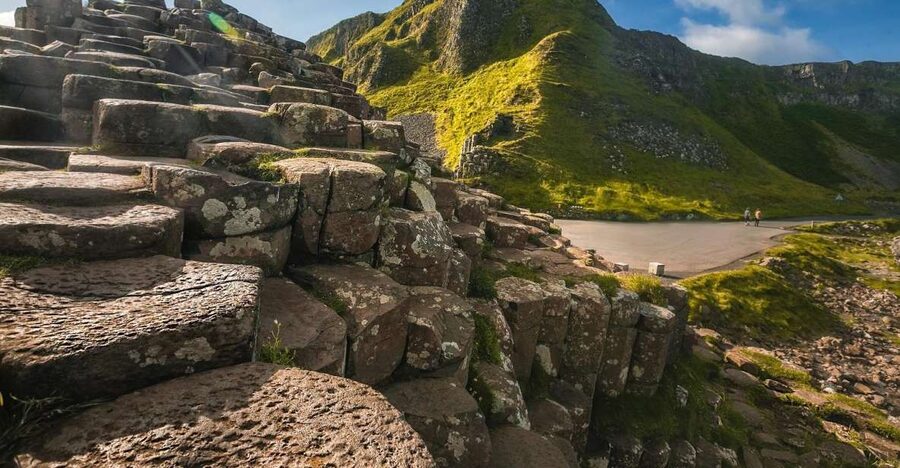
- Giant’s Causeway’s 40,000 basalt columns: you get real time on-site, not just a drive-by
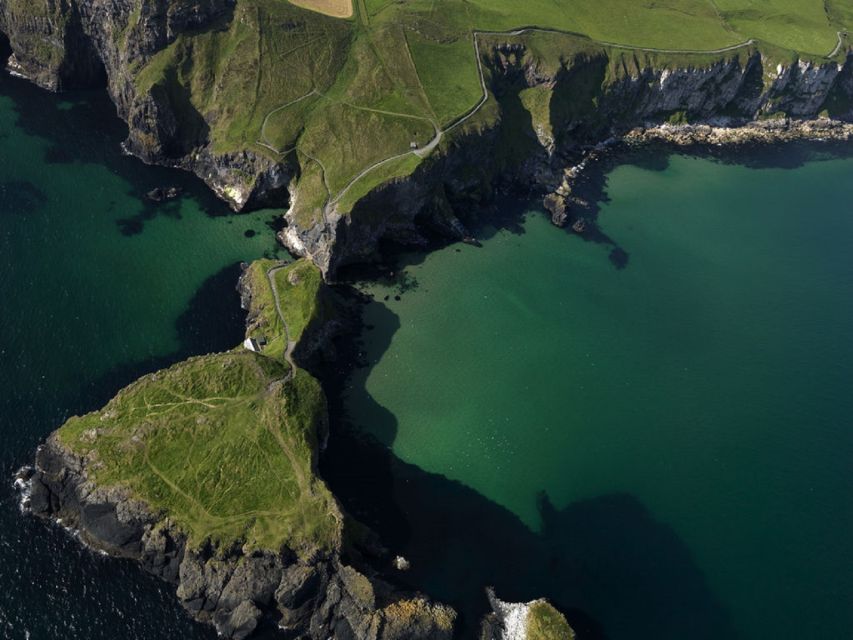
- Carrick-a-Rede rope bridge photo stop: views over Rathlin Island help make your camera work overtime
- Dunluce Castle ruins: dramatic cliff-top setting tied to the MacDonnell clan
- Dark Hedges Game of Thrones photo moment: a quick stop that still feels special in person
- Optional Black Taxi Tour: Falls and Shankill Roads can turn Belfast’s city time into something much more meaningful
Entering Northern Ireland via the Peace Highway and Drogheda’s St. Oliver Plunkett
Day 1 starts with a drive north from Dublin to Belfast. Along the way, the tour uses the Peace Highway, which keeps your travel time efficient and makes the long route feel more manageable. If you’re prone to getting stiff on coach days, this smooth start helps.
Before Belfast, you stop at St. Peter’s Cathedral in Drogheda. The standout here is the preserved head of St. Oliver Plunkett, beheaded in 1681. It’s displayed in a glass box near the altar, and even if you’re not a church history nerd, it’s one of those objects you can’t really recreate in a photo. It puts Northern Ireland’s past into a very human scale early in the journey.
Then you head off the main route for Monasterboice, with ruins that feel both peaceful and eerie at the same time. You’ll see a 10th-century round tower and learn how residents once used it for refuge from Vikings. The Celtic crosses are the other big draw here, carved by hand by monks in the 9th century. This stop gives you a contrast to the modern “headline” stuff later in Belfast.
What this accomplishes for you: it helps the next stops make emotional sense. By the time you roll into Belfast, you’re not just seeing attractions, you’re understanding why people remember things the way they do.
You can also read our reviews of more guided tours in Dublin


Belfast city time, plus why the Titanic timing matters
When you arrive in Belfast, you get about two hours of free time. This is the part that can make or break your enjoyment, because it’s your chance to decide whether you want quick city wandering or something structured.
If you want a deeper context view of Belfast neighborhoods, there’s an optional and strongly recommended Black Taxi Tour focused on the Falls and Shankill Roads. The name alone is the cue, but what matters is the route: this is where conversations shift from monuments to lived experience. One practical tip if you do it: bring cash. A past guest pointed out the Black Taxi ride can be cash-only, so save yourself an awkward moment.
If you prefer to keep it simple, use your free time for lunch and shopping in downtown Belfast. But keep one detail in mind if you’re traveling on a Sunday: some shops may open later, around 1 pm. If you arrive earlier than that, don’t plan on a full shopping marathon. Instead, aim for a slower lunch, a quick look at the streets, and leaving space for the Titanic later.
Also, there’s a sequencing lesson that I think is worth taking seriously. I’d put Titanic first if you want everything to feel tidy and logical. The Titanic Experience is a focused, ticketed block. If you spend your early free time on the city first, you might feel a little rushed or scattered before you get to the museum story.
The Titanic Experience in Belfast: where time, steel, and storytelling meet
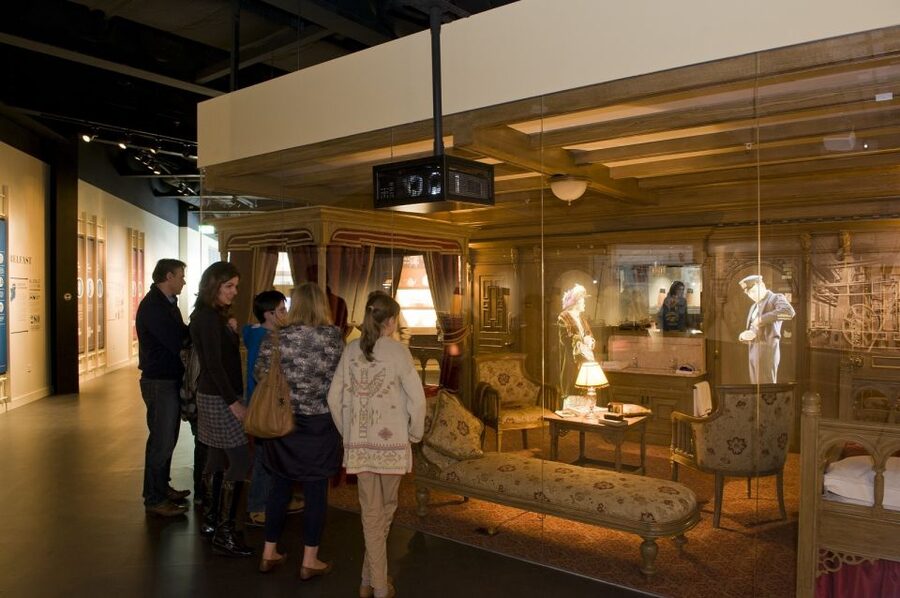
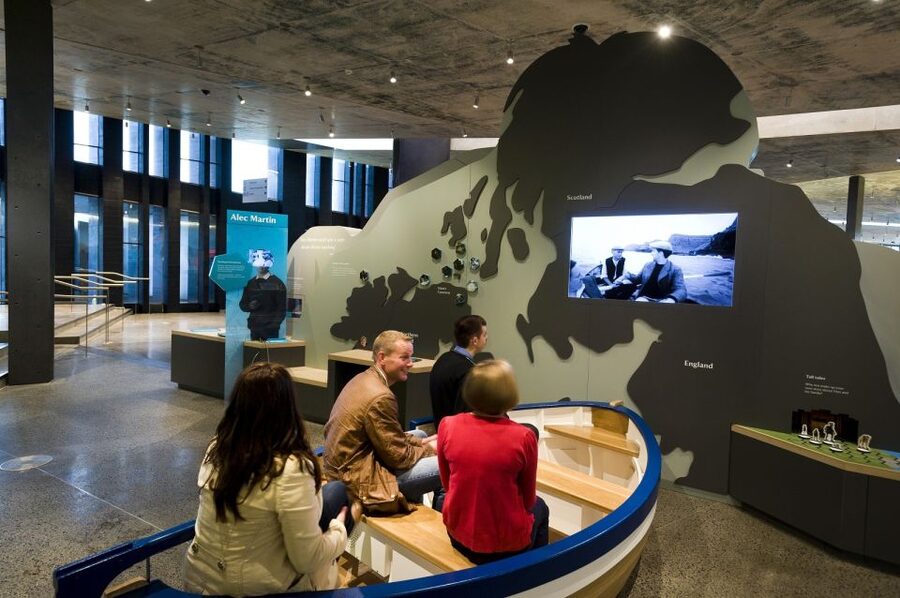
After Belfast city time, you head to the docks area for the main attraction: the Titanic Experience, now anchored in Titanic Belfast. You’ll spend around two hours inside, following the story from conception in early-1900s Belfast through construction and launch, and then to the ship’s infamous maiden voyage and catastrophe.
What’s valuable here is that it’s not just “look at artifacts.” The way the experience is paced helps you understand why Belfast built the ship in the first place, and why the story still connects to the city today. Even if you’ve seen Titanic stories before, the museum approach tends to make the human and local angles feel more real.
And since this is a guided tour, you’re more likely to pick up the key facts instead of just drifting along with your phone camera out. I find that when a museum is this story-driven, guidance helps you notice what matters rather than getting overwhelmed by visuals.
A useful reality check: if your English is strong enough but you’re sensitive to heavy accents, you might want to ask the guide to repeat anything that doesn’t land. One booking flagged that not all info got through clearly, so don’t assume you’re the only one who might miss a detail. If something is unclear, it’s easy to ask in the moment.
Where you sleep: Belfast’s university quarter location advantage
You overnight in Belfast’s historic downtown university quarter. That’s a practical choice. It usually means you can walk to more central areas and you’re not losing time fighting transit in the dark after a full day.
It also helps you reset. Day 1 has a lot packed into it: Drogheda, Monasterboice, Belfast city time, then Titanic. Sleeping centrally keeps your Day 2 start feeling less complicated, so you can focus on the coast day instead of logistics.
Day 2 begins in County Antrim: Carrick-a-Rede views over Rathlin Island
Day 2 turns from city story to coastal geology and dramatic scenery. You leave Belfast and drive through rolling farmland in County Antrim toward the north coast of Ulster. Your first stop is a photo stop at Carrick-a-Rede rope bridge, with views of Rathlin Island.
Even as a photo stop, it’s a strong moment. That spot tends to give you scale quickly: sea, rock, distance, and that rope-bridge line that looks like it shouldn’t be real. If you’re the kind of traveler who likes iconic images, this is where you’ll get them.
If you’ve got knee or stamina limits, this is where good footwear matters. The bridge itself may not be the only walking, because photo stops can still involve moving around to find decent angles.
A few more Dublin tours and experiences worth a look



Giant’s Causeway: 60 million years you can actually walk through
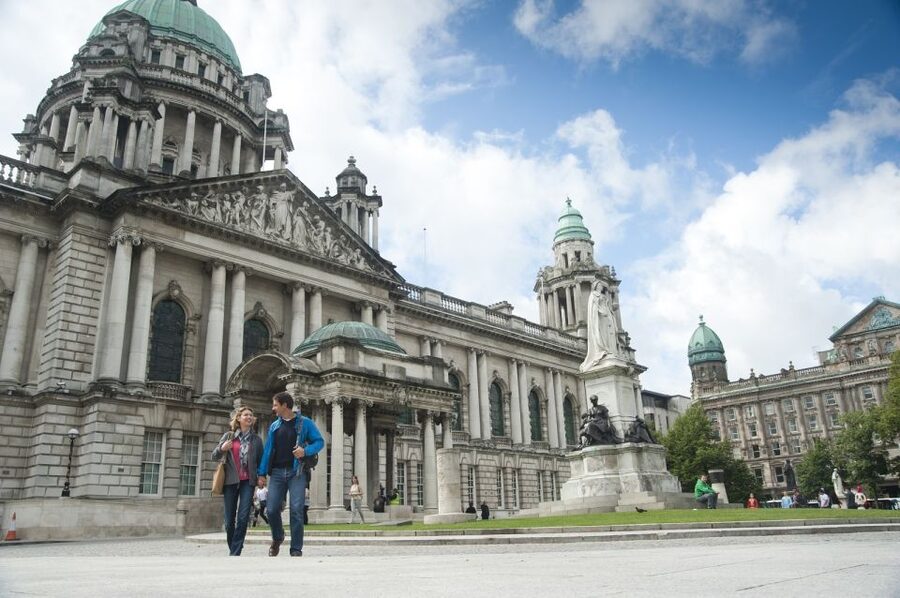
Then you get the big one: Giant’s Causeway. You’ll explore the site, with time on the ground to take it in properly. The tour frames it around the estimated 40,000 hexagonal basalt columns, formed during a volcanic eruption around 60 million years ago.
This is where the guided format is useful in a different way. Without someone to point out what to look for, it’s easy to see “cool rocks” only. With guidance, you’re more likely to connect the columns to the shape and the story of how they formed. The learning sticks because the setting is so visual.
Here’s the best way to use your time: move slowly enough that you can notice patterns. Hexagons feel repetitive until you see how they shift from one area to the next. Then it clicks. You start to read it like a natural structure rather than a pile of stone.
You’ll also want to watch your timing. The schedule continues onward after at least two hours exploring, and on these tours it’s common for the guide to keep everyone together for the next stop. If you want extra photos, plan for quick trips toward viewpoints rather than getting lost.
One small logistics note that came up for some people: at times, there may be options for how you approach or move around on the site, including whether there’s a bus option versus footway movement. If you’re unsure what you’ll be doing, ask the guide on arrival so you’re not surprised when it’s time to walk.
Dunluce Castle cliff ruins and MacDonnell clan setting
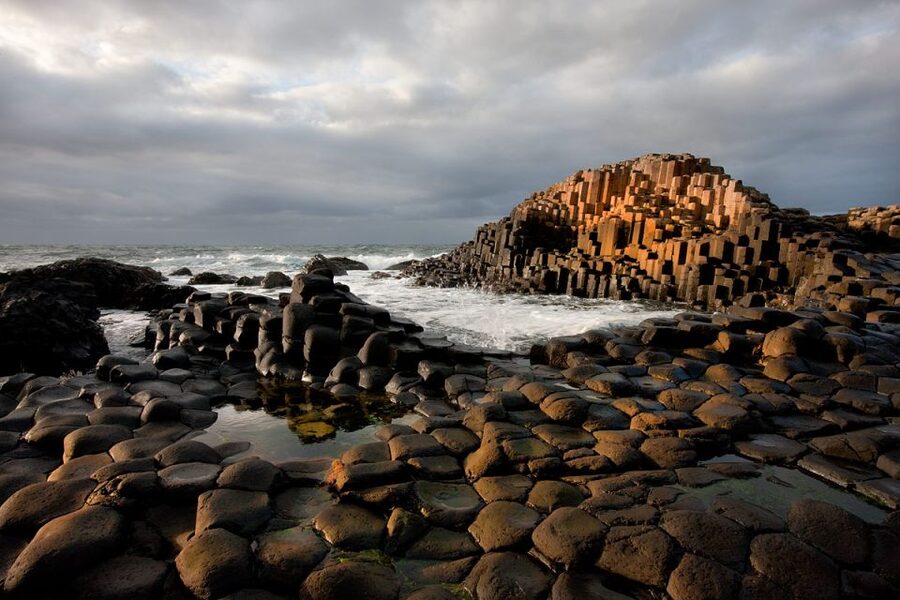
After Giant’s Causeway, you head to Dunluce Castle, the cliff-top ruins tied to the MacDonnell clan. This is another “wow from a distance” stop, but it’s also worth the time inside the paid entrance area for a more comprehensive look.
The setting is the main star. You feel how exposed this fortress was, and how that would shape daily life in earlier centuries. Even if ruins aren’t your favorite category, the sheer placement makes it memorable.
What I like about Dunluce on this tour is that it doesn’t require you to be a specialist. The castle is visually loud. You don’t need a lot of background to feel the drama of the cliffs and the gaps in the stone.
Dark Hedges: the quick photo stop that actually works
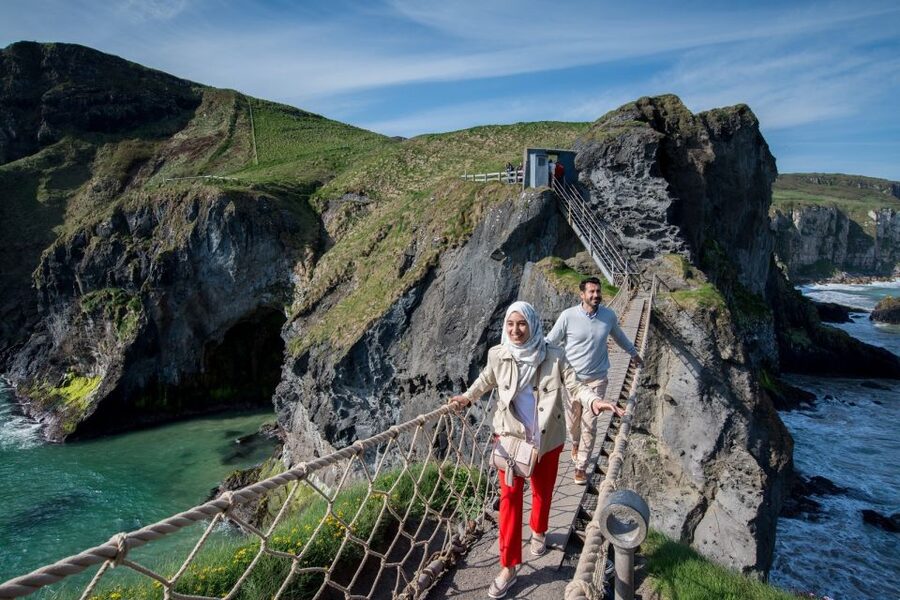
Next up: a photo stop at Dark Hedges, the tree-lined road known for its Game of Thrones fame. It’s brief, but it still lands because you’re stopping at the right moment, with enough time to step out, take a few angles, and get a feel for the tunnel-like perspective.
This is where you want to be decisive. Decide your spot, frame fast, and don’t spend your time arguing with your camera about focus. The payoff is worth it, and then you’re off again.
The return ride to Dublin, including rest breaks
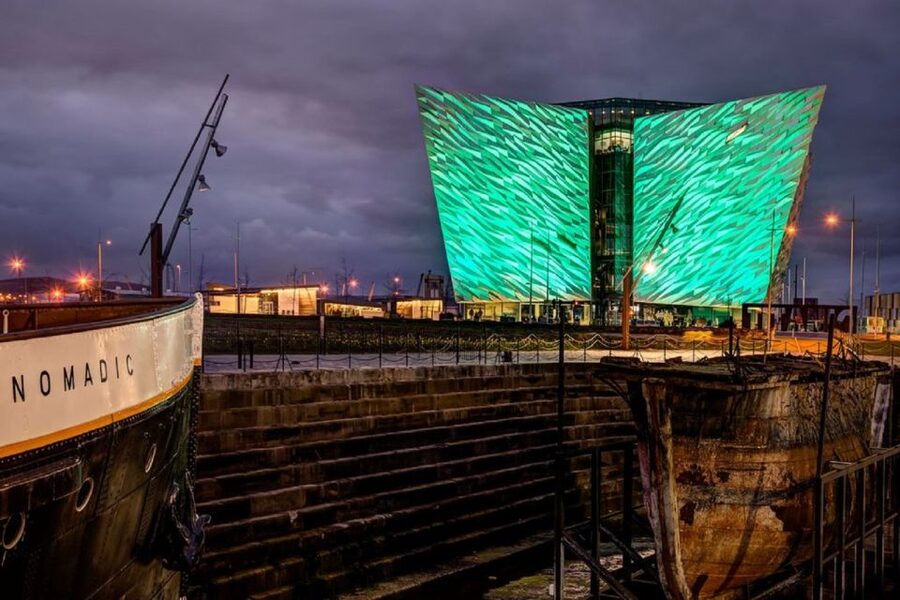
On the way back to Dublin, the tour includes a short rest and refreshments stop. That’s important on a two-day itinerary where you’ve already logged a lot of movement.
One thing to be aware of: some departures can shift timing around the return. A past guest mentioned the second day return to Belfast felt different from what was initially expected, rather than going straight back to Dublin. I can’t say this happens every time, but it’s smart to keep a flexible mindset if you’re trying to connect dinner plans right after the tour ends.
When you arrive back in Dublin, you’ll have the kind of trip where you feel like you did two different travel styles in one go: museum-and-city energy, then coastal-and-ruins atmosphere.
Price and what $234 gets you in real terms
This tour costs $234 per person for two days. That’s not a “budget bus deal,” but it also isn’t an all-day luxury rail fantasy. For what you’re paying, you’re mostly funding three things:
- Transportation plus a guided structure across long distances
- Accommodation in Belfast (based on the option selected)
- Entrance fees, including major ticket stops like Titanic Belfast and paid access at key locations
Lunch and dinner are not included, so you should plan on paying for meals separately. If you compare this to DIY travel, the value usually comes from removing the burden of planning routes, timing, and multiple separate bookings. When you factor in the entrances and the fact that you’re covering Belfast plus Northern Ireland coast highlights in one package, the price starts to look more sensible than it first appears.
Where costs can creep up: optional extras. If you choose the Black Taxi Tour, also budget for it. And if you decide you want additional attractions beyond what’s included, that becomes on you too.
Practical tips that make the schedule feel smoother
A two-day coach tour works best when you pack lightly and move with intention. Here’s how to get the most out of it:
- Bring comfortable shoes. You’ll be walking at multiple stops, including outdoors sites where footing matters.
- Travel without large luggage. The tour says luggage or large bags are not allowed, so pack like you’re walking more than you’re riding.
- Expect English as the working language. That’s helpful to know if you rely on spoken details for context. If something doesn’t land, ask for clarification early.
- If you’re doing the Black Taxi Tour, plan your payment with cash in mind.
- For Sunday planning, remember some stores may open later. Build around the major ticketed stops first, and treat city wandering as flexible.
Who this tour fits best
This is a great match if you want a structured highlight loop that doesn’t leave you stuck figuring out connections. It also works well if you enjoy contrast: city history, museum storytelling, then geology and ruins.
It may not be ideal if you need frequent quiet time or if you prefer to explore at your own pace with long unscheduled breaks. This is built around guided timing and a set sequence, so you’ll be moving through the sights as a group.
Also, it is not suitable for wheelchair users, based on the tour info provided, so if accessibility is key, you’ll need a different option.
Should you book the Dublin to Belfast and Giant’s Causeway 2-Day Guided Tour?
I’d book it if you want a well-organized way to see Belfast plus Northern Ireland’s coast highlights without doing the trip math yourself. The included entrances, the Titanic Belfast storytelling block, and the time on Giant’s Causeway make it feel like more than a checklist tour.
I would hesitate if you hate coach days or you’re the type who needs lots of free time to roam. The driving and scheduled stops mean you’ll follow the rhythm, not freestyle it.
If you’re torn, here’s the decision shortcut I’d use: if Titanic Belfast and Giant’s Causeway are on your must-see list, this package is a strong way to knock them out efficiently. If your goal is slow travel and long unscheduled city hours, you may be happier with a slower plan that gives Belfast more space.
FAQ
How long is the Dublin to Belfast and Giant’s Causeway tour?
It runs for 2 days.
What are the main stops on the itinerary?
The tour includes Belfast city time, the Titanic Experience (Titanic Belfast), Carrick-a-Rede rope bridge (photo stop), Giant’s Causeway, Dunluce Castle, and Dark Hedges. It also includes stops in Drogheda and Monasterboice on Day 1.
Is transportation included?
Yes. Transportation is included.
Is accommodation included for the night in Belfast?
Yes. Accommodation is included based on the option selected.
Are meals included?
Breakfast is included, but lunch and dinner are not included.
Is there an entry fee for attractions included in the price?
Yes. Entrance fees are included.
Can I cancel for a full refund?
You can cancel up to 24 hours in advance for a full refund.
Can I reserve without paying right away?
Yes. You can reserve now and pay later.
What should I bring and wear?
Bring comfortable shoes.
Is the tour suitable for wheelchair users?
No, it is not suitable for wheelchair users.
More Guided Tours in Dublin



More Tours in Dublin



More Tour Reviews in Dublin



Not for you? Here's more nearby things to do in Dublin we have reviewed


Dublin City Tours, compared.
 ★ 5.0Dublin to Cliffs of Moher, including Wild Atlantic Way and GalwayFrom $9023,331 reviews
 ★ 4.8From Dublin: Cliffs of Moher, Burren & Galway City Day TourFrom $8918,888 reviews
 ★ 4.6Guinness Storehouse Entry TicketFrom $3416,863 reviews
 ★ 5.0Dublin to Cliffs of Moher, Burren, Wild Atlantic Way, Galway TourFrom $9412,924 reviews
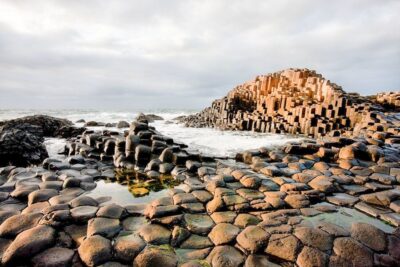 ★ 4.8Giants Causeway, Dark Hedges, Dunluce & Belfast TourFrom $1128,843 reviews
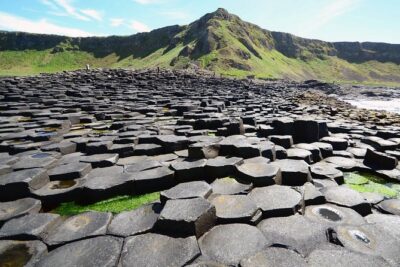 ★ 5.0Dublin to Belfast Black Cab, Dunluce Castle and Giant’s CausewayFrom $967,954 reviews
 ★ 5.0Kilkenny, Wicklow Mountains & Glendalough Day Tour from DublinFrom $487,897 reviews
 ★ 4.8From Dublin: Wicklow Mountains, Glendalough & Kilkenny TourFrom $456,235 reviews
Browse the lists this tour appears in