
Reviewed · DUBLIN MUSEUM TOURS
Dublin: Treasures of Ireland Museums Private Tour
Dublin museums can feel like separate worlds. This private tour ties them into one story, using Irish art, literature, and archaeology to explain the moments that shaped the country. I love the private guide approach, because you get clear, conversational explanations without wasting time guessing what matters. I also love the highlight-only pace, with enough time at each stop to see the big ideas and not just the biggest rooms. One thing to consider, though, is that it is focused on selected highlights, so if you want a deep, slow museum study of every room, you may prefer a longer self-guided visit.
You start at the National Gallery of Ireland and then move on to the National Library of Ireland and the National Museum of Ireland archaeology side. A break happens halfway through, which helps a lot when you are bouncing between literature, paintings, and artifacts in one sitting. If you are lucky and get a guide like John, the explanations can turn museum browsing into something you actually remember. And if you end up with Augustine, the experience is described as very good, with smooth pacing and easy-to-follow context.
Key Points You Should Know Before You Go
- Three major museums, one connected storyline that links art, books, and archaeology into Irish history.
- Forty minutes per museum stop plus a halfway break, so you stay engaged instead of museum-weary.
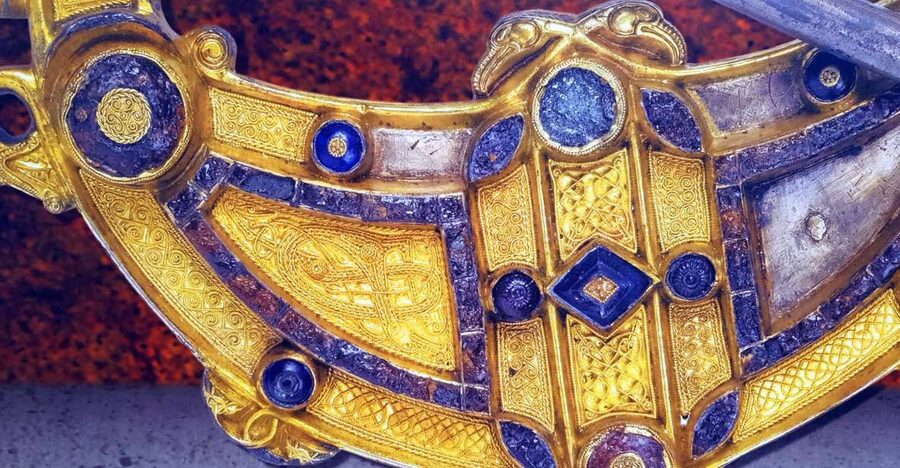
- Big-name cultural items show up, including the Tara Brooch and the Ardagh Chalice.
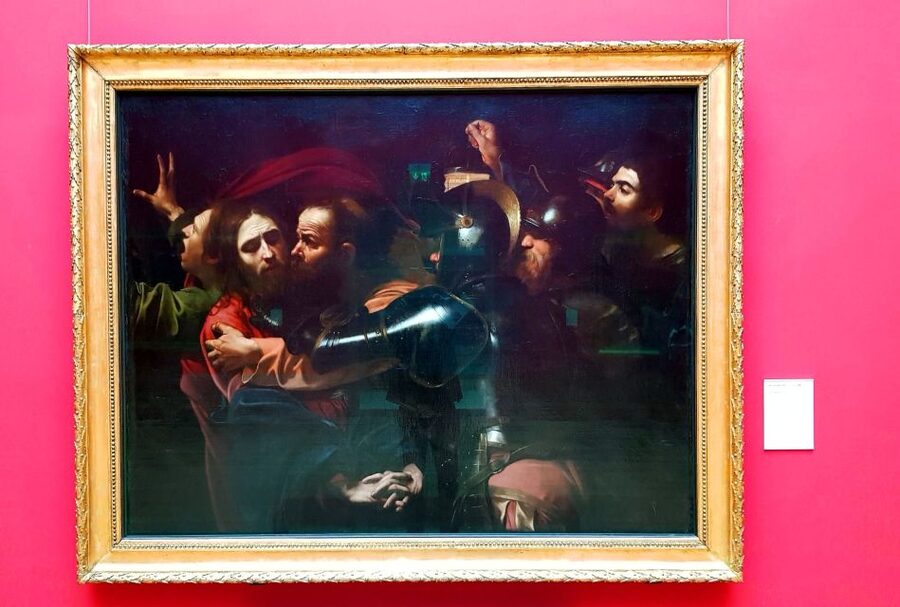
- National Gallery themes include works that connect symbolic art to the Norman Conquest era and the Irish Civil War.
- National Library time gives you a literature-first lens on Irish culture and ideas.
- Private group up to five with entry included, which can be great value if you come as a small group.
A Museum Tour That Teaches You How to Look
The best museum experiences do two things at once. They help you see what is in front of you, and they help you understand why it exists. This tour does both by treating each artwork or artifact like a clue in the same mystery.
The guide’s job is not to recite dates. It is to connect themes: tradition and change, conflict and survival, faith and identity. You walk out with a sense of how Irish history can be read through paintings, writings, and objects that lasted. It is also a smart format for limited time in Dublin. Three hours is short enough to be manageable, but long enough to cover real ground when you are not wandering around trying to pick highlights yourself.
You can also read our reviews of more private tours in Dublin


Private Guide Format, and Why It Saves Your Energy
Because this is a private group, you are not competing with the loudest voice in the room. That matters in Ireland’s big museums, where you can easily spend half your visit trying to find the one painting or object everyone talks about online.
Here’s what you gain with a private guide:
- You get direction on what to prioritize, instead of relying on your own instincts.
- You get explanations timed to what you are actually seeing, not generic backstory.
- You can ask quick questions if something is unclear.
A practical bonus is that entry is included. You show up, meet your guide, and start. No awkward hunt for tickets or scrambling to figure out which floor holds the thing you actually came for.
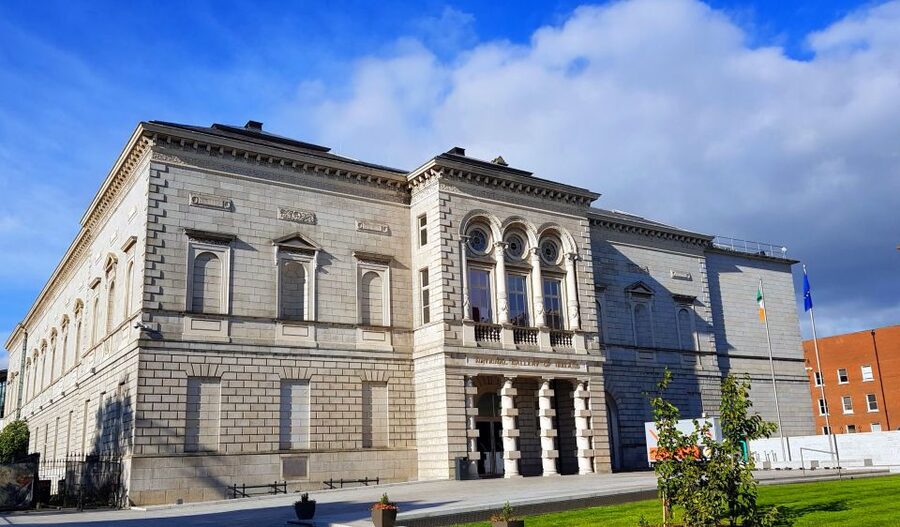
Stop 1: National Gallery of Ireland on Merrion Square West
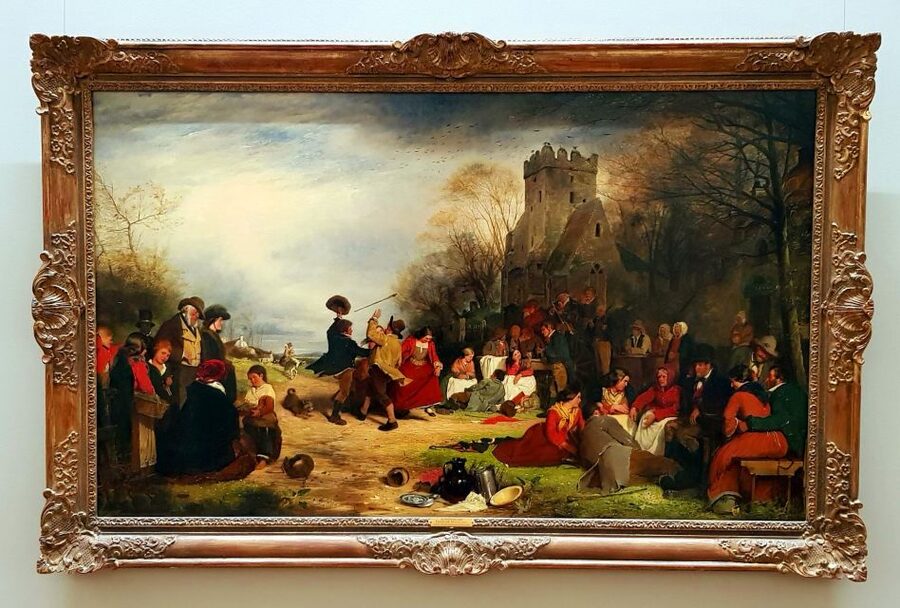
Your tour starts outside the National Gallery on Merrion Square West. This is a great starting point because it is easy to orient yourself in the city center, and it sets the tone right away: you begin with art, and you build your history reading from there.
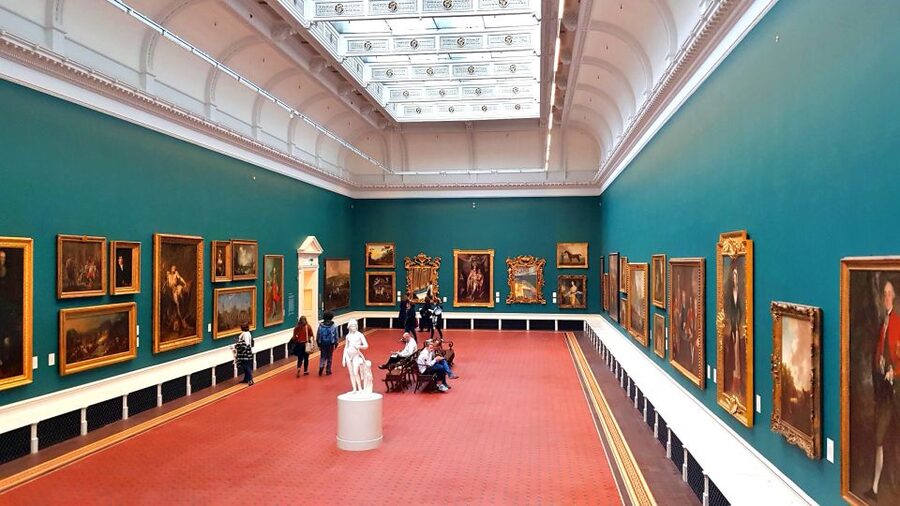
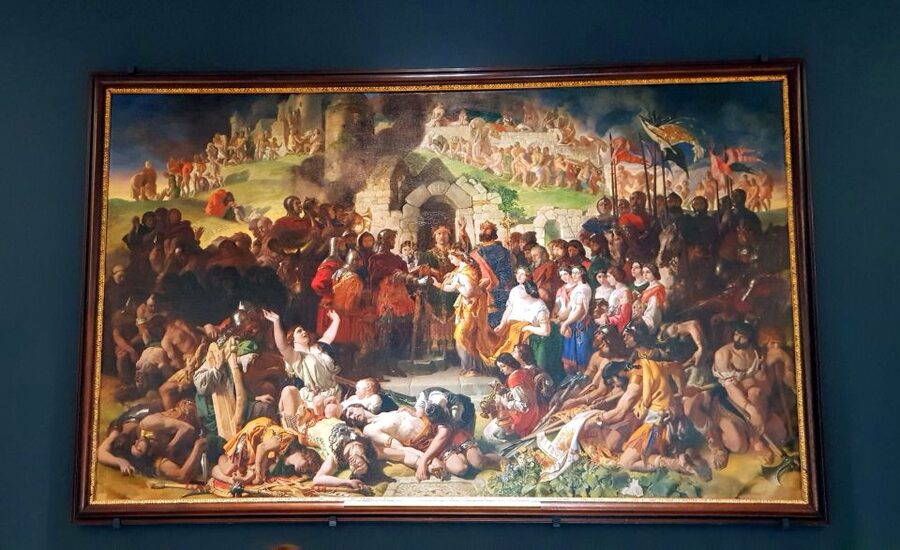
At the National Gallery stop, you get about 40 minutes to focus on highlights. The themes you are guided through are specific and story-driven. You will see symbolic paintings tied to the Norman Conquest of Ireland and the Irish Civil War, and you get context for how artists used imagery to communicate political and cultural meaning. You also get insight into W.B. Yeats, including his life and works, which helps explain why Yeats is more than just a famous name. In this kind of guided flow, you do not just learn who he was. You learn why his ideas mattered, and how his work fits into the broader shifts in Irish society.
What I like about this first stop is the confidence it gives you. After the paintings and symbolism are explained, you tend to look at the rest of the museum visit differently. You start thinking, What is the object trying to say, and who needed it to say it?
Possible drawback: if you are an art purist who wants long stretches in front of a single painting, 40 minutes may feel quick. But for the tour’s goal, it works. You get the “story setup” so the rest of the museums make more sense.
National Library Time: Literature as a Map of Identity
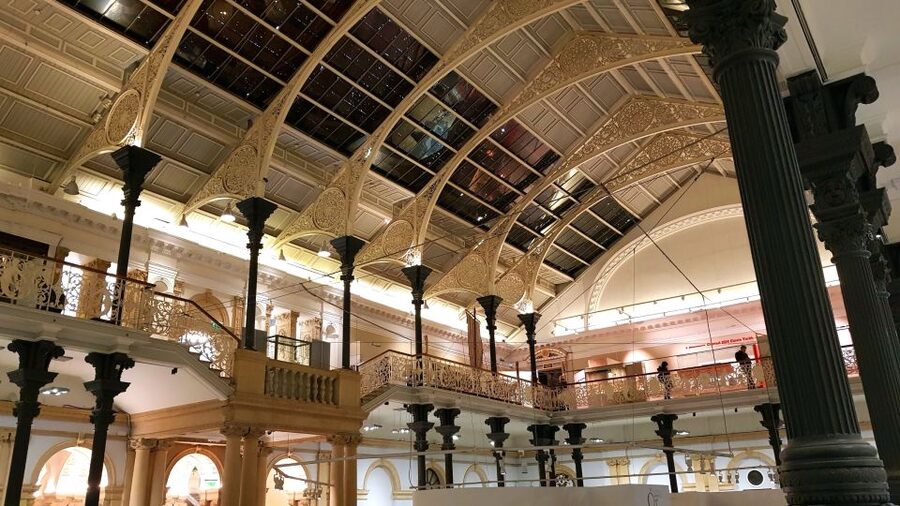
Next comes the National Library of Ireland, again for about 40 minutes. This stop is where the tour shifts from visual art to language and ideas. Ireland’s story is full of writing that shaped public debate, preserved memory, and turned personal voices into cultural touchstones.
Even if you are not a lifelong literature nerd, you will likely appreciate the way the guide uses the library time to connect culture to history. You are not just looking at a building and walking past shelves. The point is to treat literature like a lens. Words are not “extras” here. They are part of the historical machinery.
In a three-museum tour, this is a smart pacing choice. The National Gallery gets your attention using symbolism. The National Museum gives you physical artifacts from earlier centuries. The National Library sits in the middle and reminds you that people have always been shaping identity with stories, not just swords.
Tip for getting the most out of this stop: stay alert and ask yourself what kind of evidence you are looking at. Paintings show meaning through symbols and composition. Artifacts show meaning through materials and survival. Books and manuscripts show meaning through what people wrote down and preserved. Once you think in those categories, the tour becomes easier to follow.
National Museum of Ireland Archaeology: Tara Brooch and Ardagh Chalice
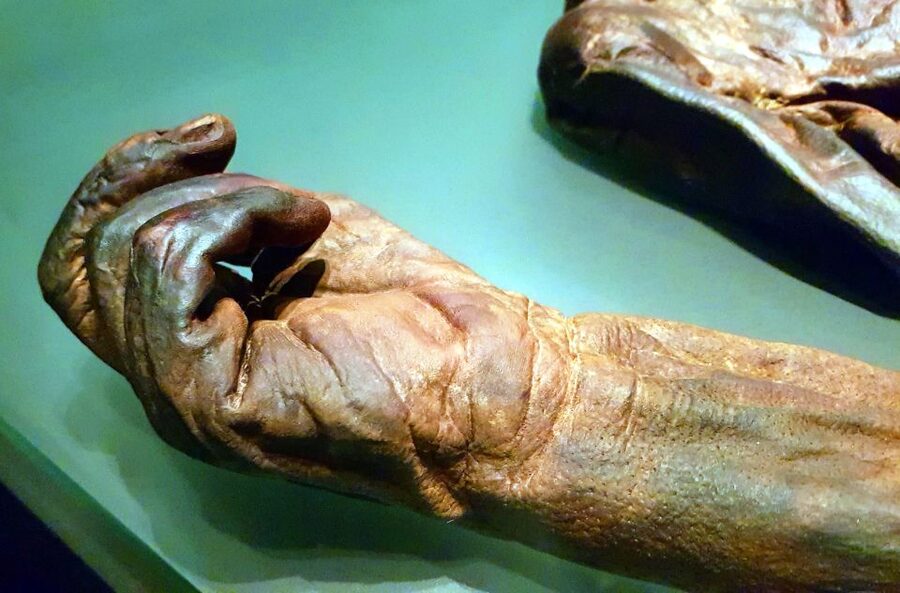
The tour’s final stretch is at the National Museum of Ireland, finishing at the archaeology side. You get about 40 minutes here, which is perfect for a highlights run when the goal is Ireland’s big eras and standout objects.
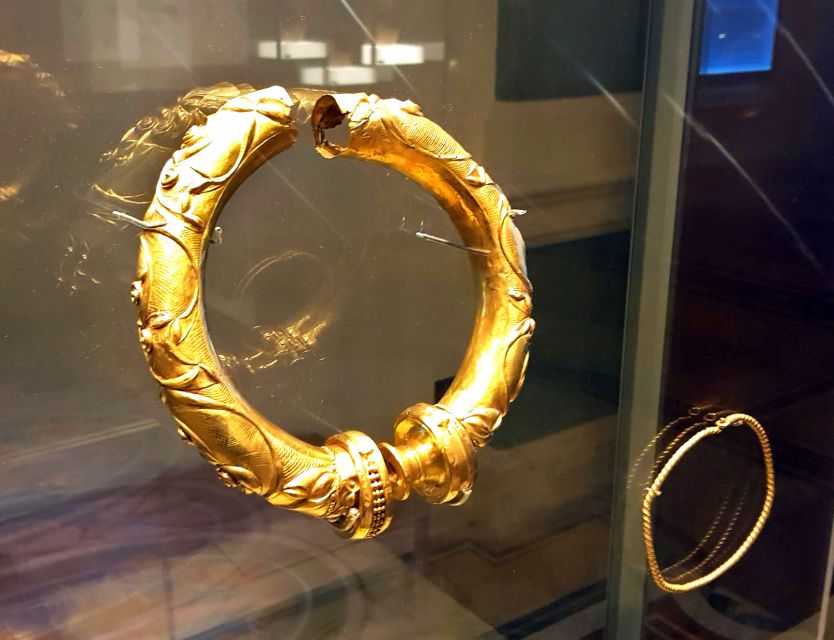
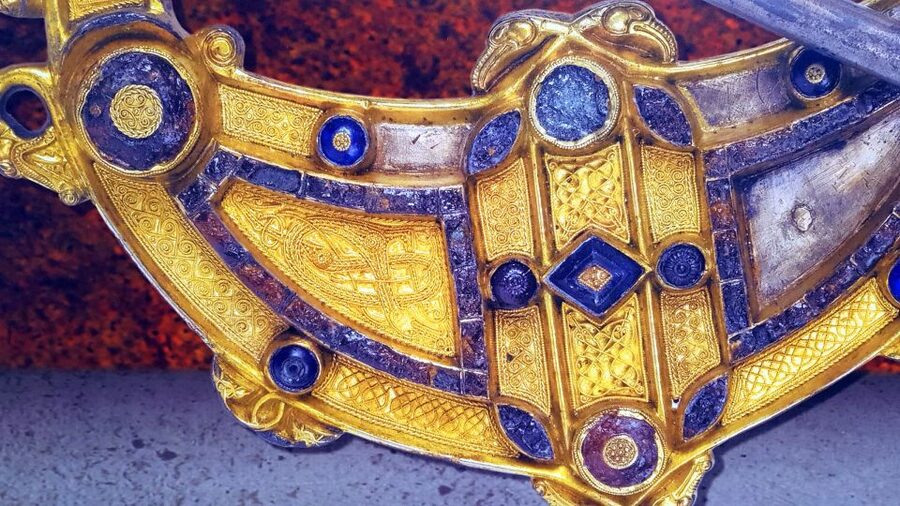
This is where the tour turns time travel into something tangible. You are guided to treasures that represent Ireland’s Golden Age, roughly 500 to 800 AD. Two names you should expect to hear are the Tara Brooch and the Ardagh Chalice. These objects are famous for a reason. They are not just pretty. They show how craftsmanship, religious life, and cultural identity came together in a way that still reads as impressive today.
What makes this stop valuable is the way the guide explains how each artifact fits into the larger puzzle of Irish culture and history. Instead of dropping a list of items, the guide treats each treasure as a “word” in a story. That means you get a clearer sense of what the object represents and why that representation mattered.
A quick consideration: if you like museums where you can wander and linger in galleries, you might wish you had longer than 40 minutes. But for this format, the highlight selection is the point. You are leaving with a coherent narrative, not a checklist of objects you barely remember.






The Halfway Break That Keeps the Tour From Feeling Like a Sprint
Some short tours forget the human part. This one includes a break halfway through, which helps you reset mentally. You are moving from a painting-focused museum to a library-focused stop, then into archaeology. That is a lot of different kinds of attention to ask for in one go.
The break is valuable because it reduces the chance you will start tuning out. In my opinion, that is the biggest risk in any “best of” museum tour. You see a lot, but nothing sticks. Here, the break supports retention, so the guide can keep connecting the pieces without you feeling fried.
Price and Value for a Private Group Up to Five
The price is $492 per group for up to five people, for a total duration of 3 hours. For some people, that sounds steep. For others, it is smart.
Here is the quick math: if you fill all five spots, that works out to about $98 per person. If you come as a smaller group, the per-person cost goes up. Either way, the value question is not only cost. It is what you get for your time.
You are buying:
- a private guide,
- museum entry for the included stops,
- and a structured highlights experience that connects art, literature, and archaeology.
If you are the kind of traveler who hates standing around reading tiny labels and still leaves the museum with “I saw stuff,” this is the type of tour that can change the outcome. You will likely spend less time figuring things out and more time understanding the big ideas.
Also, if you have kids or a mix of interests, the guide’s story approach can keep everyone engaged. It is not just history class. It is the story of identity told through objects and art.
How the Pieces Fit Together: The Real Payoff
The main value here is the connections. The tour is built around the idea that Irish culture and history form a single jigsaw. Each stop adds pieces, and the guide helps you see how those pieces interlock.
You start with art that uses symbolism, like paintings connected to major turning points such as the Norman Conquest and the Irish Civil War. Then you shift to literature and the way words shape identity and memory. Then you end with artifacts from the Golden Age, where craftsmanship and cultural life become physical evidence.
That structure matters because it stops Irish history from becoming a pile of disconnected topics. You start building an internal storyline. And once you have that, even casual museum label reading feels different. You start recognizing themes you learned earlier, like how power, belief, and creativity echo across centuries.
Who This Tour Suits Best (and Who Might Skip)
This tour is a strong match if you:
- have limited time in Dublin,
- want museum highlights without guesswork,
- like learning through stories, not just facts,
- are interested in Irish culture through art, literature, and archaeology.
It is less ideal if you:
- want to spend long uninterrupted hours in one gallery,
- plan to do a very detailed, item-by-item museum deep dive on your own,
- prefer purely self-guided visits where you can move at your own pace with no structured narrative.
For most people, though, the private structure plus the connected themes is exactly the kind of “best use of time” plan that makes a short Dublin trip feel richer.
Practical Tips for a Smoother 3-Hour Visit
- Wear comfortable shoes. You will move between three major institutions and still spend most of the time looking carefully.
- Keep your questions simple. If you get confused, ask what connection you are supposed to be noticing. The guide’s job is to help you see the pattern.
- If you have a particular interest, say it at the start. The tour is designed around highlights, so your guide can often steer attention toward the parts that matter most to you.
- Don’t overpack your day. Museums work best when you are not immediately rushing off to another big-ticket activity. This tour already gives you a lot to process.
Should You Book Dublin Treasures of Ireland Museums Private Tour?
I think this is a great booking for anyone who wants a guided “high points plus meaning” museum experience in a tight time window. The strongest reasons are the private guide storytelling and the way the tour uses art and artifacts as evidence, not decorations. You get three major institutions without the usual problem of wandering too long in the wrong rooms.
Book it if you want your Dublin museums to feel connected, where each stop helps explain the next. Skip or consider another option if you prefer long self-guided museum time or you want maximum depth on one collection.
If you book, show up ready to look closely and listen for the connections. That is where this tour does its best work.
FAQ
How long is the Dublin Treasures of Ireland Museums private tour?
The tour lasts 3 hours.
What is the starting meeting point?
The guide meets you outside the National Gallery on Merrion Square West.
What museums are included?
You visit the National Gallery of Ireland, the National Library of Ireland, and the National Museum of Ireland, focused on the archaeology side.
Is museum entry included in the price?
Yes, entry to the museums is included.
Is hotel pickup or drop-off included?
No, hotel pickup and drop-off are not included.
What is the group type and size?
It is a private group. The price is per group up to 5 people.
Is the tour wheelchair accessible?
Yes, the tour is wheelchair accessible.
What language is the tour guide?
The live tour guide speaks English.
Can I cancel and get a full refund?
Yes. You can cancel up to 24 hours in advance for a full refund.
More Private Tours in Dublin


More Tours in Dublin


More Tour Reviews in Dublin


Not for you? Here's more nearby things to do in Dublin we have reviewed


Dublin Museum Tours, compared.
 ★ 5.0Irish Rock ‘N’ Roll Museum Experience DublinFrom $266,112 reviews
 ★ 5.0The Little Museum of Dublin Famous Guided TourFrom $212,948 reviews
 ★ 4.5Dublin EPIC Museum Admission TicketFrom $251,729 reviews
 ★ 5.0Giant’s Causeway with the Titanic Exhibition and the best of Northern IrelandFrom $1021,122 reviews
 ★ 4.6Irish Whiskey Museum Tour and Whiskey TastingFrom $22999 reviews
 ★ 4.6EPIC Museum Entrance TicketFrom $24816 reviews
 ★ 5.0Irish Whiskey Museum: Whiskey Blending ExperienceFrom $44577 reviews
 ★ 4.8Jeanie Johnston Tall Ship Irish Famine History TourFrom $16431 reviews
Browse the lists this tour appears in