Dublin Traditional Irish Music Walking Tour with Live Performance

Reviewed · DUBLIN WALKING TOURS

Dublin Traditional Irish Music Walking Tour with Live Performance

5.0 · 253 reviews From $27 Operated by Original Dublin · Bookable on Viator
Book on Viator →

That first note in Temple Bar sets the tone. This 2-hour Dublin walking tour pairs live traditional Irish music with stop-by-stop stories, from Smock Alley to St Patrick’s Cathedral. I like that it is more than sightseeing, it turns streets, bridges, and cathedrals into lyrics you can remember. I also love the small-group feel, capped at 20 people, with guides who keep the pace friendly and the mood upbeat. One consideration: if you arrive late or get mixed up with other groups at Temple Bar, you could miss the music portion early on.

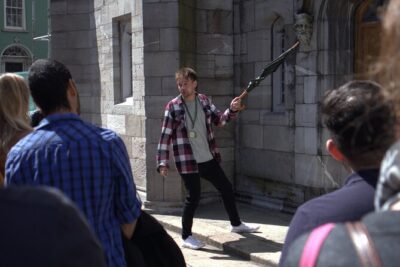
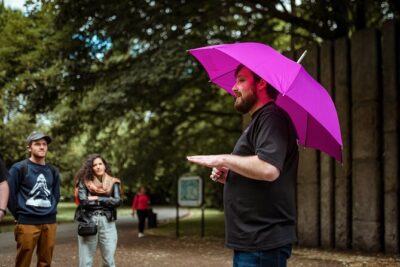
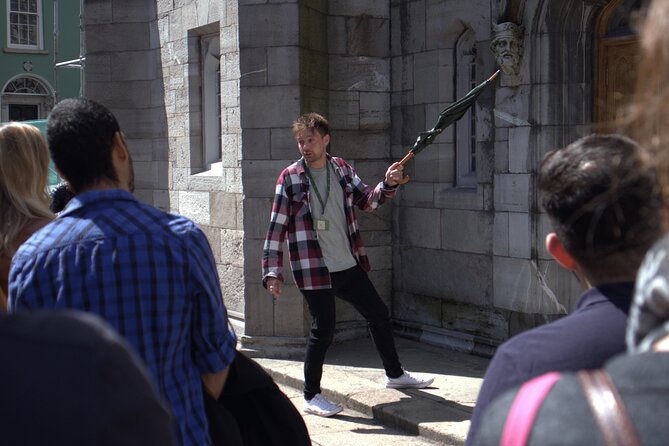
You will walk a tight loop through some of Dublin’s most talked-about landmarks, but the angle is what makes it special. Your guide, an Irish musician, threads folk ballads, poems, and sometimes audience interaction into the city’s story, including details that go beyond the usual plaque-level facts. The day is built for casual viewing and quick photos, with short stops and plenty of chance to hear both the sights and the sounds.

Key things to know before you go

Dublin Traditional Irish Music Walking Tour with Live Performance - Key things to know before you go

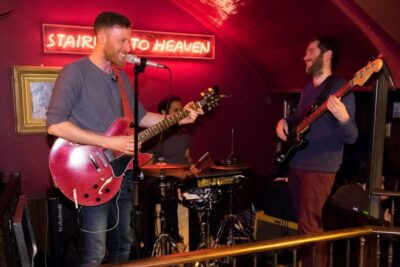
  • Live musician guide: Songs are built into each stop, not just played at the start.
  • Temple Bar meeting point: Start at 3 Crown Alley, right in the heart of the area.
  • Historic stops in one loop: Smock Alley Theatre, Grattan Bridge, Fishamble Street, Christ Church, Dublin Castle, and St Patrick’s Cathedral.
  • Short, photo-friendly time blocks: Each stop is about 10 minutes, so you do a lot without rushing.
  • Small group size: Maximum 20 travelers, which helps the music feel more present.
  • Multiple guide styles: Reviews mention guides like Ciarán, Sean, Shaun, and Dylan, so expect personality and stage energy.

Finding the group at Temple Bar, 3 Crown Alley at 1:00 pm

Start time is 1:00 pm, and you meet at 3 Crown Alley, Temple Bar. That location matters, because Temple Bar is popular and can be chaotic. The upside is simple: if you are already in the area, you get easy access and you can build the rest of your day around it. Temple Bar is also the kind of place where music is already in the air, so walking in with a live performance on your schedule feels natural, not forced.

Here is what I’d do to avoid the one common snag. Arrive a little early and scan for the group with the instrument and the guide leading the walk. One review complaint mentioned a guide starting late and people feeling rushed while figuring out where they were supposed to be. Another review mentioned confusion when two different tours were meeting at the same area. You can prevent both problems with one habit: show up early enough to confirm you’re standing with the correct group.

If you want a smooth experience, plan your schedule so you are not sprinting across Dublin to make the start. With a tour duration of about 2 hours, the first few minutes set the rhythm. Get there, get oriented, and settle in.

You can also read our reviews of more tours and experiences in Dublin.

Smock Alley Theatre (1662) and Grattan Bridge, Dublin in mini-scene form

Dublin Traditional Irish Music Walking Tour with Live Performance - Smock Alley Theatre (1662) and Grattan Bridge, Dublin in mini-scene form
The walk begins with a quick stop at Smock Alley Theatre, 1662. This is Ireland’s oldest theatre and it sits right inside Temple Bar territory. Even if you are not a theater history nerd, you’ll feel why this stop works: it gives the tour a cultural anchor early on. You are not only walking medieval and Victorian streets, you are also seeing where performance culture has roots.

Next up is Grattan Bridge, a picturesque crossing over the River Liffey. It connects Capel Street to Parliament Street, and it is decorated with seahorse lanterns. This kind of detail is perfect for photos, but it also does a clever job for the tour. Bridges are natural story points because they link neighborhoods, trade routes, and social life. When a musician guide ties that geography to a song or poem, the city stops feeling like a list of landmarks and starts feeling like a living place.

What you should watch for at these early stops is pacing. Each location is about 10 minutes, which means you get a quick look and then move before you get bored. If you like tours that keep momentum, this is a good sign. If you prefer long museum-style time at each site, you might find this style moves quickly. The tradeoff is that you will cover more ground and still leave with the music moments clearly in your head.

Fishamble Street, Viking roots and Handel’s Messiah first performance

Dublin Traditional Irish Music Walking Tour with Live Performance - Fishamble Street, Viking roots and Handel’s Messiah first performance
Fishamble Street is one of those Dublin lanes where the past feels unusually close. It is often described as Dublin’s oldest street, and it once held the largest Viking settlement found outside Scandinavia. That is the historical weight. Then the tour adds a surprise: Fishamble Street is also tied to the first ever performance of Handel’s Messiah.

That blend is why this stop is a standout. Most walking tours treat history like separate chapters. Here, the story connects communities across time, from Vikings to Baroque-era music. And because the guide is a musician, you do not just hear facts. You hear how music grew out of the same streets where people lived, worked, and gathered.

In real terms, you’ll get two benefits. First, you get context for why these narrow streets matter beyond their looks. Second, you get a mental “hook” that helps you remember what you saw. When a song or lyric gets paired with a specific street, you start noticing similar sound and rhythm patterns in how you move through the city afterward.

One more practical point: street lanes can get noisy, especially near Temple Bar. The tour is only about 2 hours, so you likely will not be listening for long stretches. Still, if you are sensitive to loud crowds, choose a spot near the front of the group when the performance happens. You will hear more and feel less frustrated if traffic or chatter rises.

Christ Church Cathedral and the darker side told through song

Christ Church Cathedral is described as the heart of Medieval Dublin, where medieval and Victorian splendour collide. That sets you up for dramatic visuals, but the tour’s angle is the real draw. You explore the cathedral and surrounding environs, including a darker side of the story, told through song.

This is where the musician-guided format matters most. Religious buildings are easy to treat as scenic backdrops. Here, the guide uses the music to highlight themes you might not catch from a quick walk inside. Songs can carry emotion and social context, and in a place like Christ Church, that emotional framing helps history land.

Also, it is a quick stop by design. You are not scheduled for a long interior visit, which means this tour works best if you want a “taste now, linger later” approach. If you want more time inside the cathedral on your own, you can treat this as your cue for what to revisit.

One drawback to consider is audio clarity. Reviews include a complaint about not being able to hear or understand the guide due to street noise and a larger group. Your group size here is capped at 20, but 20 can still be a lot on narrow sidewalks. If you care about hearing every lyric, stand closer to the guide. If you bring kids or you prefer a more relaxed listening style, position yourself where you can see the guide clearly, not just hear.

Dublin Castle steps, then St Patrick’s Cathedral to close out

Dublin Traditional Irish Music Walking Tour with Live Performance - Dublin Castle steps, then St Patrick’s Cathedral to close out
After Christ Church, you swing by the Ship Street Gate of Dublin Castle. You’re seeing the famous steps and that immediate sense of power and ceremony the castle represents. It is another quick 10-minute stop, which keeps the tour energy high and prevents the day from turning into “stand in one spot and wait.”

Then you finish at Saint Patrick’s Cathedral, specifically in Saint Patrick’s Park adjoining the cathedral. Ending here feels right because it provides a visual contrast to earlier stops. Temple Bar is all about lively streets and performance energy. St Patrick’s Cathedral shifts the mood toward scale and solemn beauty. If you are planning your afternoon, this finish point is a great place to extend the day, because you are in a central, walkable area with other sites nearby.

You can think of the route as a story arc. You start with cultural performance roots, move through streets where music, politics, and community intersect, then end at a major spiritual landmark. It is a compact loop, but the emotional sequence is intentional.

If your main goal is live music, you should know the tour is designed around short performances tied to stops rather than one long concert. That can be ideal if you like variety. It can feel different if you were hoping for sustained singing for the full 2 hours. Look at each stop as a chapter, not a single show.

Why this musician-led walk beats a standard Dublin stroll

Dublin Traditional Irish Music Walking Tour with Live Performance - Why this musician-led walk beats a standard Dublin stroll
The biggest praise in the reviews centers on how the guide performs while also telling stories. You’re not just hearing Irish music as background entertainment. You are getting a guided explanation of how folk songs, lyrics, and poems connect to Dublin’s social and political history.

Guides mentioned by name include Ciarán, Sean, Shaun, and Dylan. Across those different personalities, the pattern is the same: humor, showmanship, and a strong link between where you stand and what you hear. One reviewer highlighted Gaelic singing and another talked about interactive sing-alongs or even dancing. Even if you are shy, that is good to know, because it suggests the guide is willing to bring the group in without making it awkward.

The pacing also seems to be built for real life. Stops are around 10 minutes each, with short walks between them. That matters if you are sightseeing all day and you want something that does not drain you. It also helps if you get distracted easily. You have a new scene every few minutes, and the music keeps attention from drifting.

There is also a value angle here. You pay one price and you get both movement and performance plus history context. That’s why people rate it so highly. It is not trying to be a lecture. It is a street-level culture lesson delivered through melody.

Price and value, what $27.81 buys in real Dublin time

At $27.81 per person for about 2 hours, this is priced like a mid-range walking experience. What makes it feel like good value is that you are paying for more than a guide. You are paying for an Irish musician who is performing as part of the itinerary.

You also get free admission noted for the stop points. While the tour itself is a paid experience, the locations listed as free admission make the experience feel less “ticketed” and more like a cultural walk. In practical terms, that means you can spend your money on the experience and not constantly worry about add-on entries at each stop.

Compared with a standard guided tour, the value comes down to two things:

  • You get an activity, live song and performance, not just narration.
  • You get context tied to place, which helps your photos and memories line up with meaning.

If you are watching your budget, $27.81 is still enough to matter. My rule: if Irish music is part of what you want to understand about Ireland, this price is reasonable. If music is not your thing, you might prefer a more conventional landmarks-focused tour instead, because the performance is the core feature.

Practical tips so you hear the songs and get great photos

Dublin Traditional Irish Music Walking Tour with Live Performance - Practical tips so you hear the songs and get great photos
Bring a camera, because the tour is designed around photo-ready landmarks, including cathedrals, castle steps, and the river bridge. The route is also short enough that you can keep your phone accessible, not buried in a bag.

Wear comfortable walking shoes. You are doing multiple short stretches across central Dublin, and Temple Bar sidewalks can be uneven. Also, consider clothing for Irish weather, even in pleasant seasons. Dublin can change quickly, and you do not want rain to wreck your listening.

For hearing the guide:

  • Stand where you can see the guide, not just where you can fit.
  • Don’t be afraid to ask the group to rotate position if the crowd blocks you.
  • If street noise is high, focus on the stops and the moments right before the singing, when your attention is freshest.

For avoiding the “wrong group” issue at Temple Bar:

  • Arrive early.
  • Look for the guide and instrument at the meeting point.
  • If the area is packed, confirm you have the right start location and you are moving with the musician-led group.

Who should book this Dublin traditional Irish music walking tour

Book it if you want Dublin in a different language, not just street names. This tour fits best if you:

  • Love traditional Irish music and want it tied to real places
  • Prefer short stops and an energetic group pace
  • Like learning history through stories, poems, and song
  • Want a fun introduction to Dublin on a first visit

It also works well as a first-day activity when you want bearings fast. Temple Bar is a natural hub, and ending at St Patrick’s Cathedral sets you up for more sightseeing.

If you are hard of hearing or audio-sensitive, you can still try it, since the group is capped at 20 and the performances are central. Just position yourself strategically at each stop. The tour’s short length also means you are not stuck in one noisy spot for hours.

If you hate singing or dancing participation, the tour can still be enjoyable because it is driven by performance and storytelling even when you stay seated with the group. Still, one review suggested that an individual who was not initially excited ended up participating by the end. That tells you the guide may use gentle prompts, not just music.

Should you book it? My take on the yes or no

Yes, if you want a Dublin walking tour that feels like an evening of traditional Irish culture, not a checklist. The combination of live performance, compact timing, and place-based stories is exactly why the tour scores so high. Guides such as Ciarán, Sean, Shaun, and Dylan are repeatedly praised for making history social, funny, and memorable through songs.

I’d lean no only if your priority is quiet, slow pacing, or if you strongly need crystal-clear audio in crowded places. In that case, you may prefer a more controlled setting.

If you are the kind of traveler who likes to hear a city’s past in rhythm and voice, this is one of the best ways to do it in two hours. Just get to Temple Bar early, find the musician guide, and let the lyrics guide your walk.

FAQ

Where does the tour start and what time is it?

The tour starts at 3 Crown Alley, Temple Bar, Dublin, D02 CX67, Ireland. The start time is 1:00 pm.

Where does the tour end?

The tour ends at St Patrick’s Cathedral, St Patrick’s Close, Dublin, D08 H6X3, Ireland.

How long is the Dublin Traditional Irish Music Walking Tour?

The duration is about 2 hours.

How much does it cost?

The price is $27.81 per person.

What kind of ticket do I get?

You receive a mobile ticket.

Is there a group size limit?

Yes. The tour has a maximum of 20 travelers.

Can I get a refund if I cancel?

Free cancellation is available. You can cancel up to 24 hours in advance for a full refund, and cancellations within 24 hours are not refundable.

Is the tour accessible for most travelers?

Most travelers can participate, and service animals are allowed. It is near public transportation.

What’s included at the stops?

The tour includes guided walking between multiple historic locations, with live traditional Irish music performed as part of the experience at each stop. Each listed stop notes free admission.