

Reviewed · SELF-GUIDED TOURS
St Patrick’s Cathedral: Self-Guided Cathedral Admission
Dublin’s most important cathedral feels instantly personal. Saint Patrick’s Cathedral, set near the legendary well tied to Saint Patrick, combines 800 years of Irish faith with a modern Discovery Space of iPads and touchscreens.
I especially like two things. First, you can visit where Jonathan Swift, the long-time dean and author of Gulliver’s Travels, is buried and learn how he shaped Dublin’s church life. Second, I love the Door of Reconciliation and the Irish expression it sparked, because it turns a moment of stonework into a bit of living language.
One thing to plan for: during busy hours the cathedral can feel crowded, and popular spots can be a little harder to linger at unless you go a bit slower or outside peak periods.
Key highlights at a glance
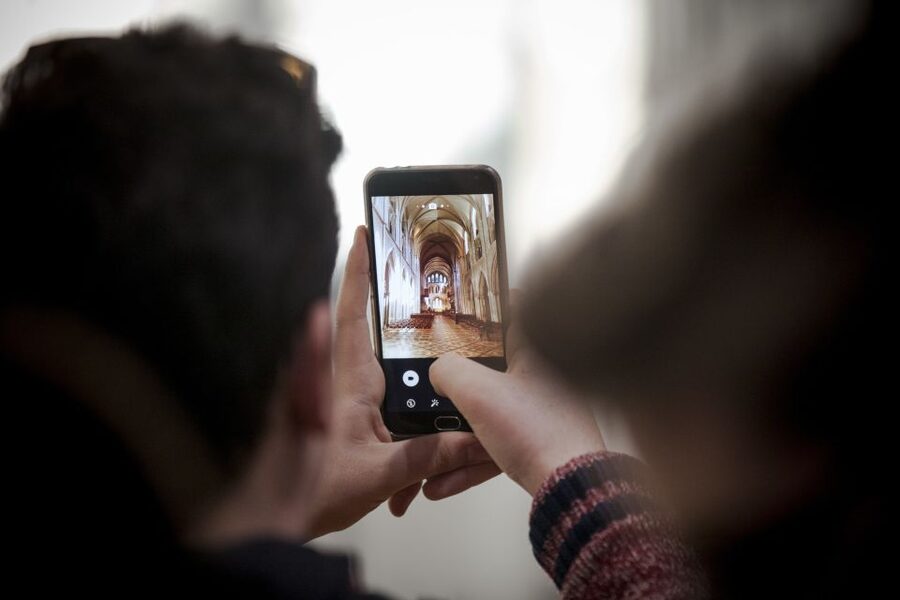
- Self-guided with included audio in English, French, German, Italian, Spanish, and Irish
- Jonathan Swift’s burial site, plus context on his years as dean
- Door of Reconciliation, tied to the Irish phrase to chance your arm
- Stained glass you can track story-by-story, including Saint Patrick shown in 39 images
- Discovery Space technology with iPads, touchscreens, and brass rubbings
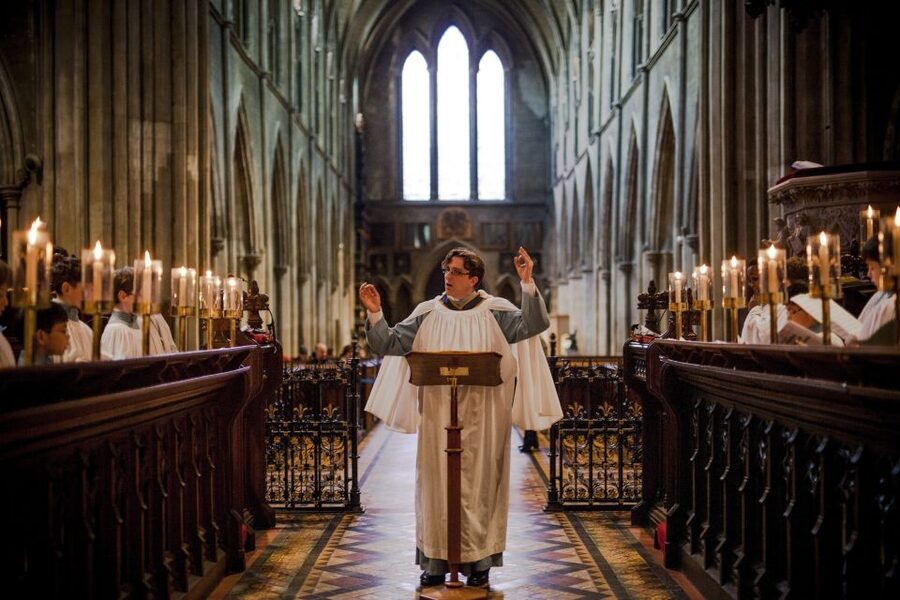
- A working cathedral, with sung services twice daily Sunday through Friday
Walking up to St Patrick’s Cathedral and getting your bearings
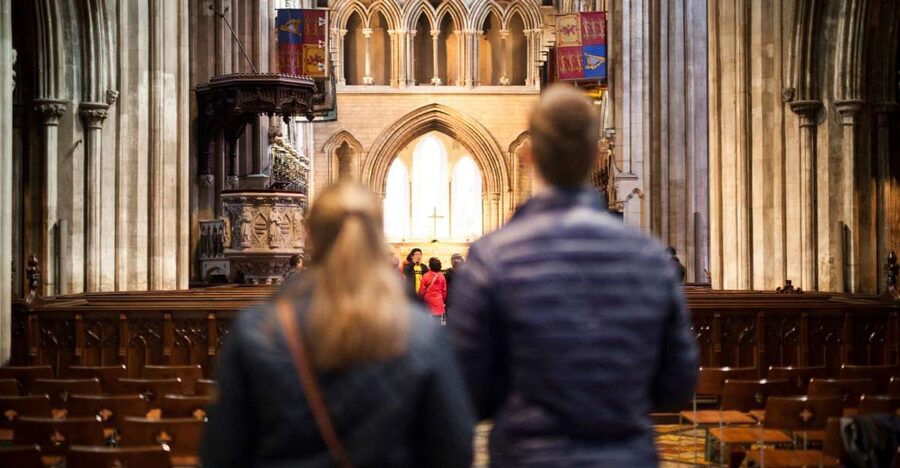
Saint Patrick’s Cathedral sits right where Dublin’s religious story got a long head start. You’re not just walking into a museum. This is the National Cathedral of the Church of Ireland, and it keeps up a steady rhythm with sung services twice daily from Sunday through Friday.
Before you go deep into the building, take a few minutes just to orient yourself. Look for the flow of visitors and the way people cluster around the most photographed areas, then decide where you want quiet time. If you have limited time, use your first pass to spot the main visual anchors: the altar area, the stained glass views that pull your eyes upward, and the spots connected to Saint Patrick’s story.
This is also a place where the setting matters. It sits adjacent to the famous well, and tradition says Saint Patrick baptized converts during his visit to Dublin. Even if you’re not religious, that context changes the mood, because you’re stepping into layered meaning, not just architecture.
What $12 gets you, and why the audio makes it worth it
This experience is priced at $12 per person, and the value is in what’s included. You get self-guided cathedral admission, you can skip the ticket line, and you receive an audio guide in multiple languages. That trio matters. A cathedral visit can turn into a blur if you’re trying to read plaques while people stream around you. Here, the audio gives you structure without forcing you into a group pace.
The other big plus is freedom. You can stop when a stained glass detail catches your eye, or when you want to hear a specific story before moving on. If you like to travel at your own speed, that’s the whole point of choosing self-guided.
For the best value, plan to use the audio guide for at least the cathedral’s “big moments,” not only the easiest photo stops. When you do that, you’ll feel like you’re getting a guided experience, just with control of timing.
Jonathan Swift’s burial spot, and why it changes your perspective
If you’re a literature fan, this is one of the strongest reasons to visit. Jonathan Swift, who served as dean of the cathedral from 1713 to 1745, is buried here. In fact, the cathedral presents artifacts connected to him as part of your visit.
You’ll get more than a name on a plaque if you lean into the audio at this stop. Swift wasn’t just a writer who happened to visit Dublin. As dean, he was part of the cathedral’s everyday life, and his time overlaps with a period of Dublin’s growth and changing attitudes. Hearing that context while standing where he’s laid to rest turns a literary connection into something physical.
I also find it helps to look around while listening. Even if Swift’s story is what brought you in, the cathedral’s stonework and layout give you a sense of how the place functioned for centuries. It’s easier to understand why people came here to pray, to be seen, and to mark major events.
The Door of Reconciliation and the saying to chance your arm
Some cathedral stops are impressive because they’re big. This one is interesting because it’s specific. The Door of Reconciliation is tied to the Irish expression to chance your arm.
That’s the kind of detail that makes a visit stick. Without that connection, you might walk past a door and think it’s just decorative. With it, you start looking for meaning in how traditions form around places. Language grows out of lived moments, and this is an example of how a physical threshold can feed a phrase that people still use.
If you want to get the most out of this section, slow down for just one extra minute. Stand in a spot where you can take in both the door and the surrounding area. Then listen to the audio segment related to it. The story lands better when you’re not rushing between photo angles.
Gothic architecture and stained glass: where the building tells a story
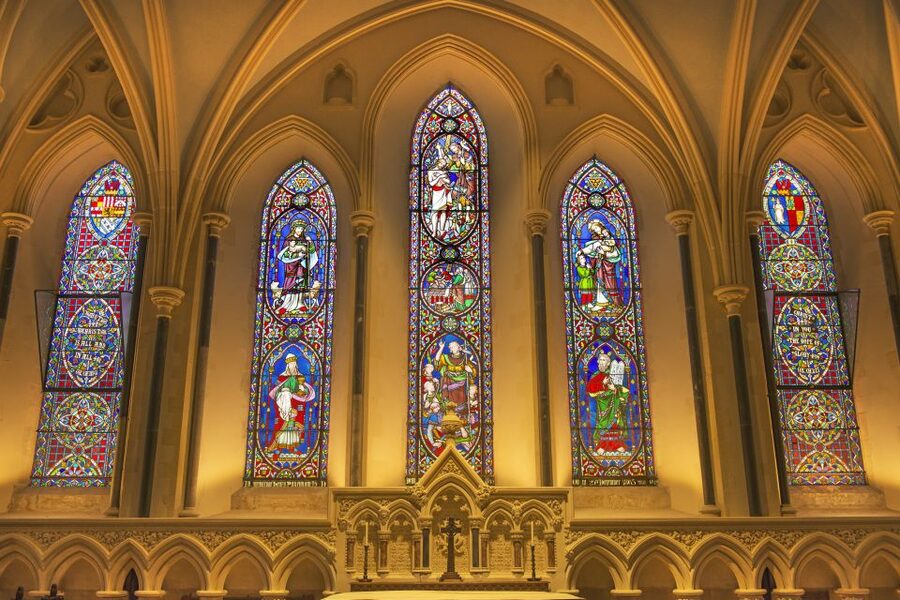
Saint Patrick’s Cathedral is famous for its Gothic style, and you feel it immediately once you’re inside. The space pulls your attention upward. Columns and pointed shapes guide your eyes toward stained glass, where the light changes the mood of the room.
What I like most is how the windows act like visual chapters. One window depicts the life of Saint Patrick in 39 images. That isn’t just impressive art. It’s a narrative tool. You can actually trace the idea of Saint Patrick’s story through repeated scenes, even if you don’t know the details beforehand.
When you’re looking at stained glass, don’t force yourself to see everything at once. Pick one window to focus on, then use the audio to help you interpret what you’re looking at. You’ll get more satisfaction from understanding part of it than from skimming all of it.
Also, if there’s a choir performing when you’re there, watch for it. Even without changing your schedule, that adds atmosphere in a way a self-guided visit alone cannot.
Discovery Space: iPads, touchscreens, and brass rubbings
This cathedral now has a Discovery Space designed to meet you halfway. Instead of only relying on static signage, you get interactive features that explain what you’re seeing in the rest of the building.
Here’s what to expect based on the on-site experience: iPads play samples of the cathedral’s choir. There are touchscreens with technology that highlights the cathedral’s long history. And there’s a brass rubbing activity in the Discovery Space, which is a hands-on way to slow down and engage.
I like these additions because they solve a common cathedral problem. You might know you’re in something old and important, but it can still feel hard to connect the dots quickly. The Discovery Space helps you connect the dot from surface beauty to real human story, including what the building meant over time.
If you’re traveling with kids, this area can be a practical reset button. It gives energy back to the visit and makes the rest of the cathedral feel more understandable.
Using the included audio guide, and getting the sound right

The included audio guides are a big reason this feels like a thoughtful visit, not just entrance-and-go. You have multiple language options: English, French, German, Italian, Spanish, and Irish. That’s useful if you’re traveling with someone who wants their own language instead of sharing.
I also appreciate how the audio is set up around key stops. The experience works in small sections, so you can follow the path and not miss major points. Many visitors use the provided headset or handheld device, and you can also make listening easier by using your own headphones or connecting via your phone if that option is available for your setup.
Two practical tips help a lot:
- Keep your listening volume comfortable, then switch to silence when you want to absorb the room’s natural quiet.
- Don’t feel pressured to listen to every single segment. If you find a stop that clicks with your interests, commit to that one and then move on.
When you use the audio this way, you turn the cathedral into an experience that matches your curiosity.
Live services and short guided tours while you stay self-guided
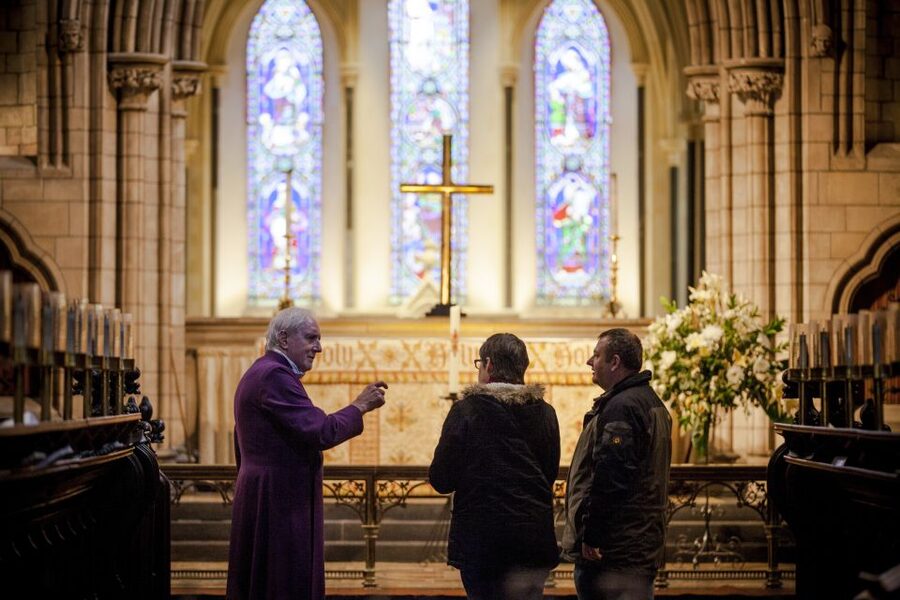
Even though this is self-guided admission, you’re walking into a place that’s active. Sung services happen twice daily Sunday through Friday, and that can shape how the interior feels while you’re there.
You may also encounter short guided tours that run frequently. One useful detail to know is that guided tours are offered about every 15 minutes. So if you arrive and want extra context, you might be able to join one, then return to self-guided audio right after.
This matters because self-guided doesn’t mean you can’t get human help. If you’re the kind of person who likes asking questions, check the flow inside and look for staff or guides who are available. In past visits, guides like Anna and David have been mentioned as knowledgeable and friendly. If you catch a guide like that, ask a question about what you should look for in the stained glass or what to prioritize first.
For the best pacing, think of it like this: use self-guided audio to move through the building, then use guided moments as “boosters” when you want deeper answers.
Practical tips for toilets, the shop, and timing your photos
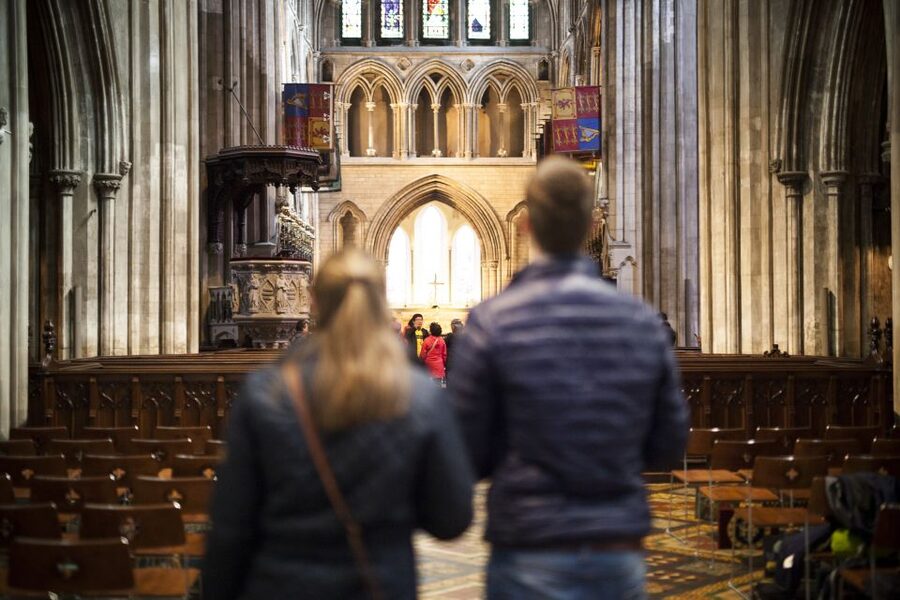
A visit to Saint Patrick’s Cathedral is a real stop in a real day, not a quick detour. Plan for timing, because the cathedral can be busier around midday. If you want to take your time, start earlier in your day when possible, or plan to linger in the Discovery Space between rushes.
A small but helpful detail: there’s an on-site toilet option. It’s in a transportable building outside the cathedral, so it’s not right inside the main area. Knowing that helps you avoid a last-minute hunt when you’re halfway through your audio.
There’s also a shop at the end of the experience. It can be a nice way to pick up a postcard or small souvenir, but if you came for solemnity, don’t feel you have to stop right away. Spend your time where the architecture and windows are, then decide at the end whether shopping is your kind of closure.
If you have time, don’t ignore the area outside. The park space around the cathedral gets mentioned as a pleasant add-on, and it’s a good place to reset your thoughts before you move on to the next Dublin stop.
Who this self-guided admission is perfect for
This is a great match if you want cathedral depth without a strict schedule. Because audio is included, you can take control of what you focus on, whether that’s Swift’s story, the Door of Reconciliation, or the stained glass scenes.
It’s also a strong fit for:
- First-time visitors to Dublin who want a major site that connects directly to Irish identity
- People who like literature, because Swift’s burial and dean years give you an extra layer
- Travelers who enjoy interactive learning, since the Discovery Space adds hands-on elements like touchscreens and brass rubbings
- Families, because the Discovery Space can make the visit feel less like a lecture and more like discovery
If you’re very sensitive to crowds, consider building in extra buffer time. A working cathedral plus frequent tours means you can’t always control foot traffic.
Should you book this self-guided cathedral admission?
Yes, I’d book it if your priority is a calm, meaningful visit with enough structure to understand what you’re seeing. The combination of skip-the-line entry plus an included multilingual audio guide makes it easy to get value out of a single visit.
Skip it only if you strongly prefer a fully guided, group-timed tour experience and you dislike using audio stations. Also, if you hate any sense of bustle in religious spaces, plan your visit for quieter hours if you can.
Bottom line: for $12, this gives you a lot of cathedral time, a strong set of “must-see” story points, and a modern Discovery Space that helps the centuries click into place.
Self-Guided Tours, compared.
 ★ 4.6Christ Church Cathedral Entrance Ticket & Self-Guided TourFrom $14773 reviews
 ★ 4.0Dublin Ghost Hunt Exploration Game and TourFrom $634 reviews
 ★ 4.5Private Dublin Treasure Hunt Self Guided TourFrom $3014 reviews
 ★ 3.5Dublin Self-Guided Murder Mystery Tour by Temple BarFrom $2112 reviews
 ★ 4.0Dublin Old Town: Famous Pubs Exploration Game and TourFrom $87 reviews
The Mystical Hill of Tara: A Self-Guided Audio TourFrom $96 reviews
★ 4.0Dublin Old Town: Famous Pubs Exploration Game and TourFrom $87 reviews
The Mystical Hill of Tara: A Self-Guided Audio TourFrom $96 reviews
 ★ 4.5A Self-Guided Stroll Along Dún Laoghaire’s East PierFrom $86 reviews
 ★ 3.5Self-Guided Scavenger Hunt: Dublin AdventureFrom $126 reviews
Browse the lists this tour appears in